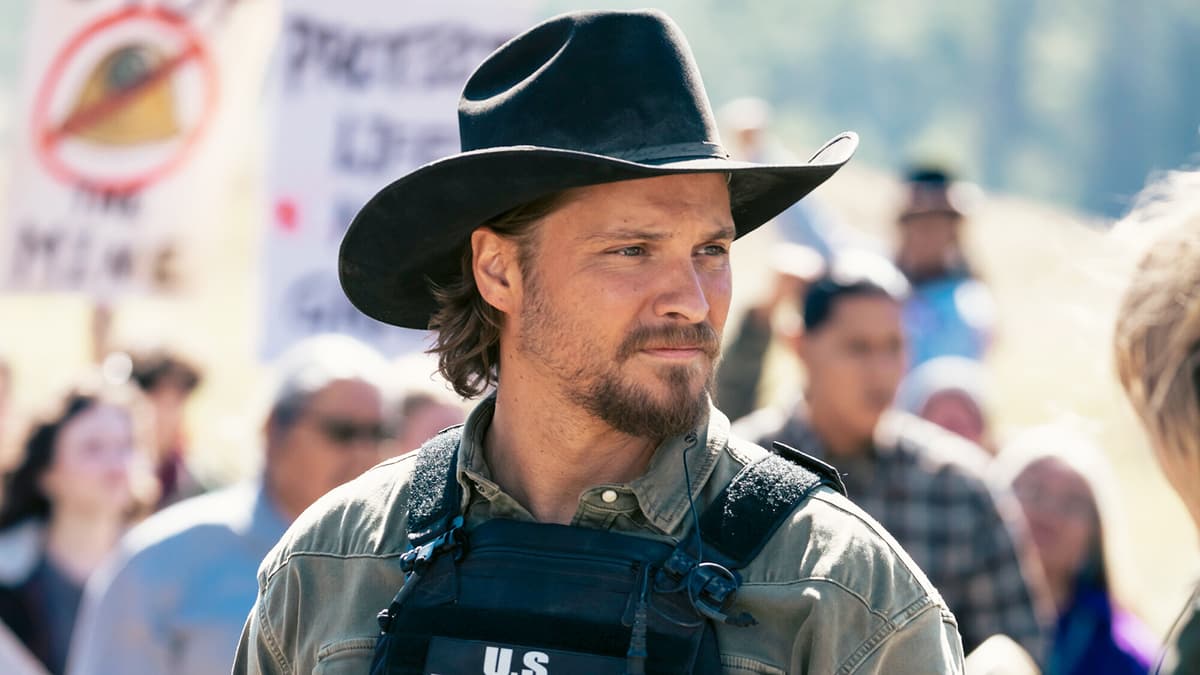
Marshals Review: CBS' Yellowstone Spinoff Is A Prestige Procedural With A Dash Of Dutton
•February 22, 2026
0
Companies Mentioned

Why It Matters
By extending the lucrative Yellowstone franchise onto network television, CBS hopes to capture a broader demographic and boost ad revenue. Success could signal a shift toward premium‑quality spinoffs as a viable strategy for legacy broadcasters.
Key Takeaways
- •CBS taps Yellowstone brand for network procedural.
- •Luke Grimes returns as Kayce Dutton, now a Marshal.
- •Show blends cinematic style with case‑of‑the‑week format.
- •No prior Yellowstone knowledge required, but fan easter eggs present.
- •Strong cast adds fresh dynamics to established universe.
Pulse Analysis
The television landscape has increasingly blurred the line between premium cable drama and broadcast procedural, and CBS’s decision to spin off Yellowstone into “Marshals” exemplifies that shift. After Paramount Network retired the original series, the Dutton name still commands strong brand equity, prompting CBS to repurpose the property for a Sunday‑night slot with broader reach. By positioning a familiar character, Kayce Dutton, as a U.S. Marshal, the network taps into an existing fan base while courting viewers who prefer self‑contained, hour‑long mysteries. This cross‑platform strategy reflects a growing appetite for recognizable IP that can migrate between streaming, cable, and broadcast environments.
From a creative standpoint, “Marshals” faces the delicate task of preserving the gritty, expansive feel of Taylor Sheridan’s western while adhering to the procedural formula that defines network television. The series answers this by delivering cinematic opening sequences, sweeping landscapes, and a soundtrack that echoes the original’s tone, then quickly shifting to a case‑of‑the‑week structure with clear beats and a tactical briefing room. The result is a hybrid that satisfies viewers seeking high‑production values without demanding the long‑form commitment of a serial drama, a balance that few recent spinoffs have achieved.
Commercially, the show offers CBS a potential ratings lift and a new avenue for premium‑price advertising during a traditionally competitive Sunday slot. If “Marshals” can retain Yellowstone’s core audience while attracting procedural fans, it could validate the practice of turning niche cable hits into network staples, encouraging other broadcasters to mine existing franchises for similar adaptations. Moreover, the series may extend the Dutton narrative beyond its original home, keeping the brand alive for future cross‑media projects such as novels, games, or international formats. Its performance will likely influence how legacy networks approach high‑concept IP in the coming years.
Marshals Review: CBS' Yellowstone Spinoff Is A Prestige Procedural With A Dash Of Dutton
0
Comments
Want to join the conversation?
Loading comments...