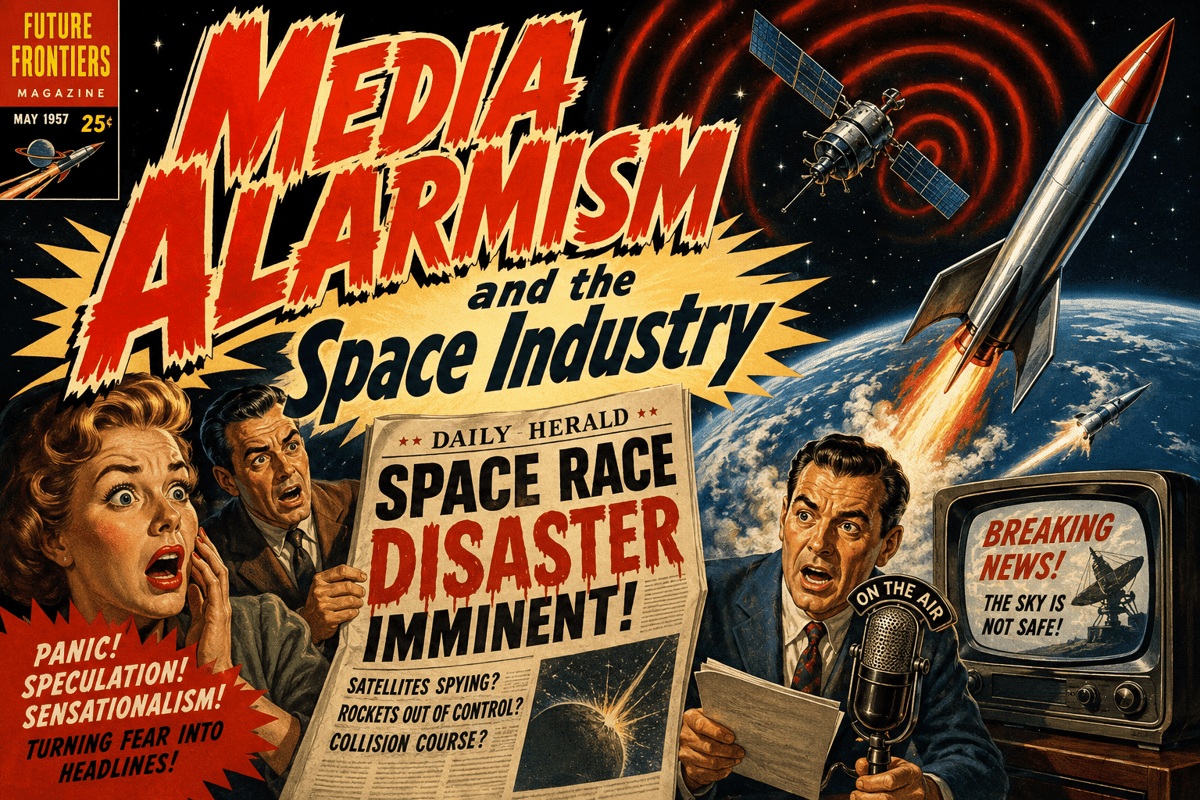
Media Alarmism and the Space Industry: What It Is, Which Topics Attract It, and Why It Happens
Why It Matters
Exaggerated space reporting can erode public confidence, misguide regulators, and destabilize a rapidly expanding market worth trillions of dollars. Balanced coverage is essential to ensure informed policy and sustained investment in critical space infrastructure.
Key Takeaways
- •Alarmist stories cluster around debris, asteroids, solar storms, launches, defense
- •Media frames uncertainty as imminent danger, inflating public fear
- •Misleading headlines can distort policy, investment, and trust in space sector
- •Accurate risk framing separates verified, plausible, hype, and speculation
- •Space economy projected to reach $1.8 trillion by 2035, amplifying stakes
Pulse Analysis
The space sector’s inherent drama—rockets exploding, solar eruptions, and near‑Earth asteroids—provides fertile ground for alarmist journalism. When early data suggest a small impact probability, as with asteroid 2024 YR4, headlines often seize on the worst‑case scenario before later observations reduce the risk. This pattern repeats across debris alerts, launch failures, and solar‑storm warnings, where vivid imagery and conflict‑driven news values amplify fear beyond the evidence. Such coverage can skew public perception, making rare hazards appear ubiquitous and immediate.
Beyond perception, alarmist framing carries tangible consequences for policy and capital flows. Overstated danger may prompt reactionary regulation, stalling innovative projects, while underplaying genuine threats can leave critical infrastructure vulnerable. Investors and insurers, who rely on accurate risk assessments, may be misled by sensational headlines, affecting financing for satellite constellations, launch services, and emerging markets like space‑based broadband. As the World Economic Forum and McKinsey project the global space economy to grow from $630 billion in 2023 to $1.8 trillion by 2035, the stakes for clear communication rise sharply.
A more disciplined media approach requires separating verified risk from plausible speculation and commercial hype. Journalists should contextualize probability estimates, explain mitigation standards such as the FCC’s five‑year disposal rule, and use visual aids that distinguish modeled debris populations from trackable objects. By doing so, coverage can inform rather than inflame, supporting public trust and enabling policymakers to craft proportionate, evidence‑based responses that sustain the sector’s rapid expansion.
Media Alarmism and the Space Industry: What It Is, Which Topics Attract It, and Why It Happens
Comments
Want to join the conversation?
Loading comments...