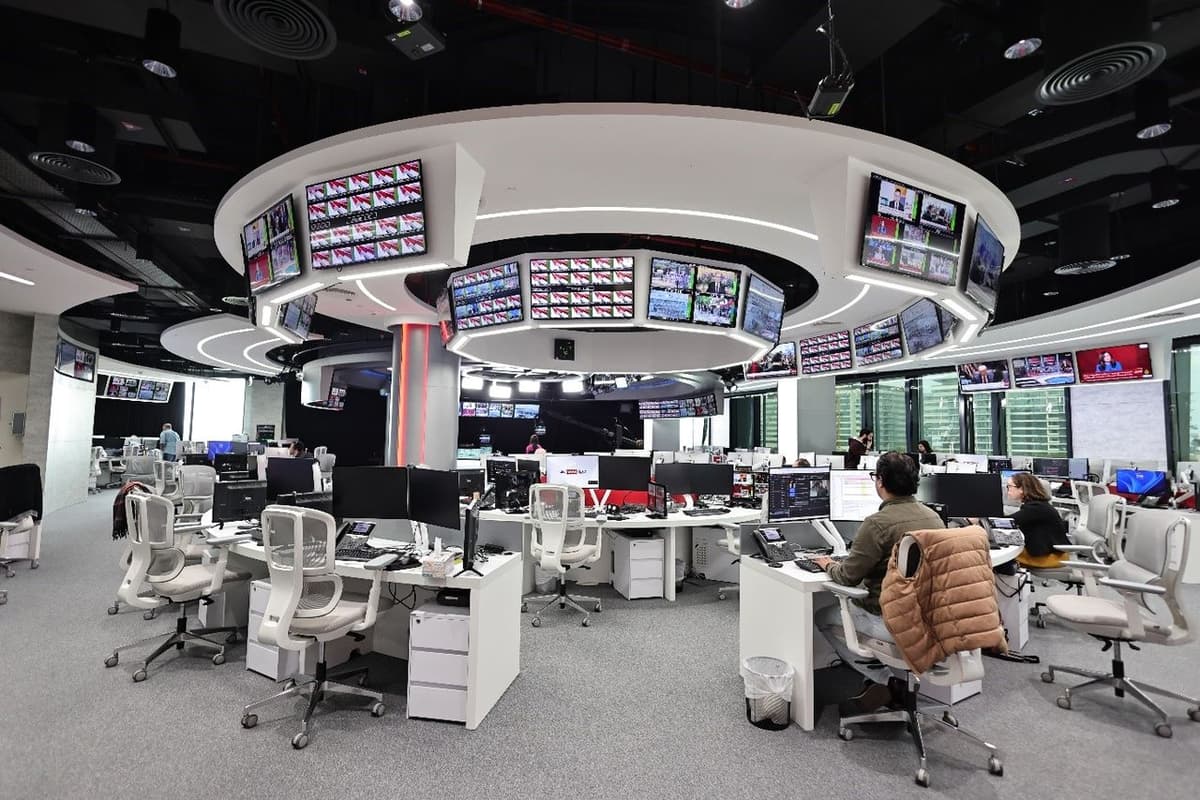
Report: Broadcast Employment Hard Hit by AI
Companies Mentioned
Why It Matters
The rapid erosion of broadcast jobs and wages signals a structural shift in media labor, forcing companies and workers to rethink talent strategies and invest in AI‑augmented skill sets.
Key Takeaways
- •Broadcasting jobs fell 36.2% from May 2022‑2024
- •Real wages in broadcasting dropped 19.5% in same period
- •Data entry, copywriting, web design saw smaller job cuts
- •Video editing demand stays high as role shifts to AI oversight
- •AI‑proof jobs include yoga, massage therapy, dancers, musicians
Pulse Analysis
The broadcast sector has long relied on human editors, reporters and technicians to shape news and entertainment. With generative AI tools like ChatGPT, Runway and Sora automating text processing, transcription and basic video assembly, the Wiingy analysis shows a dramatic 36.2% reduction in U.S. radio and TV positions over a two‑year span. By tracking monthly Google searches for 29 skill clusters before and after ChatGPT’s 2022 launch, the report quantifies a 19.5% real‑wage decline— the steepest across all occupations examined. This data‑driven approach confirms earlier forecasts from Oxford and the World Economic Forum that routine digital tasks are most vulnerable to automation.
The fallout extends beyond broadcasting. Data entry lost 14% of its workforce, while copywriting and web design each shed roughly 11% of jobs. Yet the wage compression is most acute in media, underscoring how AI can simultaneously thin headcount and depress compensation. For labor unions and talent pipelines, the trend raises urgent questions about retraining budgets, collective bargaining leverage, and the long‑term viability of traditional broadcast career ladders. Companies that cling to legacy production models risk falling behind peers that proactively integrate AI while protecting employee value.
Conversely, the report highlights a “barbell effect” for video editing. Search interest for learning the craft remains robust because the role is evolving from manual cut‑and‑splice work to overseeing AI‑generated footage, ensuring narrative coherence and brand standards. This shift creates a premium for hybrid talent—creatives who understand both storytelling and the technical nuances of AI tools. Media firms should therefore prioritize reskilling programs that blend artistic judgment with prompt engineering and AI supervision, turning a potential displacement risk into a competitive advantage in the fast‑changing content ecosystem.
Report: Broadcast Employment Hard Hit by AI
Comments
Want to join the conversation?
Loading comments...