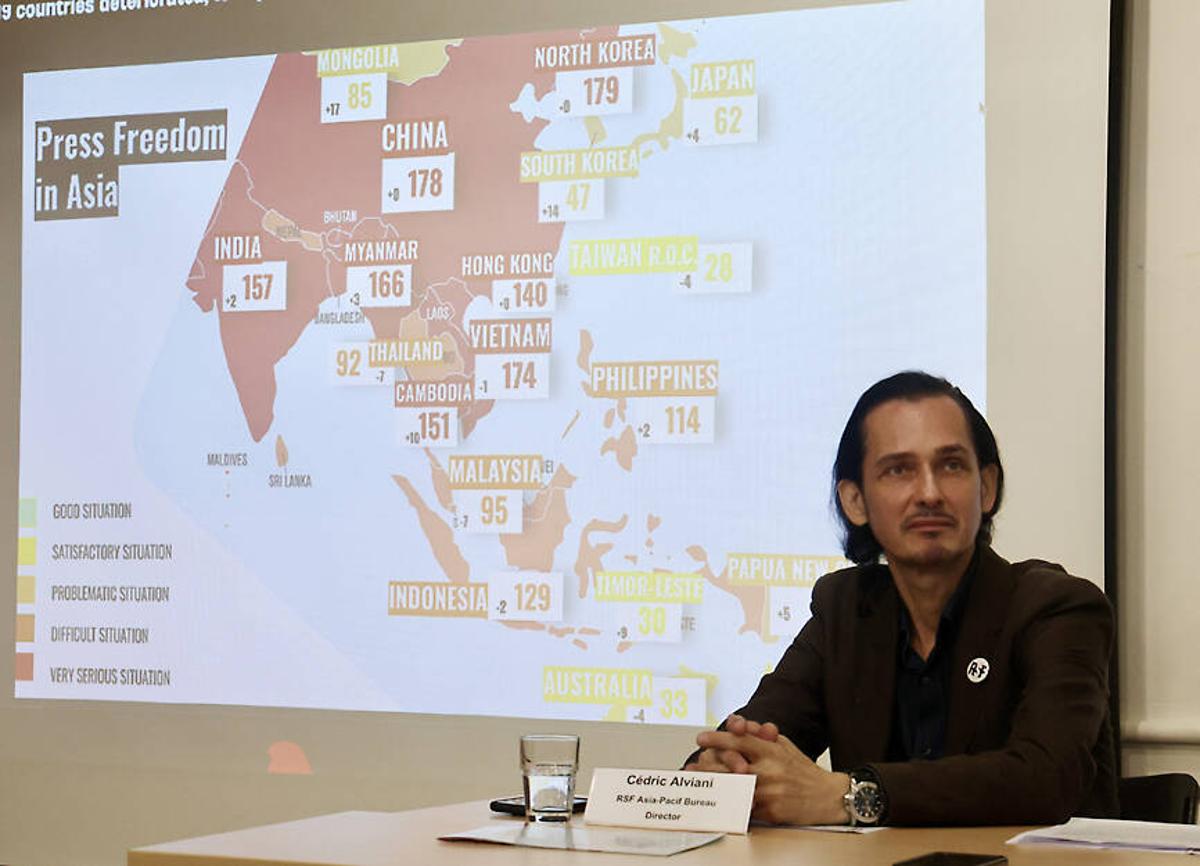
Taiwan Falls Four Places in RSF’s World Press Freedom Ranking
Why It Matters
The ranking signals growing vulnerabilities in Taiwan’s democratic information ecosystem and underscores a broader worldwide erosion of press freedoms, affecting investor confidence and civil‑society resilience.
Key Takeaways
- •Taiwan fell to 28th, score 75.44, from 24th, 77.04.
- •Ranks second in Asia‑Pacific, ahead of Australia, South Korea, Japan.
- •No journalist arrests reported; environment still among safest democracies.
- •Media firms face advertising slump and reduced public funding.
- •RSF says global press freedom at 25‑year low, <1% good.
Pulse Analysis
Taiwan’s recent slide in the World Press Freedom Index highlights a nuanced picture for the island’s media landscape. While the nation remains the second‑best performer in the Asia‑Pacific region—trailing only New Zealand—its score of 75.44 marks a measurable dip from last year’s 77.04. The drop is not driven by overt repression; RSF recorded no journalist arrests or newsroom raids, underscoring that Taiwan still offers a comparatively safe environment for reporters. However, the shift signals subtle pressures that could erode that safety over time.
The underlying causes stem largely from economic and policy challenges. Local media outlets grapple with a prolonged slump in advertising revenue and recent cuts to government subsidies for public broadcasters, squeezing resources needed for investigative reporting. RSF’s East Asian Bureau also flagged a decade‑long lack of decisive government action to improve news quality and guarantee reliable information, a shortfall that threatens the robustness of Taiwan’s democratic discourse. As media firms tighten belts, the risk of self‑censorship and reduced editorial independence rises, potentially diminishing the public’s access to diverse viewpoints.
Globally, the index paints a bleak portrait: more than half of countries now fall into the “difficult” or “very serious” categories, and less than one percent of the world’s population lives in environments deemed “good” for press freedom. Taiwan’s relative standing—especially against neighboring Hong Kong (140th) and China (178th)—offers a modest buffer, yet the narrowing gap underscores the spread of security‑driven restrictions. For investors, policymakers, and civil‑society actors, Taiwan’s ranking serves as both a warning and a benchmark, emphasizing the need for sustained support of independent journalism to preserve democratic resilience.
Taiwan falls four places in RSF’s world press freedom ranking
Comments
Want to join the conversation?
Loading comments...