Key Takeaways
- •TV local news viewership fell ~45% from 2016 to 2022.
- •Broadcast ad revenue dropped 56% (inflation‑adjusted) since 2004.
- •Digital local news hours rose from 4 to 6.5 per weekday.
- •53% of U.S. adults get news via social media platforms.
- •Hyperlocal digital outlets thrive on low overhead and niche audiences.
Pulse Analysis
The decline of traditional broadcast news is a market‑driven evolution, not a crisis. Between 2016 and 2022, primetime local TV audiences fell by roughly 45%, and inflation‑adjusted advertising revenue slid from $22.4 billion in 2004 to about $15.5 billion today. Yet stations have responded by expanding local news slots, increasing weekday airtime from under four hours to more than six and half. This shift reflects a strategic pivot toward content that can be repackaged for digital channels, where advertisers now chase fragmented, data‑rich audiences.
Digital distribution has unlocked new business models for local journalism. Hyperlocal newsletters, community‑focused websites, and social‑media‑native news influencers reach niche audiences with minimal overhead, turning what once required costly print runs into scalable online platforms. Revenue streams now blend subscriptions, native advertising, sponsorships, and platform partnerships, allowing outlets to monetize audiences that legacy broadcasters could not reach. For example, the Minneapolis Star Tribune’s digital‑only subscriber base surpassed 100,000, illustrating how utility‑focused reporting can drive sustainable growth.
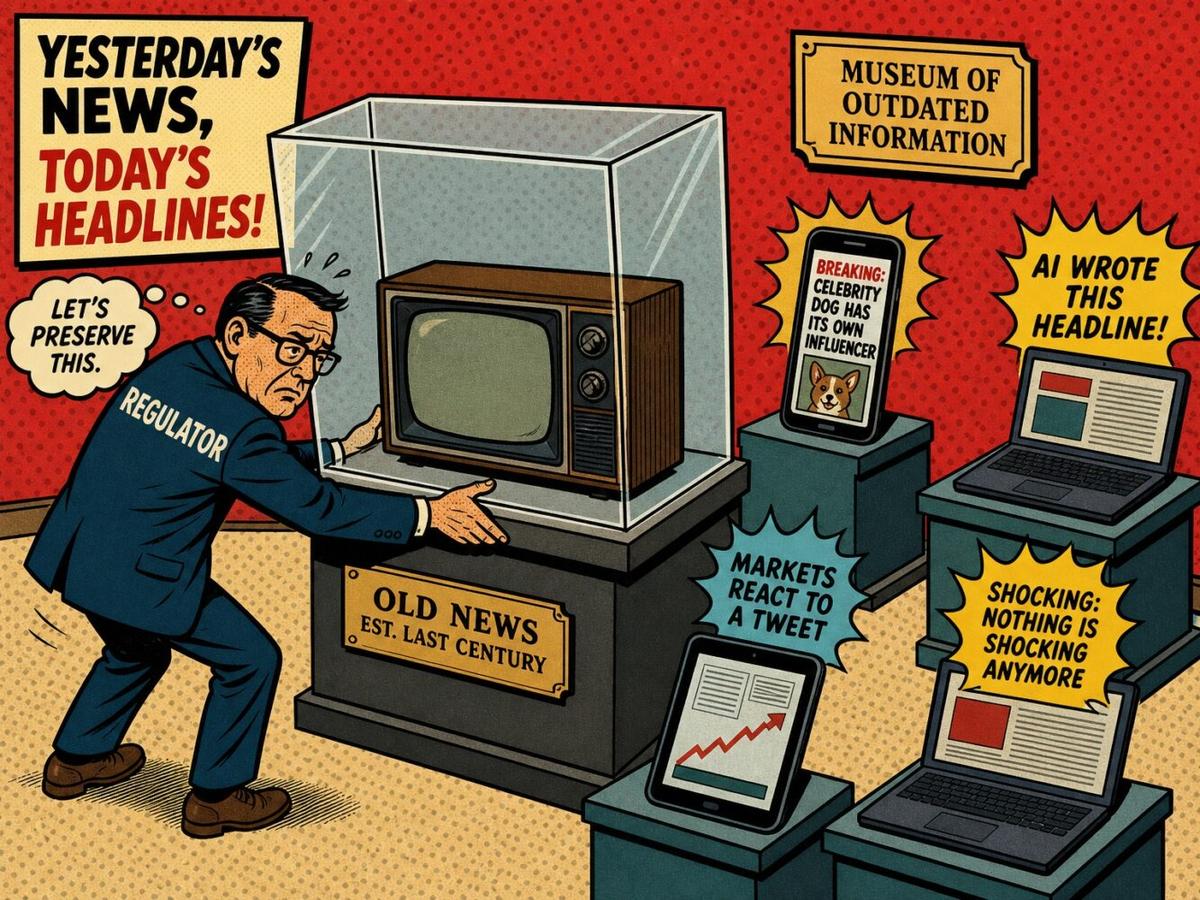
Policymakers should recalibrate their focus from preserving legacy broadcast structures to safeguarding consumer welfare in a fluid media ecosystem. Interventions that shield incumbents risk freezing innovation and limiting the emergence of diverse digital voices. Instead, regulation ought to target clear harms—such as misinformation amplification or anti‑competitive practices—while allowing market experimentation to continue. As audiences consume news in bite‑size formats, the industry must balance the convenience of passive consumption with incentives for deep, accountable reporting, ensuring that the digital news desert does not become an information desert.
The Future of News and Its Frenemies
Comments
Want to join the conversation?