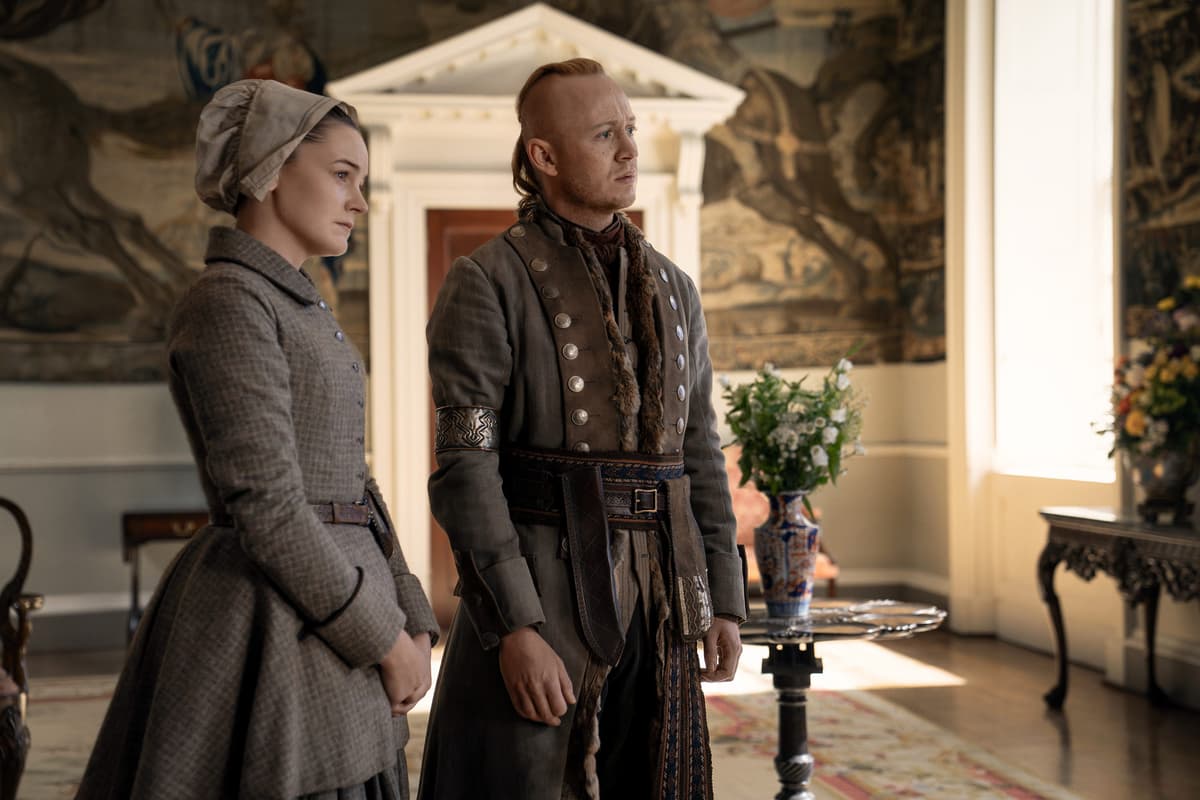
The Real Life of the Mohawk Leader Thayendanegea on Outlander
Companies Mentioned
Why It Matters
Bringing Joseph Brant to a mainstream audience highlights Indigenous agency in the Revolutionary era, prompting renewed discussion of Native contributions and treaty neglect. The portrayal also encourages viewers to reconsider the often‑overlooked Indigenous perspective in early American history.
Key Takeaways
- •Outlander season 8 features Mohawk chief Joseph Brant as a main character
- •Brant negotiated with King George III for Mohawk support in 1775
- •His “Brant’s Volunteers” fought for Britain, notably at Oriskany 1777
- •Post‑war, Britain granted Brant land on Ontario’s Grand River
- •Brant’s portrait appeared on 1820s American banknotes, a rare honor
Pulse Analysis
Outlander has built a reputation for blending romance, time travel, and meticulous historical research, and season 8 pushes that formula further by anchoring its plot in the final years of the American Revolution. By inserting real‑life figures such as Mohawk chief Thayendanegea—better known as Joseph Brant—the series offers viewers a vivid entry point into a turbulent era where colonial ambitions collided with Indigenous sovereignty. This approach not only enriches the drama’s narrative depth but also satisfies a growing audience appetite for historically grounded storytelling.
Joseph Brant’s historical footprint is substantial. In 1775 he traveled to London and met King George III, securing British promises to protect Mohawk lands in exchange for military support. He then raised “Brant’s Volunteers,” an irregular force that played a decisive role at the Battle of Oriskany in 1777 and conducted raids across the Mohawk Valley. After the war, Britain compensated the Mohawk with a sizable grant along Ontario’s Grand River, laying the foundation for today’s Brantford. Even his likeness graced 1820s American banknotes, a rare acknowledgment of an Indigenous leader in early U.S. iconography.
The inclusion of Brant in a popular series carries broader cultural weight. Mainstream media rarely foregrounds Indigenous leaders from the Revolutionary period, so Outlander’s spotlight can spark public curiosity and drive deeper research into treaty rights, land dispossession, and the legacy of figures like Brant. By humanizing a complex character who navigated dual identities, the show contributes to a more nuanced dialogue about reconciliation and the ongoing impact of colonial policies on Native communities. For viewers and scholars alike, the series becomes a catalyst for re‑examining a pivotal chapter of North‑American history.
The Real Life of the Mohawk Leader Thayendanegea on Outlander
Comments
Want to join the conversation?
Loading comments...