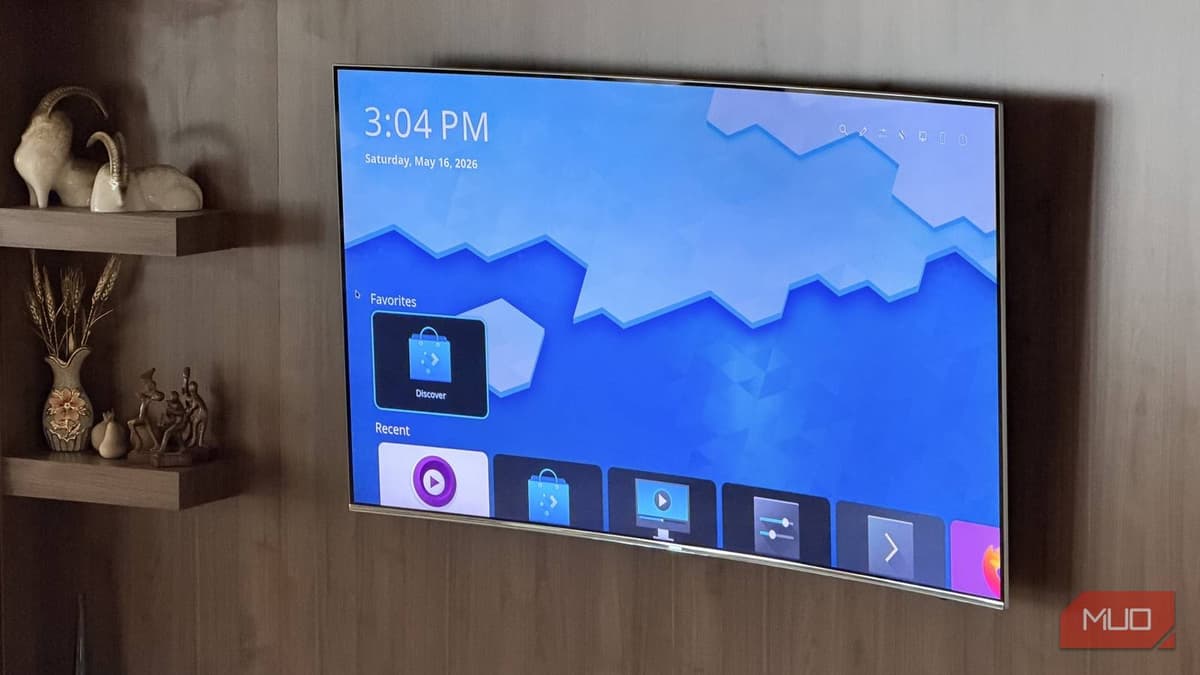
The Smart TV OS Nobody Recommends but Everyone Should Know About
Companies Mentioned
Why It Matters
It demonstrates a viable, ad‑free TV ecosystem built on open source, challenging the data‑driven models of mainstream smart‑TV vendors. For privacy‑conscious consumers and developers, it offers a platform that can be customized without vendor lock‑in.
Key Takeaways
- •KDE Plasma Big Screen brings Linux to TVs
- •No Google account; fully open-source platform
- •Supports web apps; works with Kodi, Jellyfin, Spotify
- •DRM limits 4K streaming to 1080p only
- •Still beta; not ready for daily use
Pulse Analysis
The smart‑TV market is dominated by closed ecosystems such as Google TV, Amazon Fire TV, Samsung Tizen, and LG webOS, all of which monetize user data through advertising and automatic content recognition. As consumers become more aware of privacy risks, demand grows for alternatives that place control back in the user’s hands. Open‑source solutions have long thrived on desktops, but translating that freedom to the living‑room has been challenging until projects like KDE Plasma Big Screen emerged.
Plasma Big Screen leverages the mature KDE Plasma desktop and the Kirigami convergence framework to deliver a TV‑optimized interface that runs on virtually any Linux distribution. Because it is essentially a desktop environment, users can install familiar media servers such as Kodi or Jellyfin, and even run web‑based services like Spotify or Discord through browser shells. The biggest technical hurdle remains digital‑rights‑management: without a Linux implementation of PlayReady, high‑resolution streaming from services like Netflix is limited to 1080p via Widevine L3. This DRM gap is the primary reason the platform is not yet positioned as a primary consumer TV solution.
Despite its beta status, Plasma Big Screen signals a shift toward community‑driven, privacy‑first TV experiences. If the KDE community continues to attract contributors and manufacturers experiment with open‑source firmware, the project could evolve into a credible competitor to proprietary stacks. For early adopters and developers, testing the platform now offers valuable insight into a future where the living‑room operates under the same open‑source principles that have reshaped desktop computing.
The smart TV OS nobody recommends but everyone should know about
Comments
Want to join the conversation?
Loading comments...