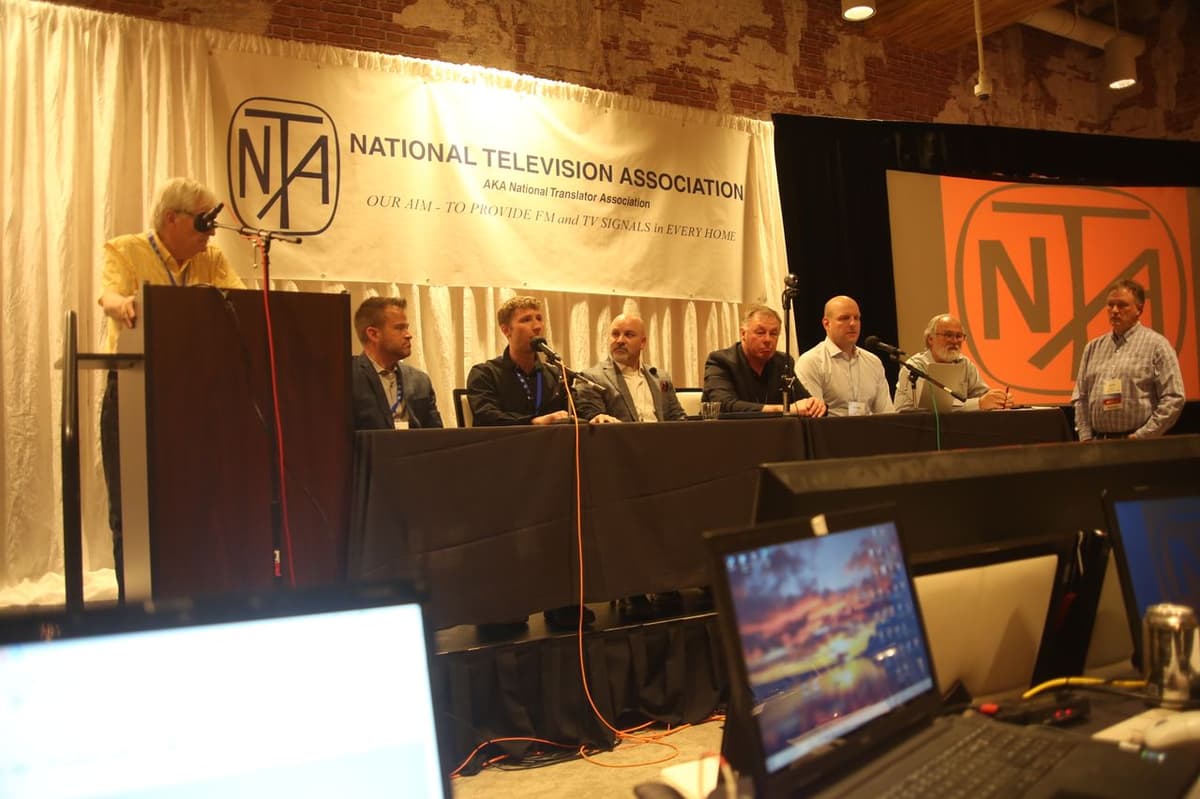
Translator Conference to Focus on Broadcasters' Current ATSC 1.0-3.0 Hybrid World
Companies Mentioned
Why It Matters
Maintaining ATSC 1.0 alongside 3.0 safeguards rural viewership and revenue, while efficient SRT deployment reduces upgrade costs. Coordinated transition plans are essential to avoid signal loss and regulatory headaches.
Key Takeaways
- •ATSC 1.0 will likely coexist with 3.0 beyond 2026
- •Harmonic, Heartland showcase encoding tricks to boost 1.0 efficiency
- •SRT offers fiber‑like reliability at lower cost for video transport
- •Translators span vast DMAs; many are government‑run with limited budgets
- •Coordination needed when lighthouse stations flip to 3.0 to prevent viewer loss
Pulse Analysis
Broadcasters are racing toward ATSC 3.0, but the legacy ATSC 1.0 system still underpins the majority of over‑the‑air TV service, especially in rural markets. Translators—low‑power repeaters that extend signal reach—remain critical for reaching viewers across the expansive DMAs of Utah, Colorado, New Mexico and Oklahoma. The National Translator Association’s Reno meeting brings together engineers, regulators and equipment makers to discuss how a hybrid 1.0‑3.0 environment can be managed without sacrificing coverage or incurring prohibitive costs.
Technical sessions at the conference highlight two emerging levers for broadcasters. First, vendors Harmonic and Heartland Video are unveiling encoding tweaks that squeeze more data out of existing 1.0 streams, extending the useful life of legacy transmitters. Second, the open‑source Secure Reliable Transport (SRT) protocol is being positioned as a fiber‑alternative, offering resilient, low‑latency video delivery over public internet links. By integrating monitoring tools and redundant paths, stations can build SRT networks that rival dedicated dark‑fiber circuits while keeping capital expenditures in check.
Beyond technology, the real hurdle is operational coordination. Many translators are owned by county agencies with tight budgets—often under $10,000 for upgrades—making sudden shifts to 3.0 risky. When a full‑power station flips to a lighthouse model, dozens of downstream translators may lose the 1.0 feed, leaving viewers confused or without service. The conference stresses proactive communication between broadcasters, the FCC and local operators, as well as shared conversion solutions, to smooth the transition and protect audience loyalty as the industry moves into the next broadcast era.
Translator Conference to Focus on Broadcasters' Current ATSC 1.0-3.0 Hybrid World
Comments
Want to join the conversation?
Loading comments...