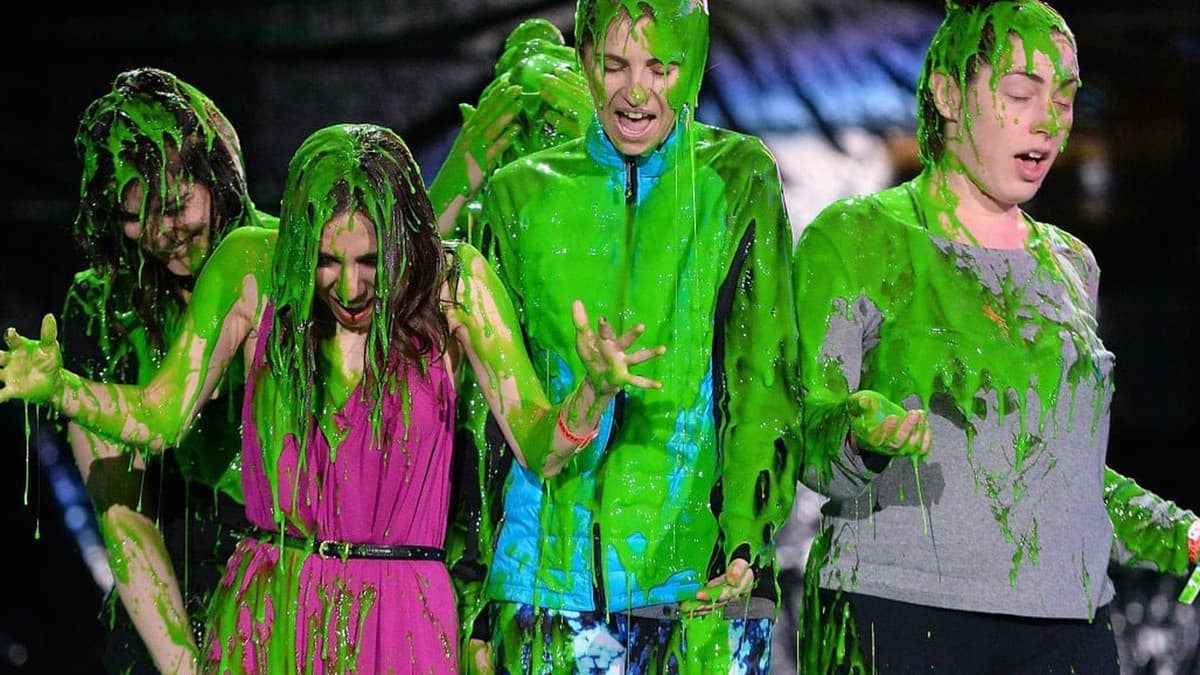
What Is Nickelodeon's Iconic Green Slime Made Of And Is It Edible?
Why It Matters
The slime’s quirky chemistry underscores Nickelodeon’s experiential marketing, turning a simple gag into a powerful, recognizable brand asset while highlighting safety considerations for consumer‑facing promotions.
Key Takeaways
- •Original slime mixed gelatin, food coloring, oatmeal, shampoo
- •Double Dare version used vanilla pudding, applesauce, oatmeal
- •Soap ingredients make slime non‑edible
- •Slime became Nickelodeon’s signature branding element
- •Kids’ Choice Awards still feature slime showers
Pulse Analysis
Nickelodeon’s green slime began as a low‑budget prop on *You Can’t Do That on Television*, where producers sought a visually striking, mess‑filled gag. By blending gelatin, food coloring, oatmeal and a dash of shampoo, they created a viscous, neon‑green ooze that resonated with a generation of kids craving slapstick chaos. The formula’s simplicity allowed the network to scale the effect for larger productions, turning slime into a cultural touchstone that defined the channel’s irreverent identity.
When *Double Dare* entered the scene, the slime recipe shifted toward edible ingredients—vanilla pudding, applesauce, and oatmeal—reflecting a growing awareness of on‑set safety and audience perception. However, the presence of soap in earlier mixes meant the substance was never meant for consumption, a fact the network has consistently emphasized to avoid liability. This evolution illustrates how entertainment brands balance theatrical spectacle with practical health considerations, especially when the content reaches younger viewers.
Today, slime transcends its physical form, appearing in digital overlays, merchandise, and social media challenges that keep Nickelodeon relevant in a fragmented media landscape. The enduring appeal lies in its tactile novelty and the nostalgia it evokes, which marketers leverage to drive engagement across platforms. By continuously adapting the slime’s composition and presentation, Nickelodeon demonstrates how a simple, messy gimmick can become a versatile, multi‑channel branding tool that fuels both legacy loyalty and new audience acquisition.
What Is Nickelodeon's Iconic Green Slime Made Of And Is It Edible?
Comments
Want to join the conversation?
Loading comments...