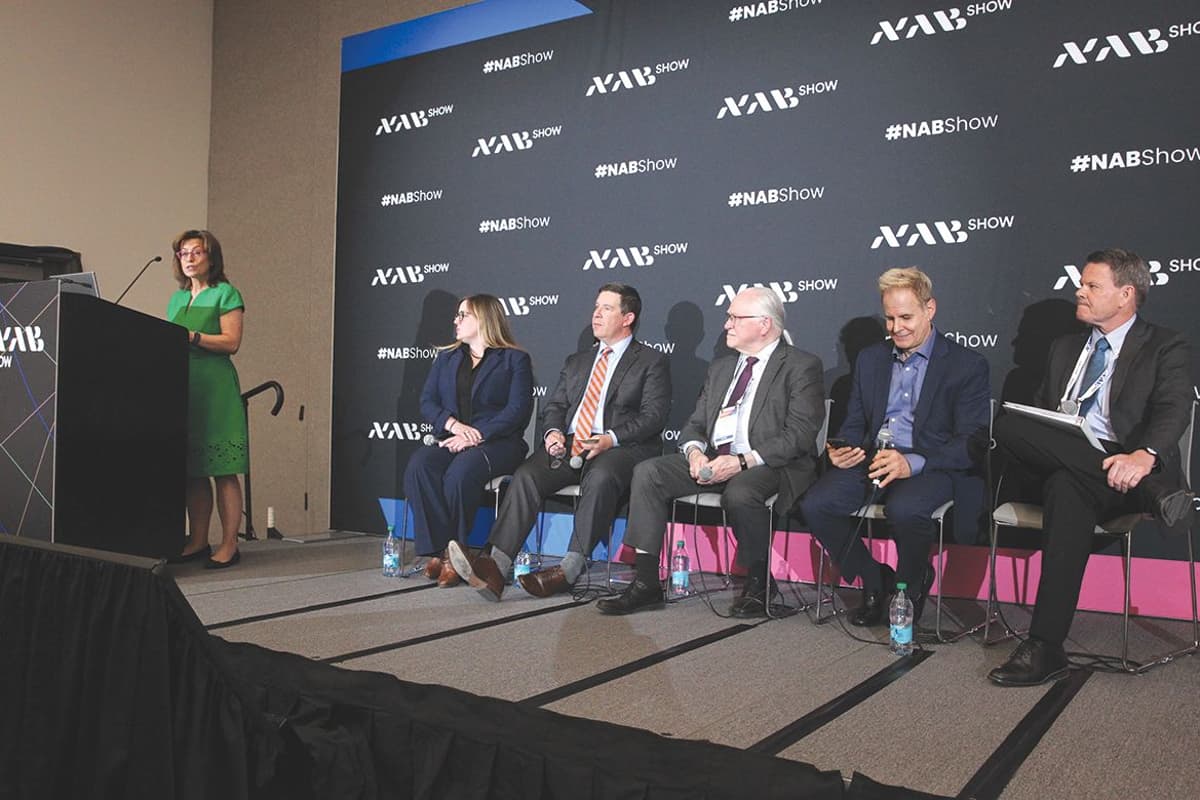
Why Broadcast Is Well-Positioned to Safeguard Freedom of Speech
Companies Mentioned
Why It Matters
The discussion highlights how regulatory intimidation could reshape broadcast content, threatening free‑speech safeguards and prompting legal challenges that may redefine the FCC’s authority over the public airwaves.
Key Takeaways
- •FCC chair threatened license revocations for broadcasters not serving public interest.
- •Panel highlighted “jawboning” as informal government pressure via social media.
- •Recent court rulings blocked Trump admin cuts to NPR, PBS, and VOA.
- •Local stations seen as buffer protecting First Amendment amid regulatory shifts.
- •Experts argue government should not decide truth in fragmented media landscape.
Pulse Analysis
The FCC’s recent posture, exemplified by Chairman Brendan Carr’s public threats on X, signals a shift toward more aggressive oversight of broadcasters. By leveraging “jawboning”—informal pressure through social media and public statements—the agency can influence editorial decisions without formal rulemaking. This tactic raises concerns about chilling effects on newsrooms, especially as license renewals hinge on perceived public interest compliance. Industry observers warn that such pressure could erode editorial independence, prompting stations to self‑censor to avoid punitive actions.
Legal developments provide a counterweight to regulatory overreach. Federal judges have recently ruled that the Trump administration’s attempts to cut federal funding for NPR, PBS, and Voice of America were unconstitutional, labeling them arbitrary and capricious. These decisions reinforce the principle that the government cannot unilaterally silence public‑service media, setting a precedent that could be invoked against future FCC actions. Lawyers for First‑Amendment groups argue that these rulings underscore the judiciary’s role in checking executive and agency power, especially when speech‑related policies intersect with funding and licensing.
Amid this backdrop, local broadcasters emerge as a vital safeguard for free expression. Unlike large network conglomerates, community stations are deeply embedded in their markets and can more readily reflect diverse viewpoints without succumbing to centralized pressure. Panelists emphasized that these stations act as a buffer, preserving a pluralistic media ecosystem. As the regulatory environment evolves, the resilience of local radio and television will be pivotal in defending First Amendment rights and ensuring that the public sphere remains open to a range of perspectives.
Why Broadcast Is Well-Positioned to Safeguard Freedom of Speech
Comments
Want to join the conversation?
Loading comments...