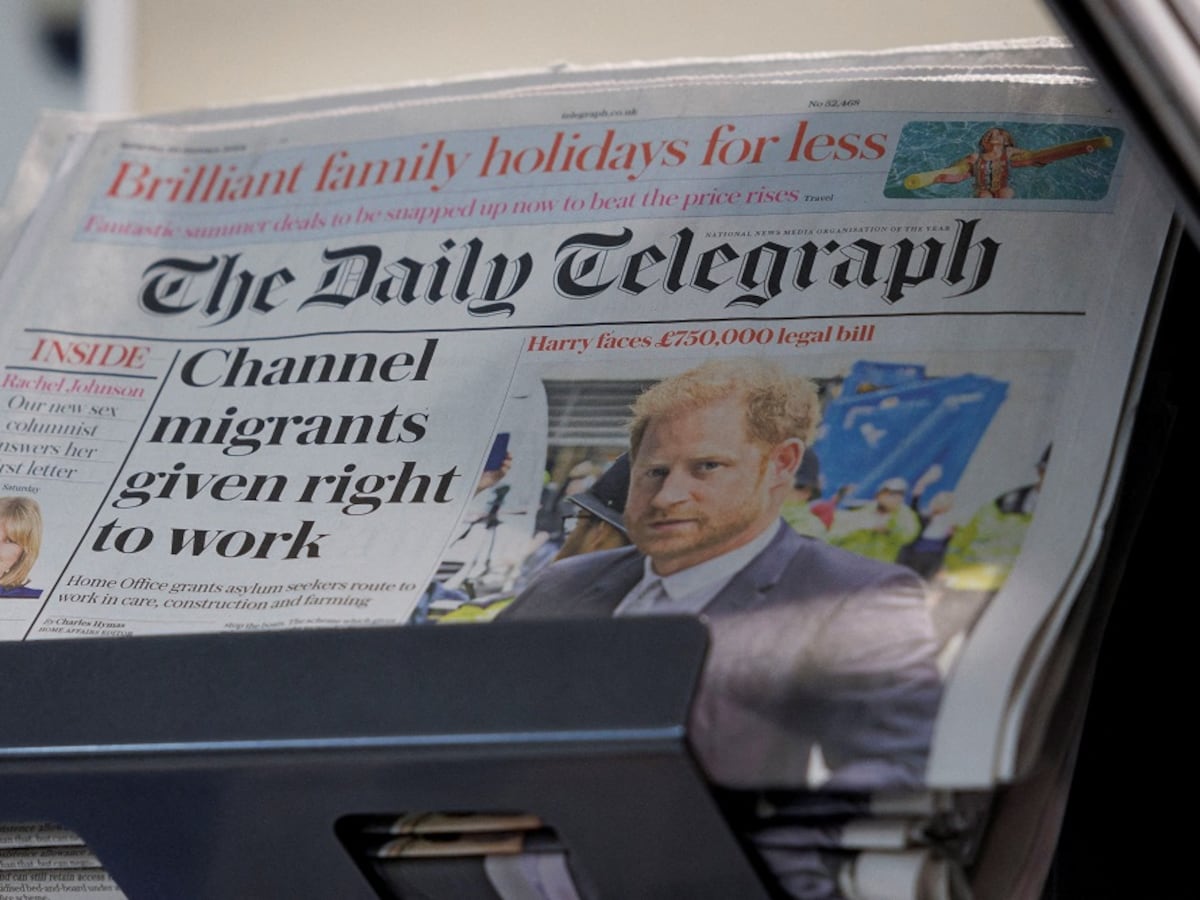
World Briefs | UK Minister to Review Axel Springer’s Deal for Telegraph Media Group
•March 9, 2026
0
Why It Matters
The scrutiny of foreign media ownership highlights growing concerns over information security, while the defence and infrastructure moves signal shifting geopolitical and economic priorities across Europe and Africa. Microsoft’s AI addition underscores accelerating enterprise adoption of autonomous agents.
Key Takeaways
- •UK to scrutinize Axel Springer's £575m Telegraph acquisition
- •EU signs defence deals with Australia, Iceland, Ghana
- •Kenya allocates up to $155m for airport expansion
- •France deploys frigates to Red Sea under EU mission
- •Microsoft adds Anthropic AI to Copilot, boosting autonomous agents
Pulse Analysis
The United Kingdom’s public‑interest and foreign‑state‑influence media‑mergers regime, introduced under the Enterprise Act 2002, is being tested by Axel Springer’s bid for the Telegraph Media Group. By mandating a quasi‑judicial assessment, the government aims to safeguard editorial independence and prevent undue foreign influence in a critical news outlet. Stakeholders are watching closely, as the outcome could set a precedent for future cross‑border media transactions, especially in a climate of heightened scrutiny over misinformation and state‑linked narratives.
Across the geopolitical spectrum, Europe is deepening its defence collaborations, signing pacts with Australia, Iceland and Ghana to diversify security partnerships amid rising global tensions. France’s deployment of two frigates to the Red Sea under the EU’s Aspides mission reinforces a collective maritime security posture against regional threats. Simultaneously, Kenya’s strategic use of proceeds from a 65% stake sale in its pipeline company—up to $155 million—to modernise Jomo Kenyatta International Airport reflects a broader trend of leveraging sovereign wealth for critical infrastructure upgrades, addressing capacity constraints and stimulating economic growth.
In the technology arena, Microsoft’s integration of Anthropic’s Claude‑based AI into its Copilot suite, branded Copilot Cowork, signals a rapid shift toward autonomous agents capable of handling complex business tasks with minimal human oversight. This move not only bolsters Microsoft’s competitive edge in enterprise AI but also accelerates adoption of generative AI tools across industries. Meanwhile, Germany’s Chancellor Friedrich Merz reaffirmed a hard line against coalition talks with the far‑right AfD, underscoring the political risks of extremist partnerships and reinforcing the stability of the centre‑right governing bloc. Both developments illustrate how political decisions and tech innovations are reshaping market dynamics and regulatory landscapes.
World briefs | UK minister to review Axel Springer’s deal for Telegraph Media Group
0
Comments
Want to join the conversation?
Loading comments...