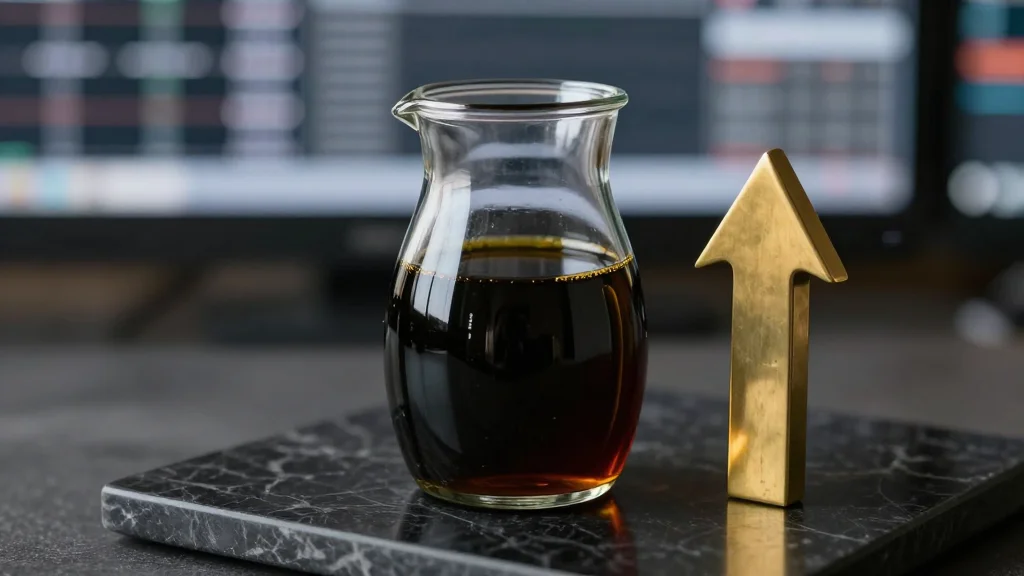
U.S. Futures Slip 0.2% as Brent Crude Jumps Over 5% on Renewed Iran Tension

Companies Mentioned

Why It Matters
The sharp swing in futures and the accompanying jump in oil prices illustrate how geopolitical risk can instantly inflate volatility premiums across the derivatives spectrum. For options traders, higher implied volatility translates into more expensive premiums, altering hedging costs and potentially reshaping the risk‑return profile of existing positions. Commodity options on Brent and WTI become more attractive for speculative bets on further price moves, while equity index options see increased demand for protective structures as investors brace for possible equity pullbacks. Beyond immediate pricing, the episode may influence longer‑term market expectations about the stability of oil supply routes. Persistent tension in the Strait of Hormuz could embed a higher baseline risk premium into oil‑related derivatives, prompting market participants to factor geopolitical risk more explicitly into their pricing models and risk‑management frameworks.
Key Takeaways
- •S&P 500 and Nasdaq‑100 futures fell 0.2% (as much as 0.5% intra‑session) after Iran claimed missiles hit a U.S. patrol boat.
- •Brent crude surged over 5% to above $113 per barrel; WTI rose $2 to around $104.
- •10‑year Treasury yield rose 4 basis points to 4.41%, lifting equity‑index volatility.
- •David Kruk of La Financiere de l’Echiquier called the dip a buying opportunity despite oil price spikes.
- •Higher implied volatility drove increased demand for protective equity puts and commodity option straddles.
Pulse Analysis
The Monday flash‑point underscores a recurring theme: geopolitical shocks act as catalysts for rapid re‑pricing across the derivatives market. Historically, tensions in the Strait of Hormuz have produced spikes in oil volatility that linger for weeks, as seen during the 2019 drone attacks. This time, the market’s quick rebound after the U.S. denial suggests a more mature risk‑pricing environment, where participants have already built a buffer for such events. However, the immediate lift in equity‑index IV indicates that traders still view the broader macro backdrop—especially the interplay between oil supply risk and tech earnings momentum—as fragile.
From an options‑pricing perspective, the episode will likely widen the skew on both equity and commodity contracts. Market makers will need to adjust their gamma exposure, especially on short‑dated contracts where the time decay is steep and the underlying can swing sharply on news. The surge in demand for protective puts may also compress put‑call parity, creating arbitrage opportunities for sophisticated players who can navigate the heightened spread volatility.
Looking forward, the durability of this volatility premium hinges on whether the Strait of Hormuz remains a flashpoint or escalates into a sustained disruption. If shipping disruptions materialize, oil‑related options could see a new regime of elevated IV, prompting a re‑allocation of capital toward commodity hedges. Conversely, a rapid diplomatic de‑escalation would likely see volatility retreat, rewarding those who positioned for a short‑term spike. In either scenario, the episode reinforces the need for real‑time intelligence and flexible hedging strategies in the options and derivatives arena.
U.S. Futures Slip 0.2% as Brent Crude Jumps Over 5% on Renewed Iran Tension
Comments
Want to join the conversation?
Loading comments...