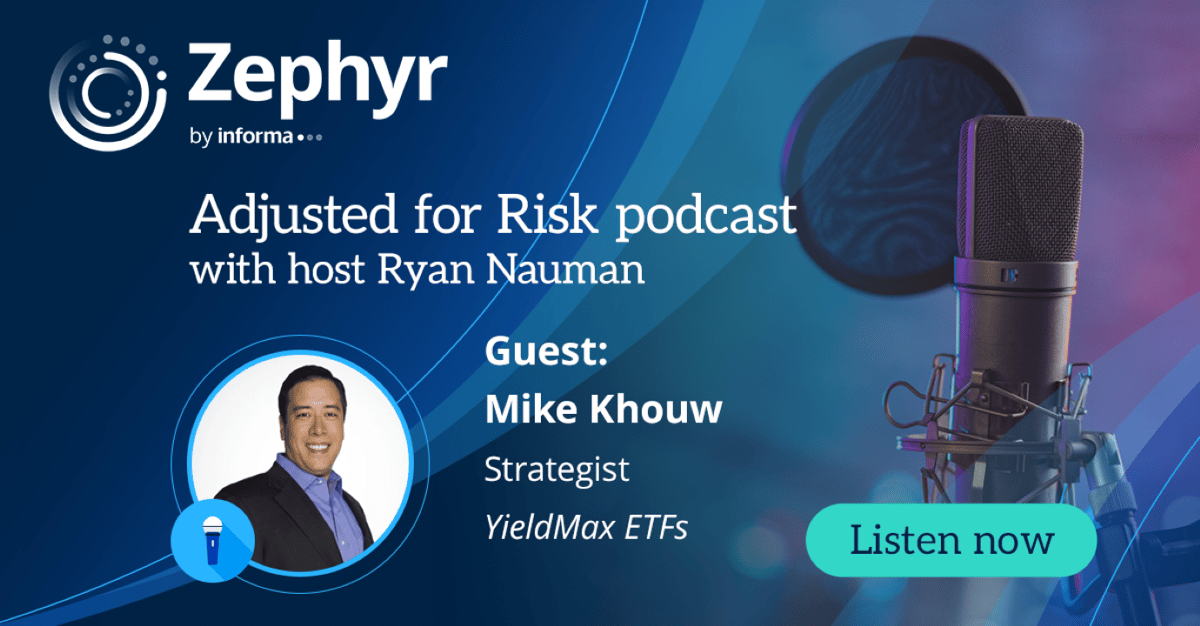
Zephyr's Adjusted for Risk: Mike Khouw on Options for Income and Risk Management
Why It Matters
Options‑overlay ETFs are reshaping income strategies for advisors, offering a tool to boost yields and manage downside risk in volatile markets, which could accelerate adoption across wealth‑management platforms.
Key Takeaways
- •Options‑based ETFs provide income while limiting portfolio drawdowns
- •YieldMax focuses on single‑stock call‑write strategies with transparent holdings
- •Advisors must weigh concentration risk against higher distribution yields
- •Tax efficiency improves when options premiums are treated as capital gains
- •Market volatility determines when overlay strategies outperform traditional funds
Pulse Analysis
The rise of options‑overlay exchange‑traded funds reflects a broader shift toward income generation in a low‑yield environment. By embedding covered‑call or put‑write positions within an ETF, managers can capture option premiums that offset market pullbacks, delivering a smoother return profile for investors. This model has gained traction as inflation pressures persist and the Federal Reserve’s policy direction remains uncertain, prompting investors to seek assets that can produce cash flow without sacrificing liquidity. YieldMax’s niche—single‑stock call‑write ETFs—leverages the high‑beta characteristics of individual equities while providing the transparency and tradability of a traditional fund.
YieldMax’s strategy centers on writing covered calls against a concentrated basket of high‑quality stocks, generating regular distribution yields that often exceed those of conventional equity ETFs. The approach appeals to advisors who need to meet client cash‑flow demands, especially retirees and income‑focused portfolios. However, the concentration inherent in single‑stock overlays introduces specific risks: heightened exposure to company‑specific events and sector swings. Khouw emphasizes rigorous due diligence, including stress‑testing the fund’s performance across different market regimes and scrutinizing tax implications, as option premiums are generally taxed at capital‑gain rates, which can enhance after‑tax returns for qualified investors.
For the broader wealth‑management industry, the proliferation of options‑based ETFs signals an evolution in product design that blends traditional equity exposure with derivative‑driven income. Advisors must balance the allure of higher yields against potential trade‑offs in price appreciation and diversification. As market volatility ebbs and flows, these overlay funds are likely to outperform during sideways or mildly bearish periods, while offering modest upside in bullish cycles. The continued innovation in this space, coupled with increasing transparency from providers like YieldMax, positions options‑overlay ETFs as a compelling addition to multi‑asset portfolios seeking resilient income streams.
Zephyr's Adjusted for Risk: Mike Khouw on Options for Income and Risk Management
Comments
Want to join the conversation?
Loading comments...