Companies Mentioned

Why It Matters
The 6SE provides an affordable, turnkey solution for newcomers seeking high‑quality optics and automated tracking, a segment driving growth in the hobby‑ist telescope market. Its limitations highlight the trade‑off between convenience and advanced imaging capability that retailers and manufacturers must balance.
Key Takeaways
- •6‑inch f/10 Schmidt‑Cassegrain delivers sharp planetary views
- •GoTo alt‑az mount points to 40,000 objects automatically
- •Setup takes 5–10 minutes; alignment can be error‑prone
- •Limited for deep‑sky imaging without reducer and equatorial upgrade
- •Price around $1,200 makes it a top value GoTo telescope
Pulse Analysis
Entry‑level computerized telescopes have become a cornerstone of the amateur astronomy market, as hobbyists seek plug‑and‑play solutions that deliver impressive views without steep learning curves. Celestron, a long‑standing brand, leverages its NexStar line to meet this demand, and the 6SE sits at the sweet spot of price and performance. At roughly $1,200, it undercuts many competing GoTo models while offering a 6‑inch aperture that rivals higher‑priced refractors for planetary detail. The inclusion of a built‑in database of 40,000 objects and a user‑friendly alignment routine lowers the barrier for newcomers, making the sky more accessible than ever.
Optically, the 6SE’s f/10 Schmidt‑Cassegrain design provides high contrast and low chromatic aberration, essential for resolving lunar craters, Martian surface features, and the bands of Jupiter. The telescope’s wave‑front error of 1/6 to 1/8 wave places it in the premium tier for its class, delivering crisp, high‑resolution images. However, the alt‑az GoTo mount, while reliable for visual tracking, lacks the precision and field rotation control needed for long‑exposure deep‑sky imaging. Users must add a focal reducer or upgrade to an equatorial platform to broaden the field of view and mitigate gear backlash, which limits exposure times to under ten seconds.
When compared with alternatives like the Sky‑Watcher Virtuoso GTi 150P or ZWO SeeStar S30 Pro, the NexStar 6SE stands out for its portability and planetary imaging strength, but it falls short for serious deep‑sky work. The market trend toward hybrid mounts that combine GoTo convenience with manual fallback suggests future iterations may address these gaps. For today’s casual stargazer or planetary photographer, the 6SE remains a compelling entry point, balancing cost, ease of use, and optical quality.
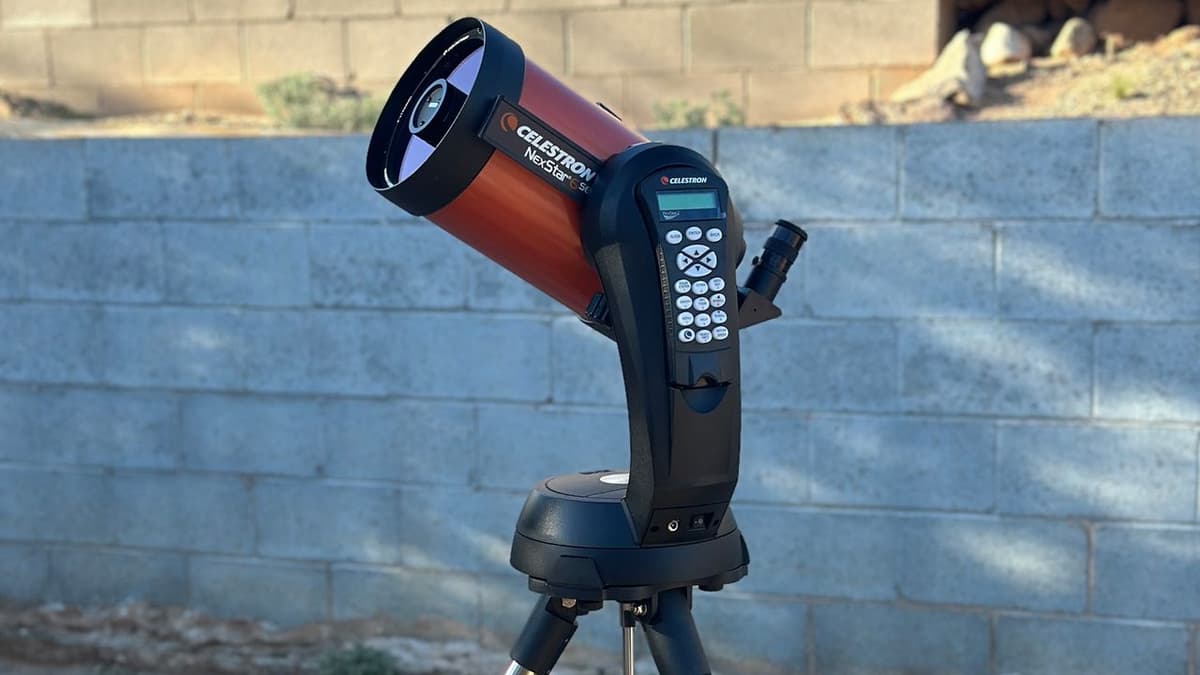
Celestron NexStar 6SE review
Comments
Want to join the conversation?
Loading comments...