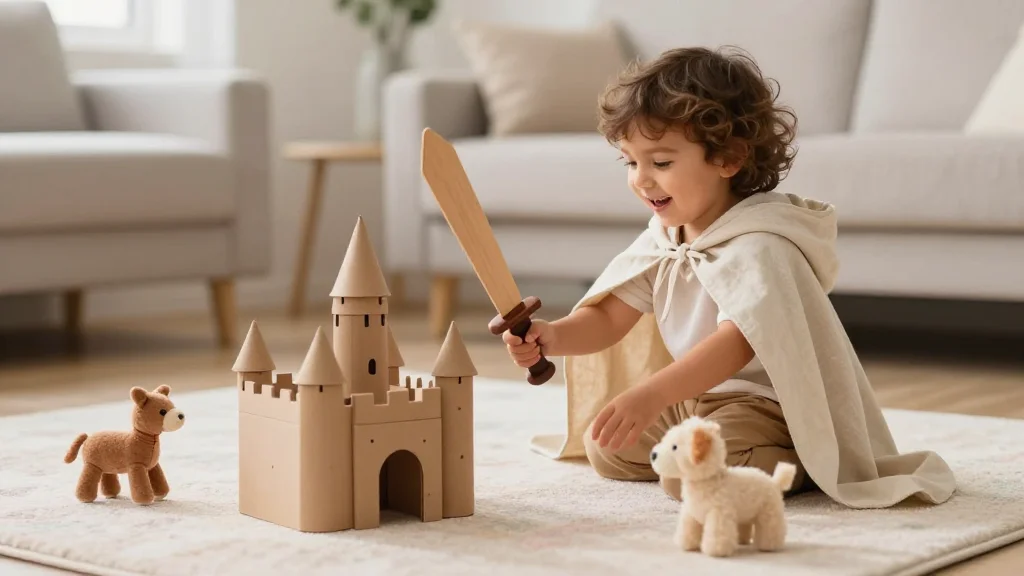
Australian Study Links Early Pretend Play to Better Child Mental Health

Why It Matters
Early childhood is a critical window for brain development, and this study provides concrete evidence that imaginative, child‑led play can influence mental‑health trajectories. By identifying pretend play as a protective factor, the research offers parents a tangible, low‑cost strategy to bolster resilience before formal schooling begins. For educators and policymakers, the findings challenge the trend toward highly structured early‑learning models, urging a re‑balance that safeguards time for free, creative exploration. If the link holds across diverse populations, integrating play‑focused interventions could reduce the future burden on mental‑health services, especially given that one in seven Australian children currently experience emotional or behavioural difficulties. The study also opens a new research frontier into the neurocognitive pathways that connect early play with later wellbeing, potentially informing therapeutic approaches for at‑risk youth.
Key Takeaways
- •Study of 1,400 Australian children links strong pretend‑play ability at ages 2‑3 to fewer mental‑health issues at ages 4‑7.
- •Researchers controlled for socioeconomic status, maternal mental health, language ability and parent‑child relationship security.
- •Emotional regulation did not mediate the relationship, suggesting other developmental mechanisms.
- •Findings highlight the mental‑health value of unstructured, child‑led play amid rising screen time and overscheduling.
- •Authors call for parents, educators and policymakers to preserve and promote imaginative play in early childhood.
Pulse Analysis
The University of Sydney study arrives at a moment when early‑learning curricula worldwide are under pressure to demonstrate academic outcomes. By providing robust, longitudinal evidence that pretend play directly correlates with later mental health, the research challenges the prevailing narrative that structured instruction should dominate the preschool agenda. Historically, play has been framed as a developmental luxury; this data reframes it as a preventive health measure, aligning with public‑health models that prioritize early interventions.
From a market perspective, the findings could stimulate demand for play‑focused educational products and services. Toy manufacturers, digital‑app developers and early‑learning centers may pivot to emphasize open‑ended, imagination‑driven offerings, positioning them as evidence‑backed tools for mental‑wellness. Simultaneously, insurers and health systems might consider supporting community play programs as cost‑effective strategies to curb future mental‑health expenditures.
Looking ahead, the study’s call for deeper investigation into embodied cognition suggests a multidisciplinary research agenda, blending developmental psychology, neuroscience and education policy. If subsequent work confirms specific neural pathways, we could see a new class of interventions—ranging from teacher training modules to urban design guidelines—that embed play into the fabric of daily life. For parents, the actionable takeaway is clear: fostering simple, child‑led pretend scenarios today may lay the groundwork for healthier, more resilient children tomorrow.
Australian Study Links Early Pretend Play to Better Child Mental Health
Comments
Want to join the conversation?
Loading comments...