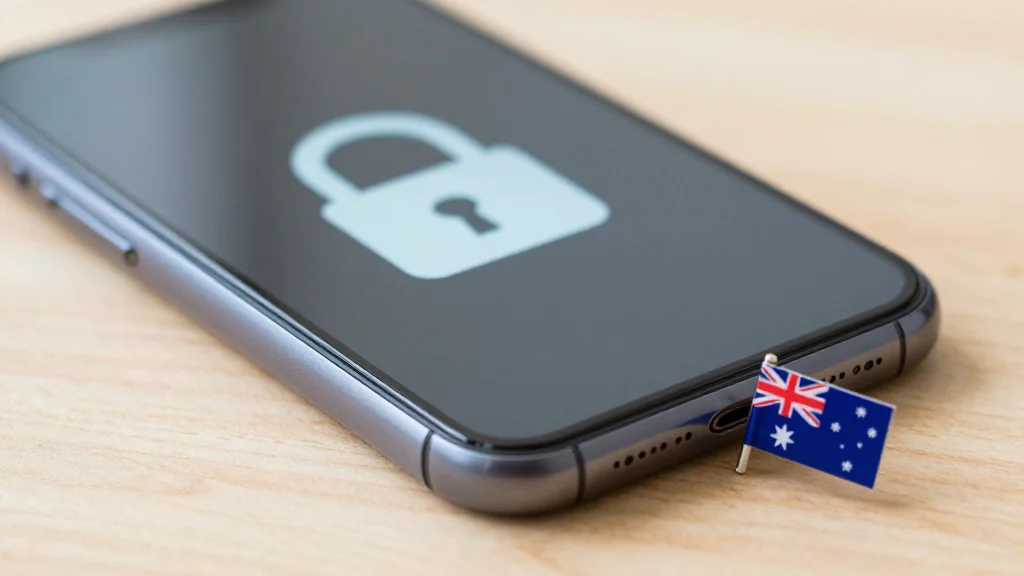
Australia’s Under‑16 Social Media Ban Falters as 75% of Teens Defy Rule

Companies Mentioned
Why It Matters
The Australian ban is the first national attempt to legally restrict social‑media access for minors, making its early results a bellwether for other governments considering similar measures. For parents, the findings highlight that legal prohibitions alone may not protect children from the mental‑health harms associated with constant online exposure. Instead, the study suggests that effective parental guidance will likely require a blend of education, community norms, and perhaps technology‑based safeguards. Globally, the policy experiment feeds into a growing conversation about digital well‑being, data privacy, and the role of the state in regulating online behavior. If Australia adjusts its approach based on the compliance data, it could set a template for more nuanced, multi‑layered strategies that combine law with incentives and platform cooperation, offering a roadmap for other nations wrestling with the same challenges.
Key Takeaways
- •Australia banned social‑media use for under‑16s in Dec 2025.
- •National Bureau of Economic Research paper finds ~75% of 14‑15‑year‑olds still use platforms.
- •Cass Sunstein says lack of penalties and peer pressure drive non‑compliance.
- •Researchers estimate a 75% compliance tipping point is needed for the ban to stick.
- •Government review scheduled for early 2027 to consider stricter enforcement or alternative measures.
Pulse Analysis
Australia’s experiment illustrates the limits of top‑down regulation in the digital age. While the ban was framed as a protective measure for mental health, the data reveal that teenage behavior is governed more by peer dynamics than by statutory authority. This mirrors earlier attempts to curb youth vaping or smoking, where legal restrictions alone failed without cultural shifts and targeted incentives.
Historically, successful public‑health interventions have combined legislation with education and community engagement. For instance, seat‑belt laws achieved high compliance after sustained public‑service campaigns and visible enforcement. In the social‑media context, a comparable approach might involve schools integrating digital‑literacy curricula, parents receiving toolkits for monitoring, and platforms offering age‑verified experiences. The NBER paper’s suggestion of a 75% compliance threshold underscores that a critical mass of offline peers is essential to reshape norms.
Looking ahead, the upcoming 2027 review will be a litmus test for policymakers worldwide. If Australia pivots toward a hybrid model—mixing modest penalties with platform‑level safeguards—it could provide a replicable framework for nations grappling with the same dilemma. Conversely, a decision to abandon the ban could reinforce the argument that legal bans are blunt instruments ill‑suited to the fluid, socially driven nature of teen internet use. Either outcome will inform how parents, educators, and regulators balance protection with autonomy in an increasingly connected world.
Australia’s Under‑16 Social Media Ban Falters as 75% of Teens Defy Rule
Comments
Want to join the conversation?
Loading comments...