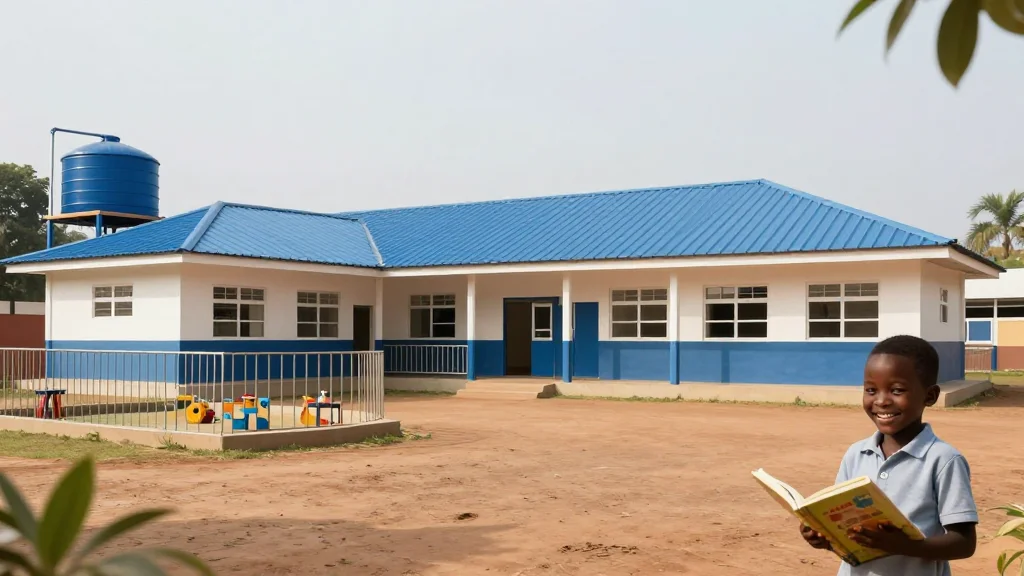
Fidelity Bank Adds Two Schools to Orange Impact Initiative in Ghana

Why It Matters
The Orange Impact Initiative directly influences parenting decisions in Ghana’s underserved regions. By improving school infrastructure, Fidelity Bank reduces barriers that often force parents to keep children at home, such as unsafe facilities or unreliable water supplies. Better learning environments also raise expectations for academic quality, prompting parents to demand more from teachers and local education officials. In the broader sense, the program demonstrates how corporate social responsibility can serve as a catalyst for systemic change, encouraging other firms to invest in community assets that support family well‑being. Moreover, the initiative aligns with Ghana’s national agenda to achieve universal primary education and improve learning outcomes. As parents witness tangible upgrades, trust in the public education system may increase, fostering higher enrollment and retention rates. This creates a virtuous cycle: educated children become future contributors to the economy, which in turn sustains community development and expands the market for financial services like those offered by Fidelity Bank.
Key Takeaways
- •Fidelity Bank commissioned two new school projects, the 12th and 13th under the Orange Impact Initiative.
- •The bank pledged to upgrade 15 marginalised schools in Ghana within five years and is on track to finish early.
- •Projects include a refurbished daycare, rainwater harvesting systems, a six‑unit classroom block and a school garden.
- •Upgraded facilities aim to improve health, attendance and learning outcomes for children and ease parental concerns.
- •The initiative reflects a growing trend of corporate‑backed education investments in Ghana.
Pulse Analysis
Fidelity Bank’s Orange Impact Initiative illustrates a strategic shift in corporate philanthropy from one‑off donations to sustained, outcome‑oriented programs. By tying infrastructure upgrades to measurable milestones—15 schools in five years—the bank creates a clear narrative for investors and stakeholders, positioning education as a long‑term growth engine for both the community and its own customer base. Historically, CSR in Ghana has been fragmented, with many firms supporting ad‑hoc scholarships or equipment grants. Fidelity’s model, which integrates construction, sustainability features and community engagement, sets a higher bar for impact accountability.
The parenting angle is crucial. In many Ghanaian districts, parents act as gatekeepers to education; their willingness to send children to school hinges on perceived safety and basic amenities. By addressing these concerns, Fidelity not only improves enrollment figures but also cultivates a future pool of financially literate customers. This creates a feedback loop: better‑educated families are more likely to use banking services, from savings accounts to micro‑loans, reinforcing the bank’s market position.
Looking ahead, the success of the Orange Impact Initiative could spur competitive CSR among Ghanaian banks and multinational firms operating in the region. If the upcoming impact assessment shows measurable gains in attendance and academic performance, it may prompt policy makers to incentivise private‑sector participation in education infrastructure. For parents, the promise of better‑equipped schools could shift expectations toward higher educational standards, potentially driving demand for supplemental services such as tutoring, digital learning platforms, and after‑school programs—sectors poised for growth in the coming years.
Fidelity Bank Adds Two Schools to Orange Impact Initiative in Ghana
Comments
Want to join the conversation?
Loading comments...