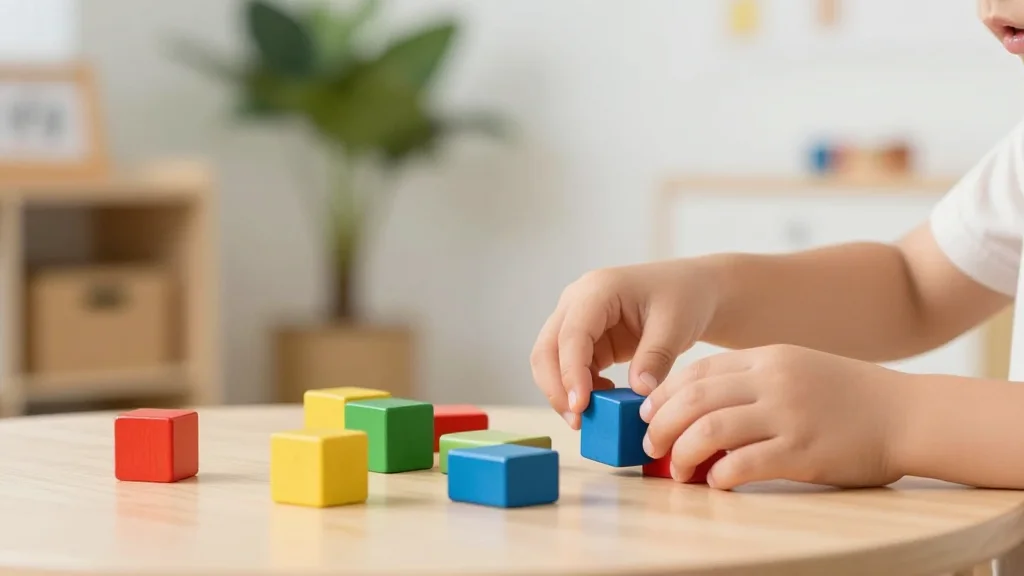
KLA Schools Study Shows Child‑Led Learning Boosts Preschool Problem‑Solving

Why It Matters
The KLA Schools case study arrives at a moment when parents are scrutinizing preschool quality beyond basic literacy and numeracy. Demonstrating that child‑led learning cultivates problem‑solving and resilience offers a tangible metric for evaluating early‑education programs, potentially reshaping enrollment decisions and funding allocations. Moreover, as schools grapple with post‑pandemic learning gaps, approaches that blend play with purposeful inquiry could provide a scalable pathway to re‑engage young learners. Beyond individual classrooms, the study could influence policy discussions around early‑childhood standards. If child‑led methodologies prove effective across socioeconomic groups, legislators may consider integrating such practices into state early‑learning guidelines, prompting a shift in teacher preparation programs and resource budgeting at the district level.
Key Takeaways
- •KLA Schools released a case study on May 12, 2026 linking child‑led learning to improved preschool problem‑solving.
- •The model uses Reggio Emilia‑inspired practices: open‑ended materials, nature investigations, and teacher‑facilitated inquiry.
- •Teachers act as guides, posing reflective questions that help children iterate and collaborate.
- •Critics warn that without clear targets, child‑led play could lack academic rigor, prompting a debate on curriculum balance.
- •KLA plans to publish longitudinal results later in 2026 to assess long‑term impact on academic performance.
Pulse Analysis
KLA Schools' case study taps into a broader shift toward experiential learning that began in the early 2000s but has accelerated as parents demand outcomes that extend beyond rote memorization. Historically, preschool curricula have oscillated between play‑based and academic‑focused models; the current data point suggests a hybrid approach can deliver measurable skill development without sacrificing the intrinsic motivation that play provides. By framing problem‑solving as a natural by‑product of child‑led exploration, KLA positions itself at the intersection of early STEM initiatives and social‑emotional learning, two domains that have traditionally been siloed.
From a market perspective, the study could catalyze a wave of investment in flexible classroom infrastructure—modular furniture, natural material kits, and digital platforms that capture child‑generated data. Venture capital firms have already earmarked funds for ed‑tech solutions that track developmental milestones; a validated child‑led framework offers a clear use case for such technologies. However, scaling will require robust teacher training, as the efficacy of the model hinges on educators' ability to observe, interpret and extend children's interests without imposing rigid scripts.
Looking ahead, the real test will be whether longitudinal data confirms that early gains in problem‑solving translate into higher achievement in later grades. If so, policymakers may embed child‑led learning metrics into state early‑learning standards, prompting a systemic re‑evaluation of how preschool success is measured. For now, KLA Schools' findings provide a data‑driven narrative that could reshape parental expectations and industry offerings alike.
KLA Schools Study Shows Child‑Led Learning Boosts Preschool Problem‑Solving
Comments
Want to join the conversation?
Loading comments...