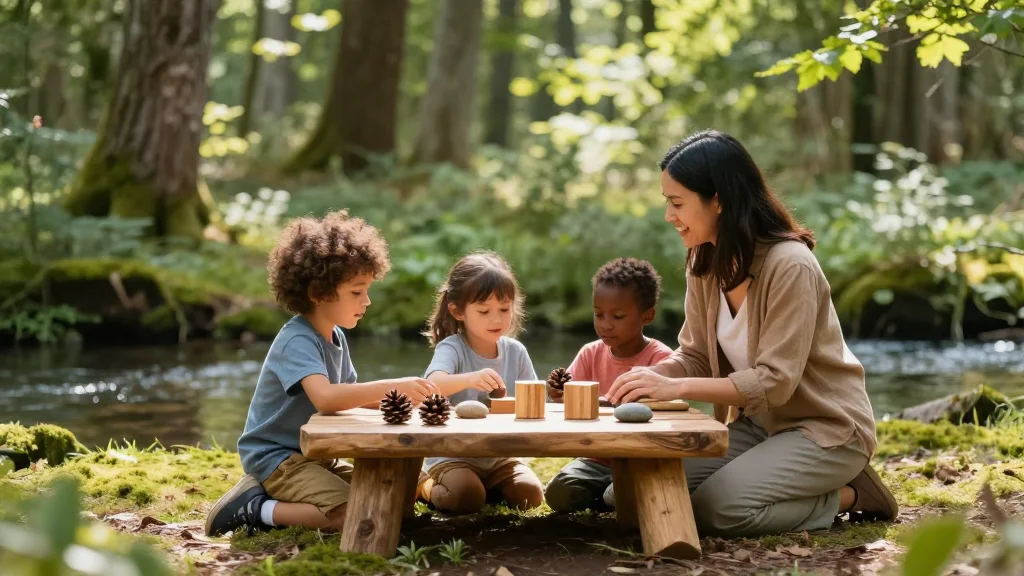
Michigan Launches Nation's First Fully Licensed Outdoor Preschool in Lansing

Why It Matters
The launch of a fully licensed outdoor preschool signals a potential redefinition of early childhood education standards. By meeting state licensing requirements while delivering instruction entirely outdoors, the Fenner Nature Preschool demonstrates that regulatory frameworks can accommodate innovative learning environments. This could encourage other states to revise licensing criteria, opening doors for more nature‑based programs that address growing concerns about screen time, mental health, and climate literacy. Moreover, the preschool’s emphasis on resilience and confidence aligns with parental demand for holistic development. As research increasingly links outdoor play with cognitive and socio‑emotional benefits, the success of this model may influence funding priorities, prompting public and private investors to support similar initiatives. The ripple effect could extend to teacher training, curriculum design, and even urban planning, as communities seek to embed natural spaces within early education infrastructure.
Key Takeaways
- •Michigan’s Fenner Nature Center opens the nation’s first fully licensed outdoor preschool on June 8.
- •Program serves children ages 3‑6 with year‑round, nature‑based curriculum.
- •Director Abigail Matthiesen confirms the school meets all standard learning domains outdoors.
- •Weather protocols include cutoffs for windchill, extreme heat, cold, and severe storms.
- •The model builds on a four‑year‑old indoor‑outdoor preschool, positioning Lansing as a testbed for nationwide replication.
Pulse Analysis
The Fenner Nature Preschool arrives at a moment when parents are increasingly skeptical of traditional classroom settings that prioritize screens over tactile experiences. By delivering a full curriculum outdoors, the program directly addresses concerns about children’s attention spans and mental health, offering a concrete alternative that aligns with the growing ‘nature‑first’ movement. Historically, early education has been confined to indoor spaces due to licensing and weather constraints; this initiative demonstrates that those barriers can be mitigated through thoughtful design and robust safety protocols.
From a market perspective, the preschool could catalyze a niche segment within the early‑learning industry, prompting investors to fund similar ventures that blend education with environmental stewardship. Companies that provide outdoor learning equipment, weather‑resilient infrastructure, and curriculum materials stand to benefit. Additionally, the model may influence public policy, encouraging state education boards to revisit licensing standards that have traditionally favored indoor facilities. If enrollment targets are met and academic outcomes match or exceed those of conventional preschools, the Fenner Nature Preschool could become a template for a new generation of licensed outdoor schools across the United States.
Looking ahead, the key question is scalability. While Lansing’s climate and existing nature center resources make the model feasible, replicating it in regions with harsher weather or limited green space will require adaptive strategies. Success will likely hinge on partnerships with local parks, community organizations, and weather‑responsive design innovations. Should these challenges be overcome, the outdoor preschool could evolve from a singular experiment into a cornerstone of early education reform, reshaping how society views the role of nature in child development.
Michigan Launches Nation's First Fully Licensed Outdoor Preschool in Lansing
Comments
Want to join the conversation?
Loading comments...