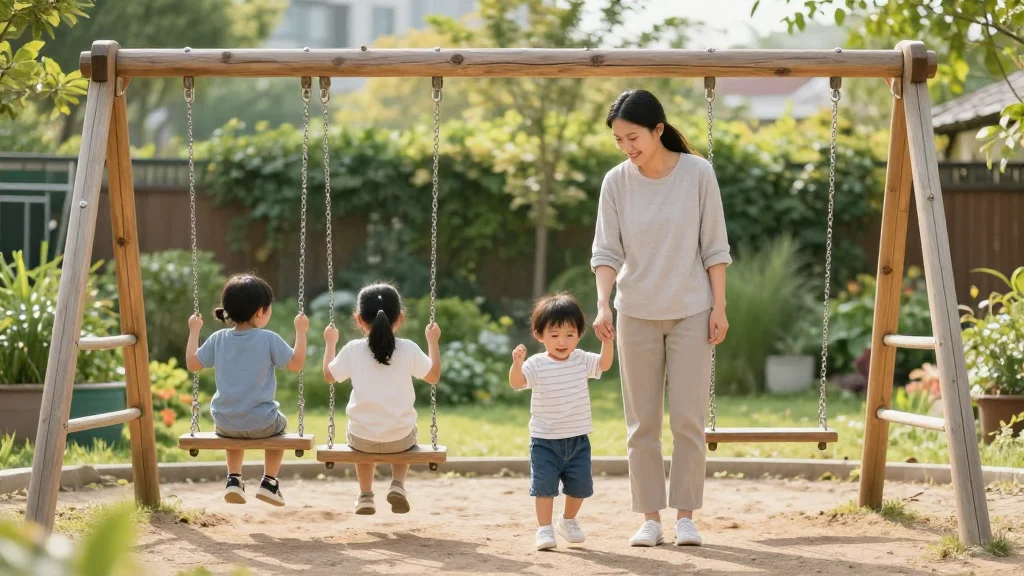
Scotland Expands Nordic‑style Open Kindergarten Pilot to Curb Family Isolation

Why It Matters
Family isolation is a growing public‑health concern that correlates with poorer mental health, reduced parental confidence, and adverse child development outcomes. By providing a structured, supportive environment where parents can connect with peers and professionals, the Open Kindergarten model tackles these issues at the community level, offering a preventative alternative to more costly interventions. If the expanded rollout proves effective, it could reshape how governments allocate resources for early‑years support, shifting focus from child‑only services to holistic family‑centred programmes. This could influence policy debates across the UK about integrating mental‑health support into early‑education settings, potentially setting a new standard for parental wellbeing initiatives.
Key Takeaways
- •Open Kindergarten pilot expanded to 11 sites across the Lothians
- •Program now serves over 225 families experiencing social isolation
- •Independent evaluation by the Open University confirmed mental‑health benefits
- •Additional Whole Family Wellbeing Fund financing secured for 2026‑27
- •Model originated in Nordic countries and is being adapted for Scottish contexts
Pulse Analysis
The Open Kindergarten pilot represents a strategic pivot in Scotland’s early‑years policy, moving from child‑centric provision toward a family‑centric ecosystem. Historically, UK childcare funding has emphasized attendance and educational outcomes, often overlooking parental wellbeing. By embedding mental‑health support within the early‑years setting, PAS and its partners are testing a hybrid model that could lower long‑term social service costs while improving child development metrics.
From a competitive standpoint, the pilot positions Scotland as an early adopter of Nordic‑inspired family support, potentially giving it a policy edge over other UK nations that have been slower to integrate parental mental‑health services into early education. The involvement of the Open University adds academic rigour, ensuring that scaling decisions are data‑driven rather than anecdotal. If the forthcoming impact report validates the early gains, we may see a cascade of similar pilots in England, Wales, and Northern Ireland, each vying for a share of the Whole Family Wellbeing Fund.
Looking forward, the key challenge will be maintaining programme fidelity as it scales. Training early‑years staff to deliver both childcare and nuanced mental‑health facilitation requires sustained investment and clear standards. Moreover, the success of the model will hinge on its ability to attract diverse families, including those in rural or socio‑economically disadvantaged areas where isolation is most acute. Policymakers will need to monitor equity outcomes closely to ensure the initiative does not inadvertently widen existing gaps. If these hurdles are navigated successfully, Open Kindergarten could become a cornerstone of a more resilient, inclusive family support system across the UK.
Scotland expands Nordic‑style Open Kindergarten pilot to curb family isolation
Comments
Want to join the conversation?
Loading comments...