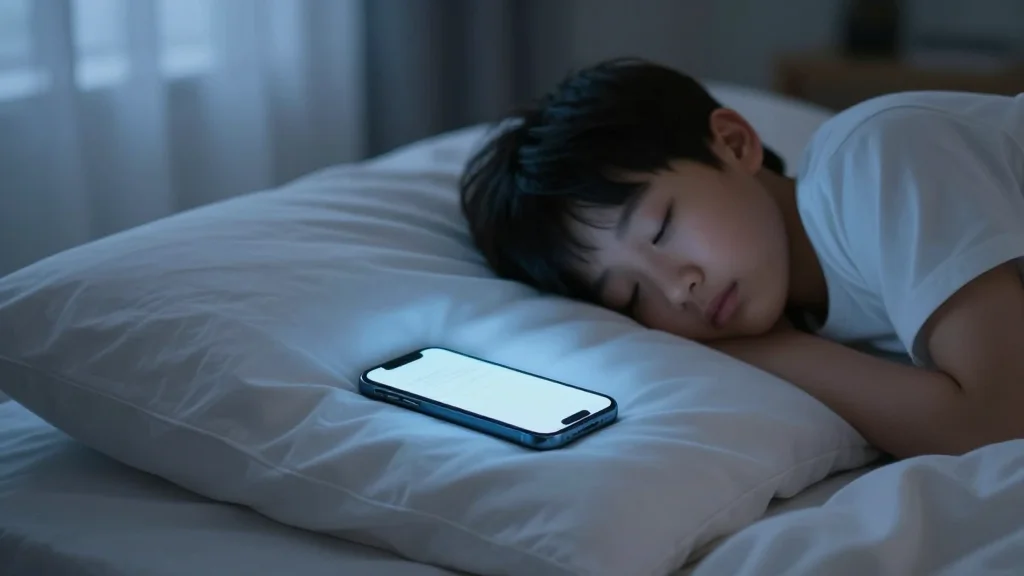
Study Finds Nearly Half of U.S. Teens Lose Critical Sleep to Late-Night Phone Use

Why It Matters
The study quantifies a behavioral shift that directly undermines the sleep hygiene essential for adolescent brain development, mental health, and academic success. By linking passive screen‑time data to sleep loss, it provides parents, educators, and policymakers with actionable evidence to justify interventions ranging from household media plans to school‑level schedule adjustments. The widening racial disparity in sleep further highlights how digital habits intersect with existing inequities, making the issue a public‑health priority that extends beyond individual families. If left unchecked, the cumulative sleep deficit could exacerbate rates of depression, obesity, and learning gaps, widening achievement gaps already evident across socioeconomic and racial lines. Conversely, effective mitigation—through parental modeling, school policies, or tech‑industry changes to notification timing—could restore critical sleep hours, improving health outcomes and narrowing educational disparities.
Key Takeaways
- •UCSF study tracked 657 teens; average 50 minutes of phone use on school nights (10 p.m.–6 a.m.)
- •Nearly 50% of participants accessed phones between midnight and 4 a.m., a critical sleep window
- •Passive app tracking revealed higher usage than self‑reported estimates
- •Only 37% of 12‑13‑year‑olds and 22% of 18‑19‑year‑olds get ≥7 hours of sleep (2021‑23 data)
- •AAP recommends media‑free bedrooms; experts cite links to depression, anxiety, and poorer grades
Pulse Analysis
The UCSF study arrives at a moment when the cultural narrative around teen screen time has shifted from "just a habit" to a measurable health risk. By employing passive monitoring, the research eliminates the bias inherent in self‑reporting, delivering a clearer picture of how smartphones intrude on the biologically mandated sleep window. This methodological leap is likely to set a new standard for future digital‑behavior studies, prompting tech companies to reconsider the design of nighttime notifications.
Historically, sleep advocacy for adolescents has focused on school start times and homework loads. The current data suggest that the digital environment is now an equally potent disruptor. Parents, who have traditionally relied on “bedtime rules,” may need to adopt more technologically sophisticated controls—such as device‑wide “downtime” settings or third‑party parental‑control apps—to enforce the recommended media‑free bedroom. Schools could also integrate digital‑wellness modules into health curricula, framing screen hygiene as a core competency alongside nutrition and exercise.
Looking ahead, the convergence of sleep science, behavioral data, and policy could catalyze a multi‑pronged response. Federal health agencies might issue stricter guidelines on nighttime push notifications, while legislators could explore incentives for manufacturers that embed sleep‑friendly features. If these measures gain traction, the next generation of teens could reclaim the 8‑10 hours of sleep deemed essential for cognitive development, potentially narrowing the mental‑health and achievement gaps that have widened over the past decade.
Study Finds Nearly Half of U.S. Teens Lose Critical Sleep to Late-Night Phone Use
Comments
Want to join the conversation?
Loading comments...