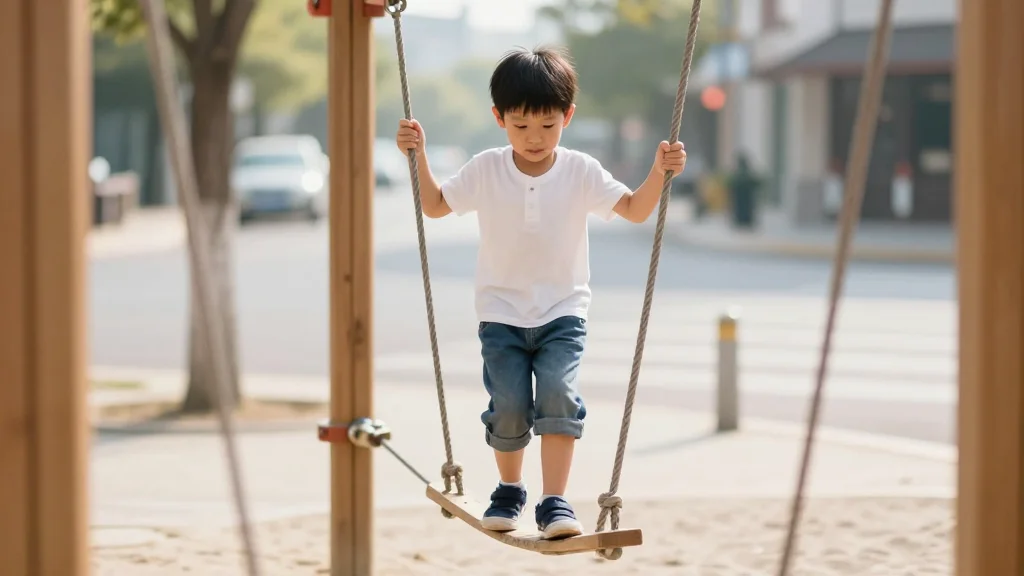
Study Finds Risky Play Sharpens Kids' Decision‑Making, Boosts Street‑Crossing Safety

Why It Matters
The study reframes risk in childhood from a liability to a developmental asset, offering evidence that measured physical challenges can improve neural pathways tied to decision‑making. For parents, this translates into actionable guidance: supervised, slightly higher or more complex play structures may reduce future accidents, rather than increase them. Schools and municipalities can leverage the data to redesign playgrounds, potentially lowering long‑term healthcare costs associated with traffic‑related injuries among youth. Beyond immediate safety, the research touches on broader educational goals. Enhanced executive function supports academic performance, emotional regulation, and social competence. By integrating risk‑rich play into curricula, educators can nurture a generation better equipped to navigate an increasingly complex world, from navigating digital misinformation to making rapid judgments in emergency situations.
Key Takeaways
- •424 children aged 7‑11 from Norway and Canada participated in VR play and street‑crossing simulations.
- •Bolder play correlated with faster, safer decisions in a virtual traffic environment.
- •Norwegian participants showed higher risk tolerance and superior crossing performance than Canadian peers.
- •Dr. Mariana Brussoni emphasized that allowing risk is essential for child safety development.
- •Findings urge parents, schools, and policymakers to redesign play spaces with graduated challenges.
Pulse Analysis
The UBC‑Queen Maud study arrives at a moment when child‑safety legislation is tightening across North America, often mandating low‑height equipment and heightened adult supervision. Historically, the pendulum swung from the free‑range philosophies of the early 20th century to the ‘danger‑free’ playgrounds of the 1990s. This new evidence could catalyze a third shift, re‑integrating calibrated risk as a core component of early learning environments.
From a market perspective, manufacturers of playground equipment stand to benefit from a resurgence in demand for modular, height‑adjustable structures that can be safely monitored yet still challenge children. Simultaneously, insurers may reassess liability models if data shows that risk‑rich play reduces long‑term injury claims. The research also opens a niche for VR training platforms aimed at schools, offering a safe sandbox for children to practice risk assessment before confronting real‑world hazards.
Looking ahead, the longitudinal arm of the study will be critical. If early risky‑play exposure demonstrably lowers adolescent traffic accidents or improves academic outcomes, policymakers could embed risk‑tolerance metrics into early‑childhood standards. For parents, the actionable takeaway is clear: supervised, slightly more demanding play is not reckless—it is a strategic investment in their child's cognitive and physical resilience.
Study Finds Risky Play Sharpens Kids' Decision‑Making, Boosts Street‑Crossing Safety
Comments
Want to join the conversation?
Loading comments...