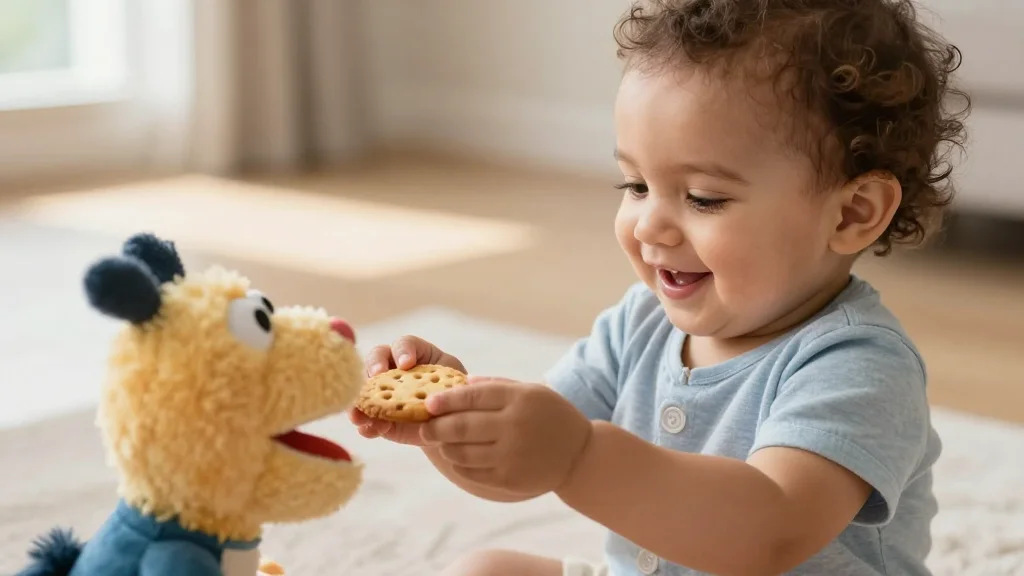
Toddlers Are Happier Giving Treats to Others than Receiving Them, Study Finds
Why It Matters
Early intrinsic pleasure from sharing indicates that the foundations of cooperation are hard‑wired, shaping how societies can nurture generosity from the start. This insight helps educators and policymakers design interventions that reinforce prosocial habits before they become habitual.
Key Takeaways
- •Toddlers smiled more when giving treats than receiving them
- •Happiness rose for both costly and non‑costly giving scenarios
- •Active sharing outperformed merely observing generosity
- •Results rule out instruction‑following as sole happiness driver
- •Study suggests intrinsic reward fuels early prosocial development
Pulse Analysis
The University of Victoria researchers used a controlled experiment to isolate toddlers' emotional response to giving. By shielding caregivers and randomizing four interaction types—costly giving, non‑costly giving, observing, and self‑reward—the team demonstrated that the act of sharing itself, not merely adult approval, triggers a measurable "warm glow" in children under two years old. This aligns with evolutionary theories that posit altruism as a fitness‑enhancing trait, offering a neuro‑psychological basis for why humans cooperate across cultures.
For parents and early‑learning programs, the study provides actionable evidence that encouraging hands‑on generosity can reinforce positive affect in young children. Simple activities like sharing snacks, toys, or collaborative play can embed a feedback loop where kindness feels rewarding, potentially reducing later behavioral issues linked to selfishness. Curriculum designers might integrate structured sharing moments, knowing that the intrinsic joy observed in toddlers can translate into stronger social bonds and classroom cohesion as children age.
Future research must expand beyond the North American sample to verify whether the intrinsic reward of giving is universal across diverse cultural contexts. Incorporating physiological metrics such as pupil dilation or skin conductance could offer objective markers of happiness, complementing facial coding. If confirmed globally, these findings could inform public policy aimed at fostering civic engagement, suggesting that early childhood interventions are a cost‑effective lever for building more cooperative societies.
Toddlers are happier giving treats to others than receiving them, study finds
Comments
Want to join the conversation?
Loading comments...