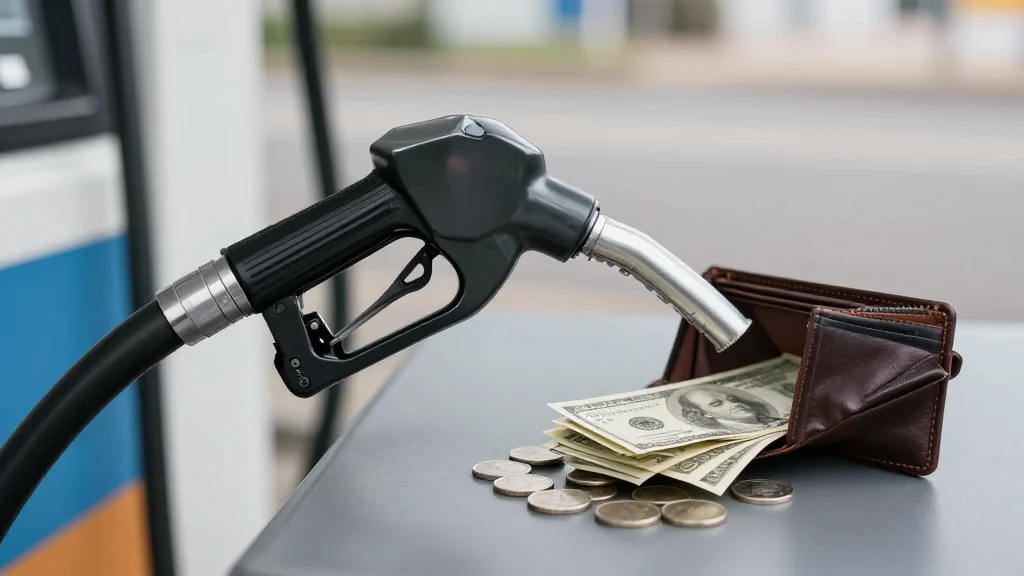
U.S. Gasoline Hits $4.24/gal, Prompting 35% Surge in Savings Withdrawals

Companies Mentioned
Why It Matters
The gasoline price surge directly erodes disposable income for millions of Americans, especially those already living paycheck to paycheck. By forcing families to withdraw from emergency‑savings accounts, the spike threatens to deplete a critical buffer that protects against unexpected expenses, potentially increasing reliance on high‑interest credit cards and deepening household debt. Moreover, the spike underscores how geopolitical events can quickly translate into personal‑finance crises, highlighting the need for more resilient budgeting tools and policy safeguards. If the trend continues, the cumulative effect could be a slowdown in consumer spending, a key driver of U.S. economic growth. Lower spending would pressure retailers, service providers, and even the labor market, creating a feedback loop that could exacerbate inflationary pressures while simultaneously tightening household finances. Understanding and addressing this nexus between fuel costs and personal savings is essential for policymakers, financial institutions, and consumers alike.
Key Takeaways
- •Regular gasoline rose to $4.24 per gallon, a 28% increase from April 2025.
- •Emergency‑savings withdrawals for transportation jumped 35% year‑over‑year.
- •National personal‑savings rate fell to 3.6% in March 2026, below the 8.4% long‑run average.
- •Average household faces an additional $857 in fuel costs for the rest of 2026.
- •53% of Americans lack enough liquidity to cover a $1,000 emergency.
Pulse Analysis
The current fuel shock is a textbook case of external risk translating into a personal‑finance crisis. Historically, spikes in oil prices have led to short‑term consumer pullback, but the depth of today’s savings depletion is unusual. The 35% rise in transportation‑related withdrawals suggests that many workers are treating fuel as a non‑discretionary expense that cannot be postponed, unlike other cost‑of‑living items that can be trimmed. This behavior signals a shift from discretionary to survival‑mode spending, which could depress retail sales and delay recovery from the lingering post‑pandemic inflationary environment.
From a market perspective, the surge may accelerate demand for fintech solutions that help users buffer volatile expenses. Products such as automated savings buffers, real‑time budgeting alerts, and low‑interest credit lines tied to fuel price indices could see heightened adoption. Meanwhile, traditional banks may see a rise in credit‑card balances and delinquency rates as consumers resort to revolving credit to cover pump costs. Financial institutions that proactively offer fuel‑price hedging tools or partner with employers to enhance emergency‑savings programs could differentiate themselves in a crowded market.
Policy implications are equally stark. While short‑term tax credits or subsidies could provide immediate relief, they risk creating dependency without addressing the underlying volatility of global oil markets. A more sustainable approach might involve expanding the tax‑advantaged status of employer‑sponsored emergency savings, encouraging broader participation, and incentivizing employers to match contributions. Additionally, investing in alternative transportation infrastructure—public transit, electric‑vehicle charging networks, and car‑pool platforms—could reduce long‑term exposure to fuel price swings, delivering both environmental and financial resilience for American households.
U.S. Gasoline Hits $4.24/gal, Prompting 35% Surge in Savings Withdrawals
Comments
Want to join the conversation?
Loading comments...