If I’m So Unhappy, Why Aren’t I Worse Off?
Key Takeaways
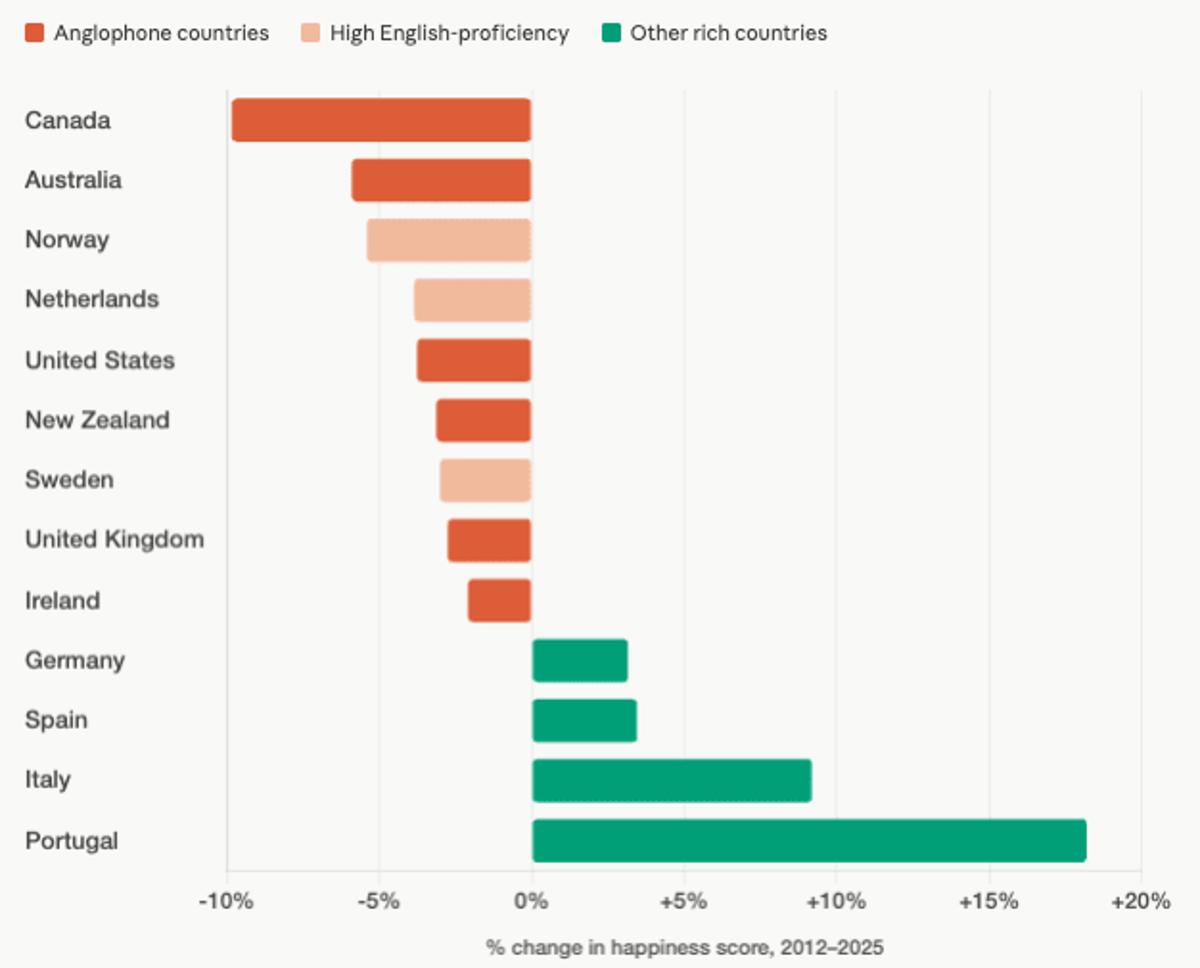
- •NYT data shows happiness scores fell 5% in Anglophone nations since 2012.
- •Countries with high English proficiency saw steeper declines than other rich nations.
- •Economic gains outpaced well‑being, suggesting income isn’t sole happiness driver.
- •Policymakers may need mental‑health initiatives to counter rising discontent.
Pulse Analysis
The New York Times’ recent happiness report underscores a paradox: as disposable incomes climb, self‑reported well‑being is eroding. The chart spanning 2012‑2025 shows a 5‑percent drop in average happiness for the United States, Canada, the United Kingdom, and Australia, while nations such as Germany and Japan exhibit modest or flat trends. Researchers attribute the divergence to factors that GDP cannot capture—social isolation, heightened expectations, and the relentless pace of digital life—creating a measurable gap between wealth and life satisfaction.
Economists point to several intertwined drivers behind the downturn. Income inequality, even in high‑income societies, fuels relative deprivation, while the ubiquity of social media amplifies comparison and anxiety. Moreover, labor market shifts toward gig work and remote arrangements blur work‑life boundaries, increasing stress despite flexible schedules. These dynamics suggest that traditional measures of prosperity are insufficient; policymakers must integrate mental‑health metrics, community cohesion initiatives, and work‑life balance policies to restore a sense of collective well‑being.
For investors and corporate leaders, the trend signals a strategic imperative. Employee burnout and consumer sentiment directly affect productivity, brand loyalty, and market demand. Companies that prioritize employee mental health, transparent compensation, and purpose‑driven culture are likely to outperform peers as the talent pool increasingly values holistic well‑being. Likewise, governments that embed well‑being indicators into fiscal planning can better allocate resources toward education, health, and social infrastructure, ultimately aligning economic growth with genuine human flourishing.
If I’m So Unhappy, Why Aren’t I Worse Off?
Comments
Want to join the conversation?