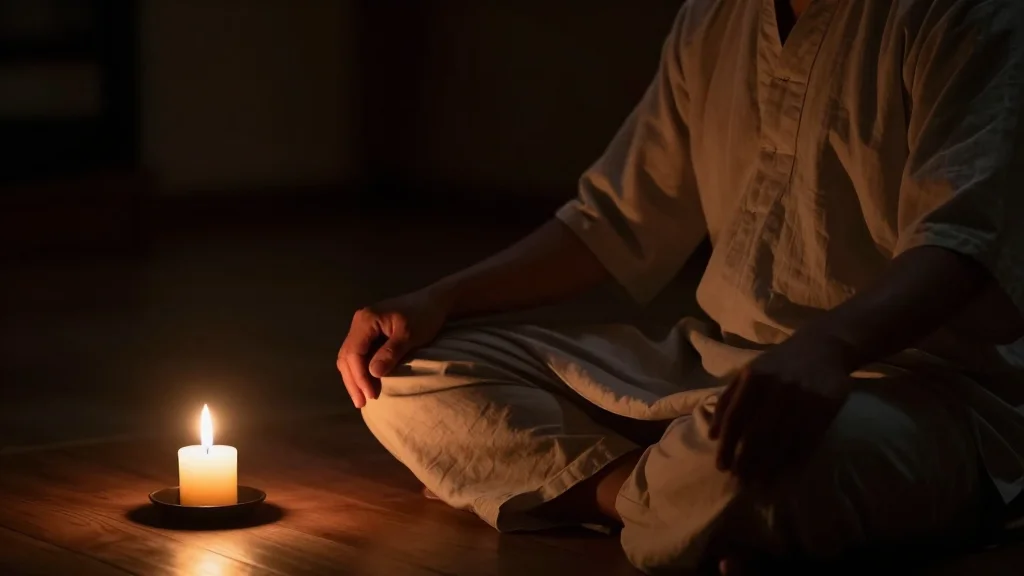
Andrew Holocek Releases 'Total Eclipse of the Mind' On Dark Retreat Practice

Why It Matters
Dark retreat represents a shift from the conventional focus on illumination and positivity toward an acceptance of inner voids as fertile ground for growth. If Holocek’s guide proves effective, it could broaden the toolkit of self‑improvement strategies, offering a low‑cost, low‑technology method for deep introspection. Moreover, the practice aligns with emerging research on sensory deprivation’s role in enhancing creativity and emotional processing, potentially bridging ancient contemplative traditions with modern neuroscience. The book also raises questions about accessibility and safety. While seasoned meditators may navigate prolonged darkness with minimal risk, newcomers could encounter anxiety or disorientation. The dialogue sparked by Holocek’s release may prompt the development of standardized protocols, ensuring that the benefits of darkness are realized without compromising mental health.
Key Takeaways
- •May 26, 2026: Andrew Holocek publishes Total Eclipse of the Mind, a guide to dark retreat.
- •Holocek claims dark retreat is "the most transformative practice" he has ever done.
- •Reviewer Carl Gregg endorses the book, noting its practical step‑by‑step approach.
- •The guide outlines home setups, physiological management, and how to find retreat centers.
- •Potential market impact includes new retreat offerings, certification programs, and research interest.
Pulse Analysis
Andrew Holocek’s entry into the personal‑growth market with a dark‑retreat manual signals a maturation of niche contemplative practices into mainstream self‑help literature. Historically, the wellness industry has gravitated toward light‑based metaphors—"enlightenment," "bright future," "positive thinking." Holocek flips this script, positioning darkness as a generative force. This reframing could attract individuals fatigued by the relentless optimism of popular self‑help, offering a counter‑cultural appeal that resonates with the current cultural moment of embracing vulnerability and shadow work.
From a commercial perspective, the book’s release may catalyze a micro‑industry around dark‑retreat logistics. Existing meditation studios might diversify their offerings, while new startups could emerge to supply blackout equipment, monitoring devices, and guided audio tracks designed for sensory deprivation. If early adopters report measurable gains in creativity or emotional regulation, investors could see dark retreat as a low‑overhead, high‑impact product line, similar to the rise of breathwork apps a few years ago.
Looking ahead, the real test will be empirical validation. Academic labs are beginning to explore the neurobiological effects of darkness, and Holocek’s claim that it outperforms multi‑year retreats will invite scrutiny. Should rigorous studies confirm his assertions, the practice could transition from fringe to evidence‑based, reshaping curricula in psychotherapy, corporate training, and even education. Until then, the conversation will likely oscillate between enthusiasm for a novel growth tool and caution about its psychological risks.
Andrew Holocek releases 'Total Eclipse of the Mind' on dark retreat practice
Comments
Want to join the conversation?
Loading comments...