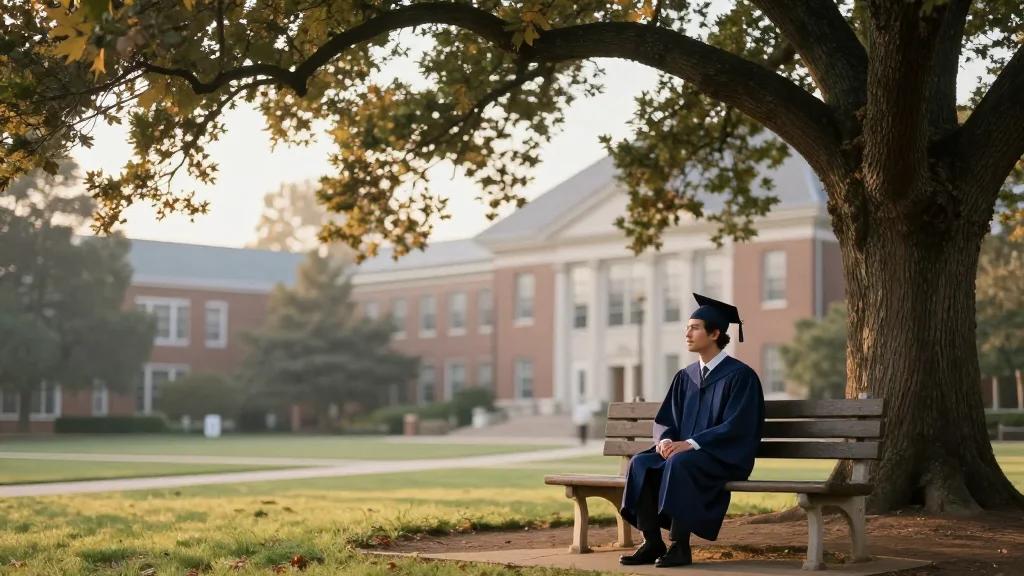
Arthur Brooks Gives Vanderbilt Class of 2026 a Purpose‑Driven Homework Assignment

Why It Matters
Embedding a purpose‑focused assignment into a high‑profile graduation ceremony signals a shift in how universities view their responsibility for student well‑being. By moving the conversation from optional counseling services to a collective, ritualized moment, Vanderbilt is positioning personal growth as a core outcome of higher education, not a peripheral add‑on. If the assignment proves effective, it could inspire other institutions to adopt similar practices, potentially creating a new norm where graduates leave campus with a concrete, evidence‑based roadmap for lifelong happiness and meaning. This could also drive research collaborations between psychology departments and alumni offices, generating data on how purpose‑oriented interventions affect career satisfaction, mental health and civic engagement.
Key Takeaways
- •Arthur C. Brooks assigned Vanderbilt’s Class of 2026 a homework to reflect on purpose and well‑being
- •The assignment asks students to ask ‘Why are you alive?’ and ‘What would you give your life to right now happily?’
- •Brooks urged device‑free reflection, calling it ‘productive boredom’ to engage the brain’s right‑hemisphere mode
- •University leaders, including Chancellor Daniel Diermeier, endorsed the initiative during the Graduates Day ceremony
- •A follow‑up alumni forum and fall‑semester mindfulness seminars will track the assignment’s impact
Pulse Analysis
Arthur Brooks’ graduation‑day homework is more than a symbolic gesture; it taps into a growing market for purpose‑driven personal development that has exploded in the last decade. Companies like Headspace and Calm have monetized mindfulness, while universities have launched wellness centers, yet few have embedded such practices into a rite of passage. By anchoring the assignment to a public ceremony, Vanderbilt leverages social proof and peer accountability—two powerful levers in behavior change theory.
Historically, higher‑education institutions have focused on academic achievement and career placement. The shift toward holistic development mirrors the rise of positive‑psychology research, which links purpose to lower mortality, higher earnings and greater civic participation. Brooks, a prolific author of best‑selling books on happiness, brings academic credibility that can help bridge the gap between scholarly findings and student action. If alumni report higher satisfaction in the upcoming reunion, the model could become a replicable template for other elite schools seeking to differentiate their alumni experience.
Looking ahead, the real test will be data. Vanderbilt’s plan to monitor reflections through an optional forum and a longitudinal study could provide rare empirical evidence on the efficacy of purpose‑focused homework. Success could attract funding from philanthropy focused on mental‑health outcomes, while failure might reinforce skepticism about institutional overreach into personal belief systems. Either way, Brooks’ initiative forces the higher‑education sector to confront the question of whether a graduation speech can be a catalyst for lifelong well‑being.
Arthur Brooks Gives Vanderbilt Class of 2026 a Purpose‑Driven Homework Assignment
Comments
Want to join the conversation?
Loading comments...