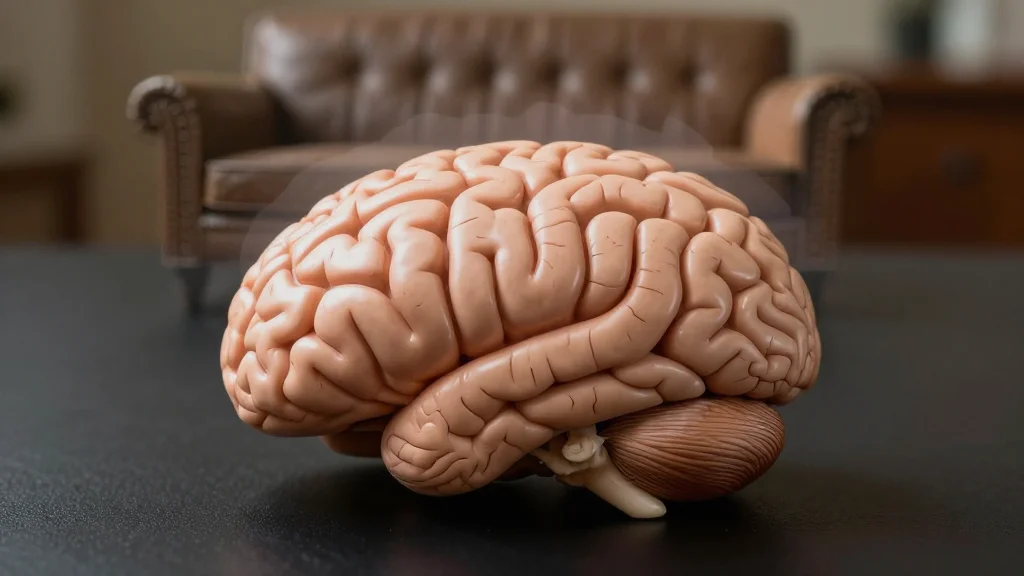
Freud's Century-Old Ideas Are Colliding with Modern Brain Science in Ways that Could Change How Minds Are Treated
Why It Matters
Uniting two century‑old and cutting‑edge frameworks offers a more comprehensive view of mental illness, potentially accelerating more effective, relationship‑focused treatments. This convergence also provides a scientific basis for traditionally subjective psychoanalytic concepts, inviting broader acceptance in clinical research and practice.
Key Takeaways
- •Freud's concepts align with brain's predictive processing model.
- •Prediction paradigm explains projection as expectation-driven perception.
- •Rigid mental patterns act as stable but inflexible predictive models.
- •Integrating psychoanalysis and neuroscience may improve psychotherapy outcomes.
- •New framework offers scientific grounding for subjective experience.
Pulse Analysis
The predictive‑processing model has become a cornerstone of modern cognitive neuroscience, describing the brain as a constant hypothesis‑testing engine that minimizes surprise. By framing Freud’s ideas of unconscious drives and projection as early phenomenological accounts of prediction, researchers are bridging a gap that has persisted for over a century. This interdisciplinary lens reframes classic psychoanalytic constructs in terms of neural inference, offering a mechanistic vocabulary that can be empirically tested with neuroimaging and computational modeling.
Clinically, the synthesis suggests that entrenched psychiatric symptoms—such as chronic paranoia or an internal critical voice—may reflect overly rigid predictive schemas. When expectations are misaligned with reality, the brain clings to familiar patterns to reduce uncertainty, even at the cost of distortion. Therapeutic interventions that deliberately introduce novel relational experiences, especially within the therapist‑patient dyad, can serve as corrective prediction errors, gradually reshaping both conscious cognition and procedural memory. This perspective supports a more nuanced, relationally oriented psychotherapy that targets the underlying predictive architecture rather than merely addressing surface‑level thoughts.
Beyond treatment, the convergence invites a new research agenda where psychoanalytic case studies inform computational models, and vice versa. Funding bodies and academic institutions are likely to prioritize projects that demonstrate measurable neural correlates of subjective experience, accelerating translational pipelines. For the mental‑health industry, this could translate into hybrid diagnostic tools that combine psychodynamic assessments with predictive‑processing biomarkers, paving the way for personalized, evidence‑based care that honors both brain biology and lived experience.
Freud's century-old ideas are colliding with modern brain science in ways that could change how minds are treated
Comments
Want to join the conversation?
Loading comments...