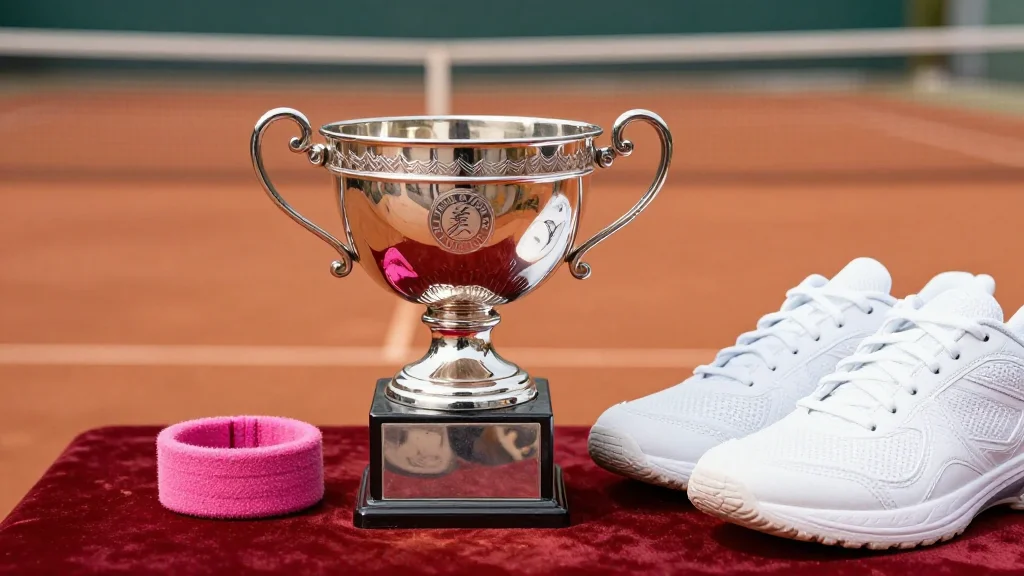
Mirra Andreeva Credits Self‑Praise for French Open Triumph

Why It Matters
Andreeva’s story bridges elite sport and everyday personal‑growth strategies, showing that self‑affirmation is not merely a feel‑good mantra but a concrete tool that can shape outcomes under extreme pressure. By vocalizing her internal dialogue, she normalizes the practice for a broader audience, encouraging readers to experiment with similar techniques in work, education, and health. The episode also underscores the role of professional support—psychologists, coaches, and mentors—in translating abstract concepts into actionable habits. As mental‑fitness becomes a mainstream component of performance, Andreeva’s example may inspire programs that integrate self‑praise into curricula, corporate training, and therapeutic settings.
Key Takeaways
- •Mirra Andreeva won the French Open singles title, defeating Maja Chwalinska 6‑3, 6‑2.
- •She publicly thanked herself for belief and effort, highlighting self‑affirmation.
- •Psychologist Alexis Castorri taught her to visualize a "big stop sign" to curb emotions.
- •Coach Conchita Martínez has guided Andreeva since 2024, overseeing five WTA titles.
- •Andreeva’s approach offers a high‑profile case study for personal‑growth and mental‑training programs.
Pulse Analysis
Andreeva’s victory illustrates a convergence of performance psychology and personal‑development rhetoric that has been gaining traction in the last decade. While self‑affirmation has long been a staple in corporate leadership workshops, its adoption by a Grand Slam champion provides empirical weight that could shift how sports psychologists market their services. Historically, elite athletes relied on stoic discipline; the modern shift toward overt self‑praise signals a cultural change where vulnerability and self‑recognition are seen as strengths rather than weaknesses.
From a market perspective, Andreeva’s endorsement of mental‑training tools may accelerate investment in sports‑psychology startups that offer digital visualization apps, biofeedback wearables, and AI‑driven coaching platforms. Companies that can quantify the ROI of self‑affirmation—through performance metrics, injury reduction, or sponsorship appeal—stand to capture a new segment of athletes and high‑performers seeking measurable mental edges.
Looking forward, the key question is scalability. Andreeva’s success is rooted in a personalized support network: a seasoned coach, a psychologist with elite experience, and a disciplined personal routine. Translating that formula to the mass market will require adaptable frameworks that respect individual differences while preserving the core principle of self‑recognition. If the sports and wellness industries can bridge that gap, Andreeva’s story could become a template for a new wave of growth‑focused performance training.
Mirra Andreeva Credits Self‑Praise for French Open Triumph
Comments
Want to join the conversation?
Loading comments...