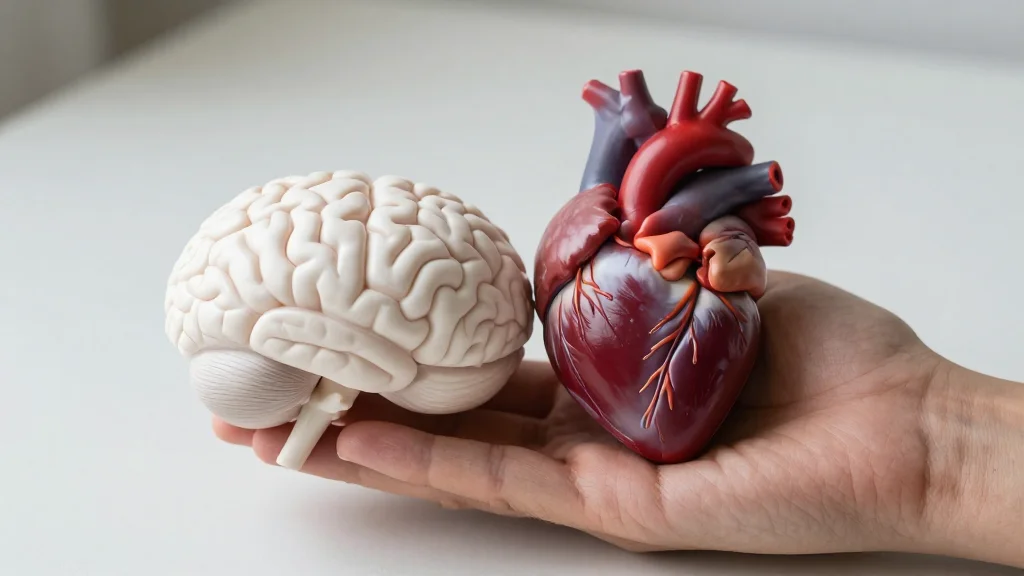
New Scientist Reveals Simple ‘Self‑Location’ Test That Predicts Thinking Style

Why It Matters
Understanding whether a person’s self‑identity is anchored in the head or the heart provides a quick lens into their decision‑making preferences, a core concern for personal development professionals. By making the abstract concepts of logic versus intuition physically observable, the exercise bridges cognitive science and everyday self‑awareness, empowering individuals to cultivate flexibility in thinking styles. If adopted widely, the test could reshape coaching methodologies, encouraging a shift from static personality typologies toward dynamic, embodied practices. This aligns with a broader movement in personal growth that values mindfulness, neuro‑plasticity, and the integration of emotional intelligence into goal‑setting and performance.
Key Takeaways
- •David Robson's New Scientist column introduces a one‑minute ‘self‑location’ task.
- •Most participants point to the head or heart, correlating with logical or intuitive thinking.
- •Research suggests shifting between head‑ and heart‑focus can improve decision quality and relationships.
- •The exercise offers a low‑cost diagnostic tool for coaches, educators, and teams.
- •Future studies may link the self‑location cue to neuroimaging evidence of brain activity.
Pulse Analysis
The emergence of a body‑based self‑assessment reflects a growing appetite for rapid, experiential tools in the personal‑growth market. Traditional psychometric tests—often lengthy and costly—are losing ground to micro‑interventions that promise immediate insight. Robson’s finger test taps into embodied cognition, a field that argues our mental processes are deeply rooted in physical sensations. By converting an abstract mindset into a tactile cue, the method sidesteps the analysis paralysis that can accompany more elaborate assessments.
From a commercial perspective, the simplicity of the test makes it ripe for integration into digital wellness platforms. Apps could prompt users to select a body location, log the choice, and then deliver tailored content—meditation for heart‑locators, analytical puzzles for head‑locators, or mixed modules for those who can switch fluidly. Such personalization could boost engagement metrics, a key driver of subscription revenue in the self‑improvement sector.
Historically, the head‑heart dichotomy echoes older personality frameworks like Myers‑Briggs’ Thinking vs. Feeling dimension, but it strips away the jargon and delivers a visceral experience. The challenge will be ensuring the tool does not become a gimmick; rigorous validation through longitudinal studies will be essential to maintain credibility. If the scientific community can substantiate the link between self‑location and measurable outcomes—such as reduced decision fatigue or improved relationship satisfaction—the test could evolve from a curiosity column into a staple of evidence‑based coaching.
In the next year, we may see pilot programs in corporate training that embed the exercise into leadership development curricula. Success stories could catalyze broader adoption, positioning the head‑heart self‑location test as a low‑tech complement to AI‑driven personality analytics. The convergence of embodied psychology and scalable digital delivery could redefine how individuals and organizations approach mindset flexibility.
New Scientist Reveals Simple ‘Self‑Location’ Test That Predicts Thinking Style
Comments
Want to join the conversation?
Loading comments...