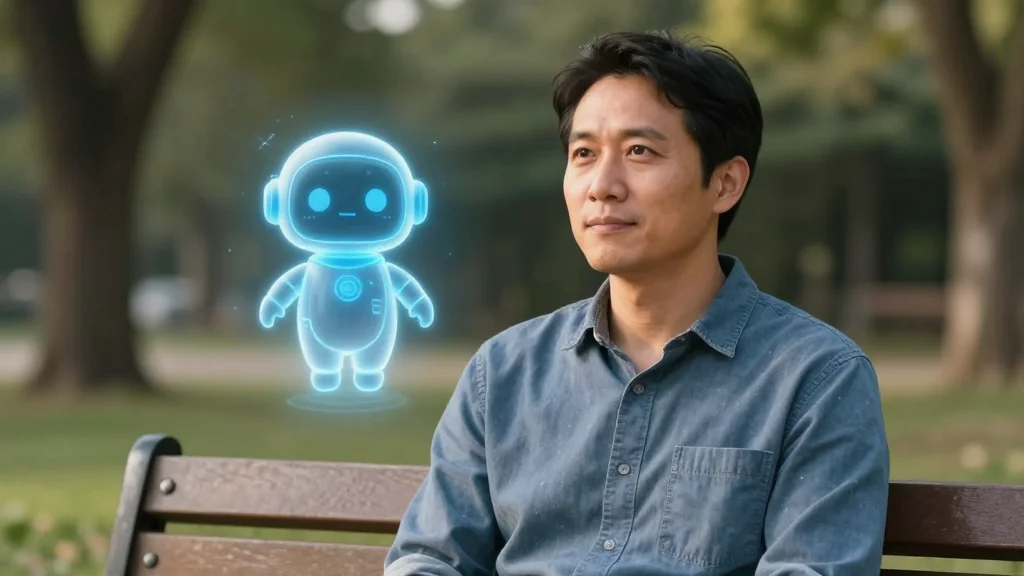
Study Finds 78% of Workers Personify AI as They Seek Personal Support, Sparking Leadership Alarm

Why It Matters
The findings spotlight a hidden dimension of the AI rollout: its effect on mental health and social cohesion at work. As AI becomes a default confidant, employees may miss out on the empathy and nuanced feedback that only human peers can provide, potentially increasing turnover and lowering overall productivity. For the personal growth market, the trend signals a demand for tools and services that blend AI efficiency with human‑centered coaching, creating a new niche for hybrid support platforms. Moreover, the leadership critique underscores that AI adoption is not a purely technical challenge but a cultural one. Organizations that fail to address the human side risk reputational damage and regulatory scrutiny around employee well‑being. Conversely, firms that embed empathy into AI strategies can differentiate themselves, attract talent, and set new standards for responsible technology use.
Key Takeaways
- •78% of surveyed knowledge workers use polite language with AI, treating it like a colleague.
- •28% describe AI tools as "personal assistant" or "friend," indicating strong anthropomorphism.
- •More than 50% of respondents report feeling lonely at work despite frequent AI interaction.
- •Entrepreneur analysis links AI reliance to leadership failures in judgment and context awareness.
- •Five recommended leadership actions aim to re‑center human connection in AI‑rich environments.
Pulse Analysis
The convergence of academic research and practitioner commentary reveals a paradox at the heart of the AI‑driven workplace: efficiency gains are being offset by a subtle erosion of the social contract that underpins employee engagement. Historically, technology adoption—whether email or instant messaging—has reshaped communication patterns, but the current wave of generative AI introduces a conversational partner that can simulate empathy without the messiness of real human interaction. This simulation can lull workers into a false sense of support, while the underlying loneliness persists, as the study shows.
From a strategic standpoint, leaders who view AI as a shortcut to employee satisfaction are likely to encounter backlash. The data suggests that without deliberate policy, AI becomes a crutch that masks deeper cultural deficiencies. Companies that proactively redesign AI touchpoints—by limiting voice‑first interactions, embedding prompts for peer check‑ins, and tracking social health metrics—will not only safeguard well‑being but also unlock higher productivity. The market for hybrid coaching platforms, which combine AI analytics with human mentors, is poised to expand as organizations seek scalable yet authentic development pathways.
Looking ahead, the next wave of AI governance will probably include standards for emotional safety, akin to data privacy regulations. Firms that adopt these standards early will gain a competitive edge, positioning themselves as responsible innovators in the personal growth arena. The key will be balancing the undeniable convenience of AI with the irreplaceable value of human connection—a balance that will define the future of work and personal development alike.
Study Finds 78% of Workers Personify AI as They Seek Personal Support, Sparking Leadership Alarm
Comments
Want to join the conversation?
Loading comments...