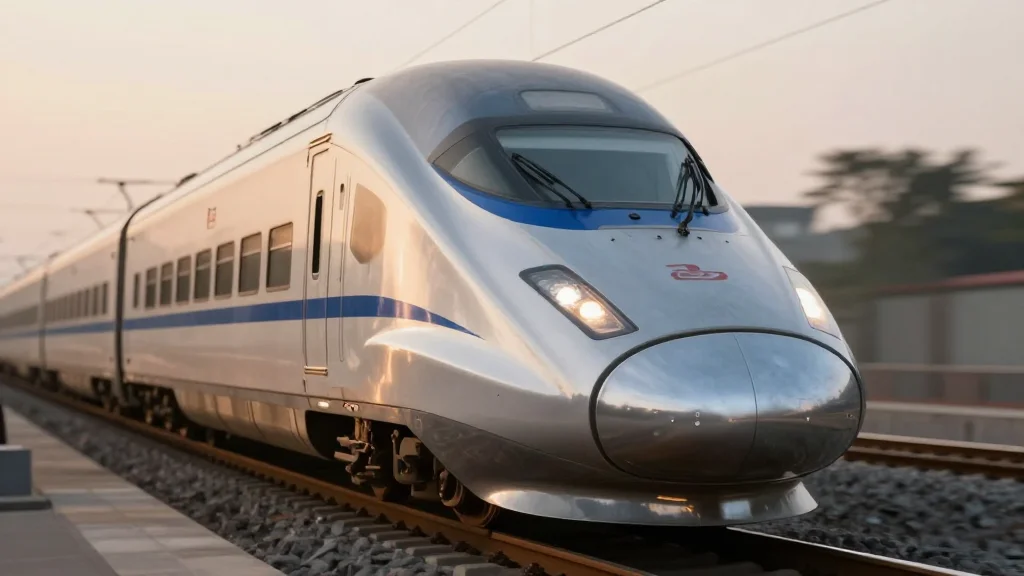
Sudhanshu Mani’s 18‑Month Sprint Built India’s Vande Bharat Express for $12 Million

Why It Matters
Sudhanshu Mani’s rapid delivery of the Vande Bharat Express demonstrates that entrenched public‑sector projects can be transformed through purpose‑driven leadership and habit‑based execution. For the personal‑growth community, his insistence on redefining work identity and embracing ownership provides a concrete method to break through inertia. The train’s success also signals that cost‑effective, locally sourced innovation is possible at scale, encouraging other leaders to apply similar frameworks in education, health and technology sectors. Beyond the railways, Mani’s post‑retirement pivot to arts highlights the synergy between technical discipline and creative pursuits—a reminder that personal development thrives on balanced growth. As more organisations look to replicate his model, the broader implication is a shift toward agile, people‑centric processes in traditionally bureaucratic environments, potentially accelerating national development goals while fostering individual empowerment.
Key Takeaways
- •Sudhanshu Mani led the 18‑month build of Vande Bharat Express, costing Rs 97 crore (~$12 M).
- •Team of 500 engineers completed the project in half the usual time (36‑42 months).
- •Mani secured Railway Board sanction by promising to build at one‑third the import cost.
- •Leadership mantra: ask ‘What is the other 75 per cent?’ to expand role perception.
- •Post‑retirement, Mani runs a Lucknow arts space, linking technical leadership with creative growth.
Pulse Analysis
Mani’s Vande Bharat story is a rare case where a public‑sector leader applied startup‑style sprint methodology to a massive infrastructure project. Historically, Indian Railways has been plagued by delays and cost overruns; Mani’s success flips that narrative by leveraging local talent, aggressive cost control and a culture of ownership. This mirrors the broader personal‑growth trend of ‘micro‑habits’—small, repeatable actions that compound into large outcomes. By reframing every employee’s role to include the unseen 75 per cent, he effectively turned a bureaucratic machine into a high‑performing team.
The financial implication is equally striking. At roughly $12 million, the Vande Bharat set cost about one‑third of comparable imported trains, delivering a high‑impact public good while preserving foreign‑exchange. This cost advantage could reshape procurement policies, encouraging ministries to adopt similar internal‑innovation pathways. However, scaling this model will require institutionalizing Mani’s habit‑centric leadership—something that may clash with entrenched hierarchies.
Looking forward, the Vande Bharat’s expansion across new corridors will test whether the agile framework can survive beyond a charismatic leader. If successful, it could catalyze a wave of purpose‑driven, habit‑focused reforms across Indian public services, offering a template for other emerging economies seeking rapid, homegrown modernization without massive external spending.
Sudhanshu Mani’s 18‑Month Sprint Built India’s Vande Bharat Express for $12 Million
Comments
Want to join the conversation?
Loading comments...