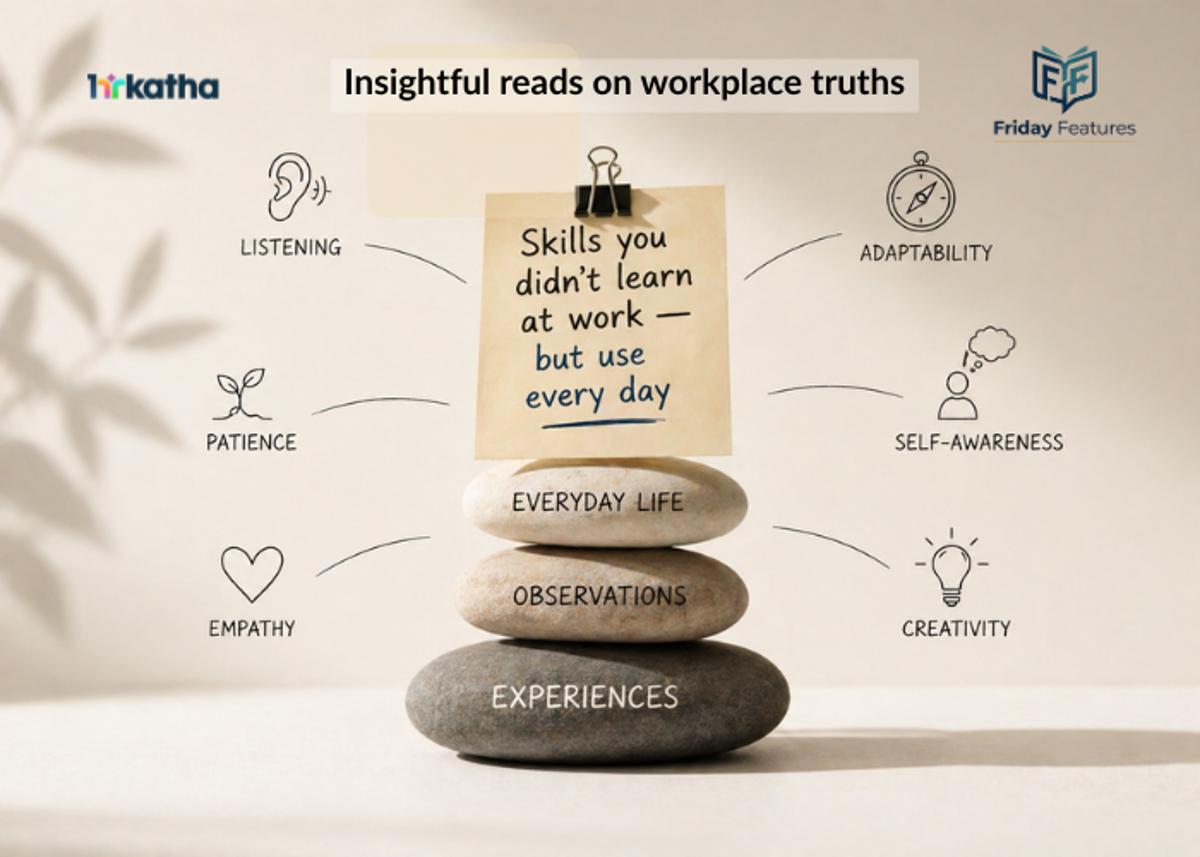
What You Didn’t Learn at Work, but Matters Most
Why It Matters
Understanding that critical competencies often arise from everyday life helps organizations tap untapped talent reservoirs, enhancing leadership pipelines and reducing reliance on costly training initiatives.
Key Takeaways
- •Listening skills often learned from family, not workshops
- •Transferring personal resilience to work requires contextual calibration
- •Artistic hobbies foster patience and creative problem‑solving in leadership
- •Self‑awareness and willingness to unlearn outweigh raw skill sets
- •Informal habits become core competencies without formal recognition
Pulse Analysis
In today’s talent‑driven economy, the line between formal training and informal learning is blurring. Research shows that up to 70% of leadership capabilities are honed through life experiences rather than classroom instruction. This shift challenges HR departments to broaden their development lens, recognizing that the quiet habits cultivated at a kitchen table or in a studio can be as potent as any certified program. By treating everyday interactions as learning opportunities, companies can foster a culture where continuous growth is embedded in daily routines.
The narratives of Atul Mathur, Shaleen Manik, and Arunima Mohanty illustrate this principle in practice. Mathur’s emphasis on genuine listening—shaped by observing his father—highlights how presence can resolve conflicts before formal solutions are applied. Manik warns that personal strengths, such as patience or competitiveness, can become liabilities if misapplied, underscoring the need for self‑awareness and the ability to unlearn outdated patterns. Mohanty’s artistic background translates into a leadership style that values iterative progress, balancing structure with creativity. For HR leaders, these stories suggest that talent assessments should capture informal skill indicators, such as empathy demonstrated in personal settings or problem‑solving approaches derived from hobbies.
To operationalize these insights, organizations can embed reflective practices into performance cycles, encouraging employees to map life‑derived habits to work outcomes. Mentorship programs can pair senior leaders with peers who exhibit strong informal competencies, facilitating knowledge transfer beyond traditional curricula. Finally, managers should create safe spaces for employees to experiment, fail, and iterate—mirroring the trial‑and‑error process of painting or parenting. By legitimizing the learning that happens outside the boardroom, firms unlock a deeper, more resilient talent pool ready to navigate today’s complex business landscape.
What you didn’t learn at work, but matters most
Comments
Want to join the conversation?
Loading comments...