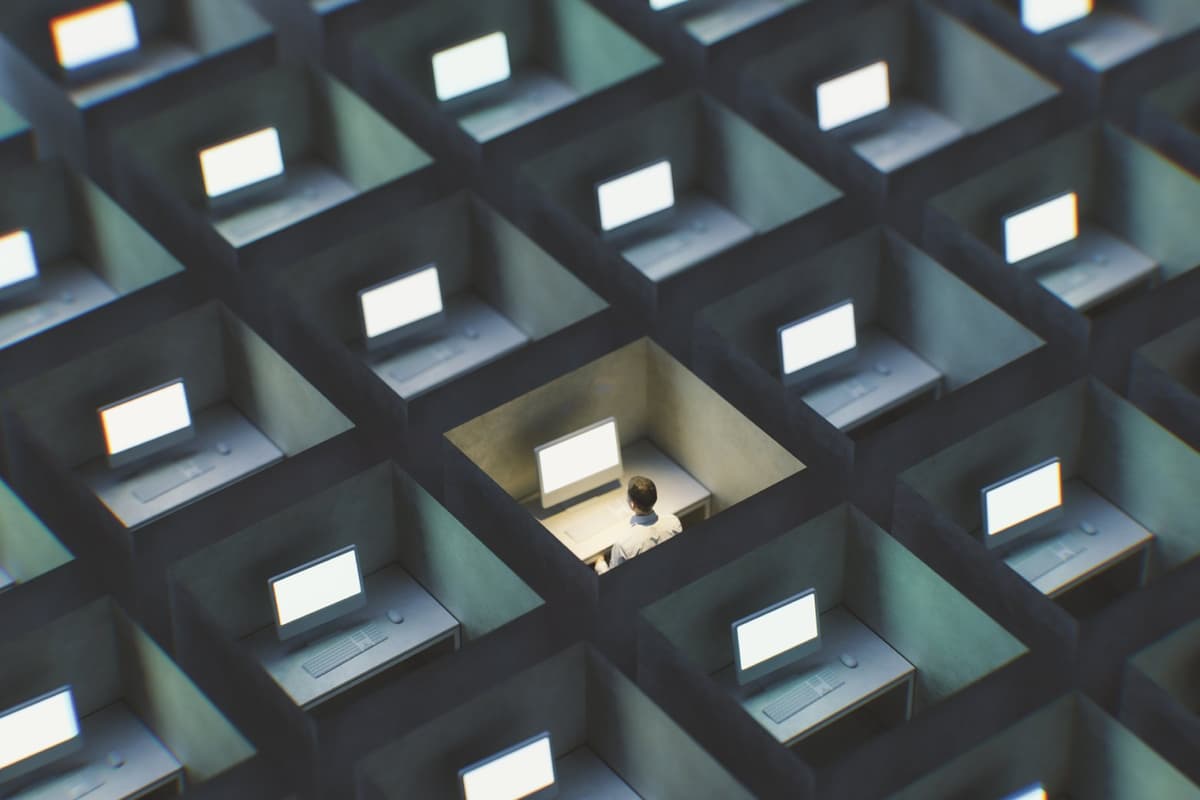
You’re Not Imagining It: Cookie-Cutter Offices Are Making You Less Productive
Why It Matters
A monotonous office environment erodes focus, innovation, and employee well‑being, directly affecting a company’s bottom line and talent retention.
Key Takeaways
- •Uniform offices diminish focus and creative thinking
- •Personal space cues engage the amygdala, influencing stress levels
- •Spatial novelty trains adaptability muscles, improving problem‑solving
- •Flexible zones and varied layouts boost deep‑work productivity
Pulse Analysis
Modern workplaces have gravitated toward sleek, interchangeable designs that prioritize cost efficiency over human cognition. Research on proxemics shows the amygdala reacts to personal‑space violations, triggering stress that hampers concentration. When desks, walls, and lighting are identical across locations, employees lose the subtle environmental cues that historically signaled new challenges and encouraged adaptive learning. The result is a subtle but measurable dip in focus, collaboration quality, and the willingness to experiment—key drivers of innovation in knowledge‑intensive firms.
Introducing spatial variety restores the brain’s natural learning loop. A mix of quiet corners, open collaboration zones, and occasional off‑site settings forces workers to renegotiate boundaries, recalibrate attention, and engage different neural pathways. Companies that embed flexible furniture, biophilic elements, and “third‑place” areas report higher rates of deep‑work sessions and lower turnover. Moreover, allowing employees to choose where they perform tasks—whether a standing desk, a glass‑walled pod, or a nearby café—leverages the same mechanisms children use to claim personal space, fostering autonomy and emotional resilience.
For leaders, the actionable path is clear: audit the current layout, identify zones of visual and functional monotony, and inject purposeful contrast. Rotate desk assignments, create pop‑up project rooms, and encourage brief “spatial sprints” where staff work from a new environment each week. Pair these changes with an "awe audit"—a habit of noting moments of wonder in everyday spaces—to reinforce the psychological benefits. By treating space as a strategic asset rather than a static backdrop, organizations can unlock higher productivity, spark creativity, and build a culture that thrives on continual spatial learning.
You’re Not Imagining It: Cookie-Cutter Offices Are Making You Less Productive
Comments
Want to join the conversation?
Loading comments...