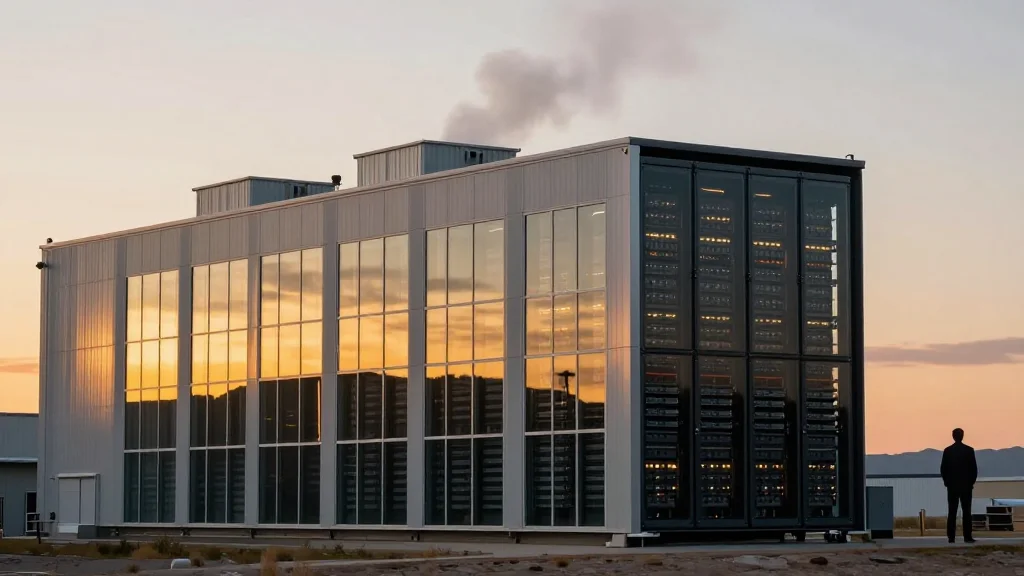
Kevin O'Leary Defends $9 GW Utah Data‑Center Plan Amid Taxpayer Subsidy Fight

Companies Mentioned
Why It Matters
The O'Leary‑Utah data‑center showdown illustrates how private‑equity capital is becoming a pivotal driver of national AI infrastructure, blurring the line between private profit and public policy. As AI workloads explode, the need for massive, low‑latency data facilities grows, and private investors are stepping in to fill the financing gap that traditional utilities and governments cannot meet alone. The controversy over taxpayer subsidies highlights the risk that political backlash could curtail future private‑equity participation in critical tech projects, potentially slowing U.S. competitiveness in the global AI race. Moreover, the case sets a benchmark for how state governments might structure incentives for large‑scale tech infrastructure. If Utah proceeds, it could spark a subsidy arms race among states, driving up public costs while attracting private capital. Conversely, a rejection could force private‑equity firms to innovate new financing mechanisms, reshaping the market dynamics for future data‑center and AI‑related investments.
Key Takeaways
- •Kevin O'Leary publicly defended Utah's 40,000‑acre Stratos data‑center project amid criticism from Tucker Carlson.
- •The project is expected to consume up to 9 GW of electricity, more than double Utah's current usage.
- •County commissioners approved the project unanimously, but opponents cite water and power strain concerns.
- •O'Leary argued that taxpayer subsidies are standard for major projects and essential to compete with China.
- •The debate may set a precedent for future private‑equity‑backed infrastructure subsidies across U.S. states.
Pulse Analysis
O'Leary’s defense of the Utah data‑center underscores a strategic shift in private‑equity: moving from traditional buy‑outs and growth equity into the realm of national‑scale infrastructure that underpins emerging technologies. By leveraging public subsidies, private‑equity firms can de‑risk capital‑intensive projects and accelerate deployment timelines, a model that mirrors historic manufacturing incentives but now applies to digital infrastructure. This approach, however, is a double‑edged sword. While it can unlock rapid capacity growth, it also exposes firms to political volatility and public backlash, especially when subsidies appear to favor a handful of tech behemoths.
Historically, the U.S. has used tax incentives to attract manufacturing plants and renewable‑energy farms, but the AI‑driven data‑center sector introduces new variables: massive power draw, water usage, and geopolitical considerations. O'Leary’s framing of the project as a counter‑measure to Chinese AI expansion taps into national security narratives, potentially making it easier to justify public funds. Yet, if legislators and voters perceive the subsidies as corporate handouts, future deals could face stricter scrutiny, higher transparency demands, or outright bans.
Looking forward, the outcome of Utah’s subsidy debate will likely ripple through the private‑equity community. A green light could embolden other firms to propose similarly large, subsidy‑dependent projects, intensifying competition among states and possibly inflating the cost of public incentives. A rejection, on the other hand, may push private‑equity sponsors toward alternative financing—such as green bonds, sovereign wealth fund partnerships, or pure equity raises—thereby reshaping the capital structure of AI infrastructure. In either scenario, O'Leary’s public sparring with Carlson signals that private‑equity leaders must now be adept not only at dealmaking but also at navigating the political arena that increasingly governs high‑tech infrastructure investment.
Kevin O'Leary Defends $9 GW Utah Data‑Center Plan Amid Taxpayer Subsidy Fight
Comments
Want to join the conversation?
Loading comments...