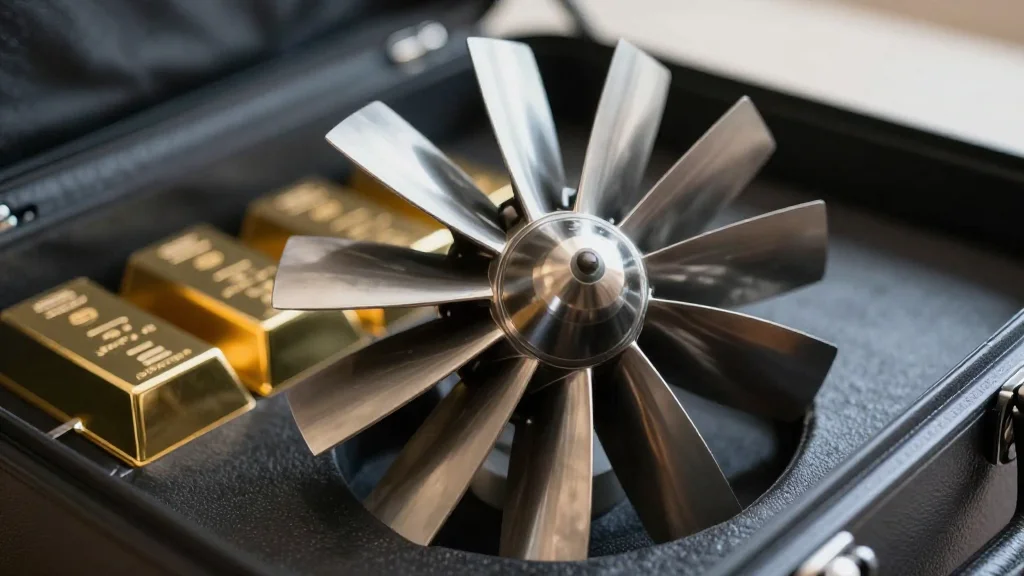
Parker‑Hannifin to Buy KKR‑Owned Circor Aerospace for $2.55 B

Companies Mentioned
Why It Matters
The transaction illustrates how private‑equity firms are capitalizing on the premium valuations of aerospace components, a sector buoyed by sustained defense spending and a resurgence in commercial aircraft production. By retaining Circor’s naval and industrial businesses, KKR maintains a diversified exposure to defense‑related markets while unlocking cash to fund new investments. For Parker‑Hannifin, the deal expands its product suite into flight‑critical motion control, a high‑margin niche that can drive earnings growth and improve its competitive stance against rivals like Honeywell and United Technologies. For the broader PE ecosystem, the $2.55 billion price tag—equating to more than 20 times EBITDA—reinforces the willingness of strategic buyers to pay a premium for specialized technology assets. This may encourage other firms to seek similar exits in aerospace, defense, and other high‑barrier industries, potentially accelerating M&A activity and reshaping the landscape of industrial private‑equity investments.
Key Takeaways
- •Parker‑Hannifin to acquire Circor Aerospace from KKR for $2.55 billion.
- •Deal values Circor Aerospace at 22.7 × 2026 EBITDA (18.2 × with synergies).
- •Circor Aerospace estimates 2026 sales of $270 million and >40 % EBITDA margin.
- •KKR retains Circor’s naval and industrial businesses, marking its fourth industrial exit this year.
- •Closing expected in H2 2026 pending regulatory approvals.
Pulse Analysis
The Parker‑Hannifin/Circor Aerospace deal is a textbook example of a strategic buyer extracting value from a private‑equity‑owned niche asset. Historically, PE firms have targeted aerospace components for their high barriers to entry, long product lifecycles, and deep integration with OEM supply chains. KKR’s decision to carve out the aerospace segment while keeping the naval and industrial arms reflects a nuanced portfolio strategy: monetize the most liquid, high‑margin piece now, and preserve exposure to longer‑term defense contracts that can deliver steady cash flows.
From Parker’s perspective, the acquisition is less about scale and more about capability. By adding flight‑critical motion and flow‑control technology, Parker can cross‑sell to its existing aerospace customers and deepen its relationship with defense programs. The projected 10 % cost‑synergy target is modest, suggesting the primary value driver is top‑line growth and margin expansion rather than aggressive cost cutting. If Parker can successfully integrate Circor’s engineering talent and leverage its Win Strategy™ framework, the combined entity could achieve double‑digit revenue growth, a metric that will be closely watched by analysts.
For the private‑equity market, the transaction sends a clear signal that high‑multiple exits remain viable in a climate of tightening credit. The 22.7‑times EBITDA multiple is well above the average for industrial deals, underscoring the premium placed on aerospace assets with proven defense contracts. This may spur other PE firms to reassess their industrial holdings, potentially igniting a wave of similar carve‑outs as investors chase comparable valuations. The deal also highlights the importance of having sophisticated strategic buyers like Parker, whose operational expertise can justify such premiums and ensure post‑deal value creation.
Parker‑Hannifin to Buy KKR‑Owned Circor Aerospace for $2.55 B
Comments
Want to join the conversation?
Loading comments...