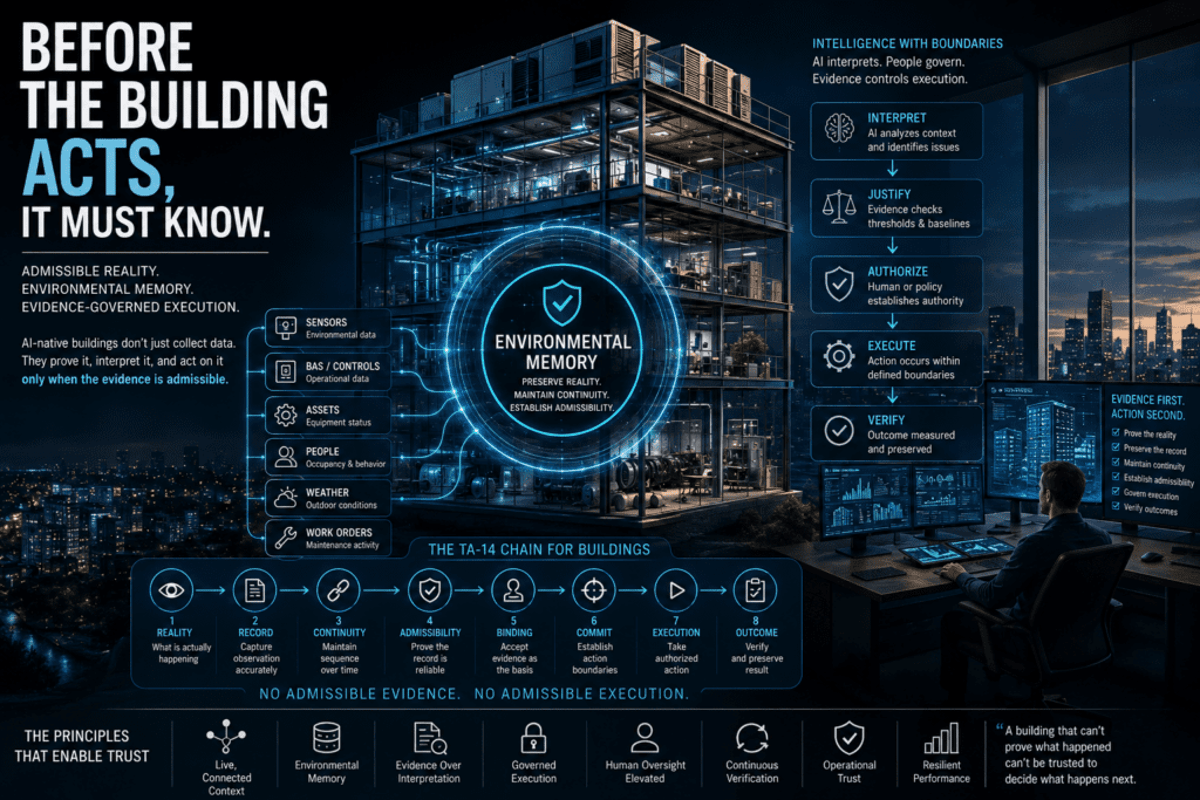
Key Takeaways
- •AI-native buildings embed decision‑making, not just reporting
- •Live data alone isn’t admissible evidence for actions
- •Environmental memory must preserve continuous, verifiable records
- •Governance requires a full chain from observation to outcome
- •Dashboards are insufficient; they must support evidence‑governed execution
Pulse Analysis
The rise of AI‑native buildings marks a fundamental shift from passive monitoring to proactive, autonomous control. While decades of connectivity, analytics, and digital twins have equipped facilities with abundant data, the new frontier demands that this data be more than a snapshot—it must become admissible evidence. In practice, this means establishing a continuous, tamper‑proof record of every sensor reading, system state, and decision point, enabling stakeholders to trace exactly how an AI recommendation was generated and validated before execution.
Achieving admissible reality requires a layered approach that starts with an accurate, up‑to‑date asset registry and semantic model. Every piece of equipment, space, and connection must be identified in real time, ensuring the AI engine reasons on a true representation of the building. From there, environmental memory—structured, governed logs of temperature, humidity, air quality, and energy use—must be captured with immutable timestamps and chain‑of‑custody metadata. This evidence layer supports not only compliance with standards like ASHRAE and Project Haystack but also provides the legal defensibility needed when autonomous actions affect occupant health or energy performance.
Finally, dashboards and user interfaces must evolve into governance tools that surface the evidentiary context behind each recommendation. Operators should see not only the AI’s suggestion but also the underlying data provenance, validation rules, and authorization pathways. By integrating these evidence‑governed mechanisms, the industry can unlock true AI autonomy while maintaining trust, safety, and regulatory compliance—turning smart buildings into reliable, defensible assets for the future.
Before the Building Acts
Comments
Want to join the conversation?