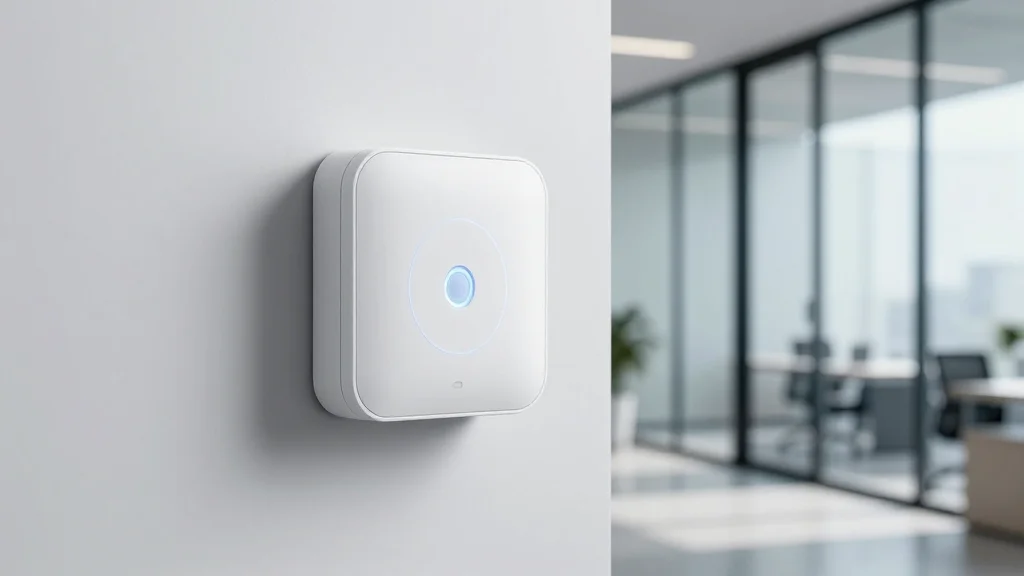
Five Global Trends Reshaping Building Automation: Occupant Well-Being Is Mission-Critical
Key Takeaways
- •Well‑being practices reduce absenteeism by 39% and boost productivity.
- •Only 25% of organizations have high occupant‑centric automation.
- •AI‑driven BAS continuously monitors and auto‑adjusts temperature, lighting, CO₂.
- •Smart edge devices cut response latency and keep systems running during outages.
- •Scalable personalization lets buildings remember individual preferences, enhancing employee experience.
Pulse Analysis
The rise of occupant‑centric building automation reflects a broader industry pivot toward health, productivity and sustainability. Companies are no longer satisfied with merely keeping HVAC systems within a narrow temperature band; they now demand environments that actively support cognitive performance and physical well‑being. Research links improved indoor air quality and adaptive lighting to lower absenteeism and higher employee engagement, making well‑being a strategic metric for CEOs and real‑estate leaders alike. This cultural shift is amplified by ESG pressures, as tenants and regulators push for greener, healthier spaces that reduce energy waste while enhancing occupant satisfaction.
Technological advances are the engine behind this transformation. AI algorithms ingest streams from thousands of sensors—measuring CO₂, humidity, acoustic levels and daylight—to predict occupancy patterns and pre‑condition spaces before people arrive. Edge computing brings processing power to the device level, slashing latency and ensuring continuous operation even when network connectivity falters. The result is a resilient, real‑time feedback loop that can automatically tweak HVAC, lighting and shading systems, delivering comfort without manual intervention. These capabilities also lay the groundwork for predictive maintenance, where anomalies are flagged before they cause downtime, further protecting mission‑critical environments like hospitals and data centers.
For building owners and operators, the business case is compelling. Personalized environments improve talent attraction and retention, a critical advantage in tight labor markets. Scalable AI platforms enable large campuses to offer individualized settings without prohibitive cost, turning building performance into a differentiator rather than a commodity. Moreover, the data generated—temperature trends, occupancy analytics, energy consumption—feeds into broader sustainability reporting, supporting decarbonization goals and compliance with emerging regulations. As the market matures, firms that adopt adaptive, edge‑enabled BAS early will likely capture higher asset values and lower operating expenses, positioning themselves at the forefront of the next wave of intelligent infrastructure.
Five Global Trends Reshaping Building Automation: Occupant Well-being is Mission-critical
Comments
Want to join the conversation?