History Repeating: The BACnet Revolution and the Battle for Your Data
Key Takeaways
- •BACnet broke proprietary lock‑ins, enabling new entrants
- •Legacy vendors now restrict data behind costly APIs
- •Open semantic standards like Haystack and Brick enable AI‑ready data
- •Upstarts gain market share by offering open‑first data platforms
- •Majors must open data or risk irrelevance in autonomous portfolios
Pulse Analysis
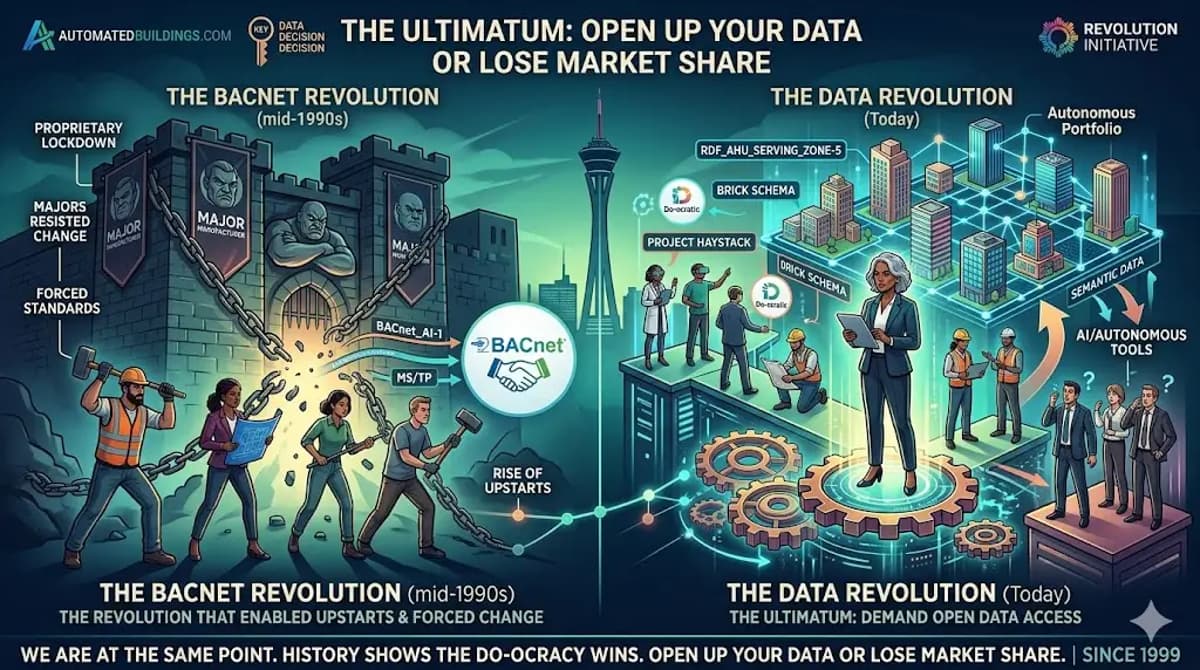
The introduction of BACnet in the 1990s marked a turning point for building automation, dismantling the entrenched model where a single vendor controlled both hardware and software. By standardizing device‑to‑device communication, BACnet lowered barriers to entry, spurring a wave of innovative startups that could focus on smarter, cheaper controllers rather than building entire proprietary ecosystems. This democratization reshaped procurement practices and forced legacy manufacturers to adapt or risk obsolescence.
Today the friction has moved from the protocol layer to the data layer. While many vendors have adopted BACnet for device interoperability, they continue to hoard operational data in proprietary clouds, imposing steep API fees and delivering raw spreadsheets that demand extensive engineering effort to interpret. Such practices undermine the promise of integrated, data‑driven facilities management and stifle the deployment of advanced analytics and autonomous control systems. Open semantic frameworks—Project Haystack, Brick Schema, and RDF/TTL graphs—provide a common language that lets AI engines instantly understand building topology and sensor relationships, eliminating manual point mapping.
The market consequence is clear: companies that expose clean, standardized data are gaining traction, while those that cling to data silos see their market share erode. Upstarts are building platforms that hand data ownership back to building owners, positioning themselves as preferred partners for portfolio‑wide autonomy initiatives. For established manufacturers, the strategic imperative is to embed open data standards into product roadmaps and specification templates now, or risk being bypassed by the next generation of data‑centric building owners.
History Repeating: The BACnet Revolution and the Battle for Your Data
Comments
Want to join the conversation?