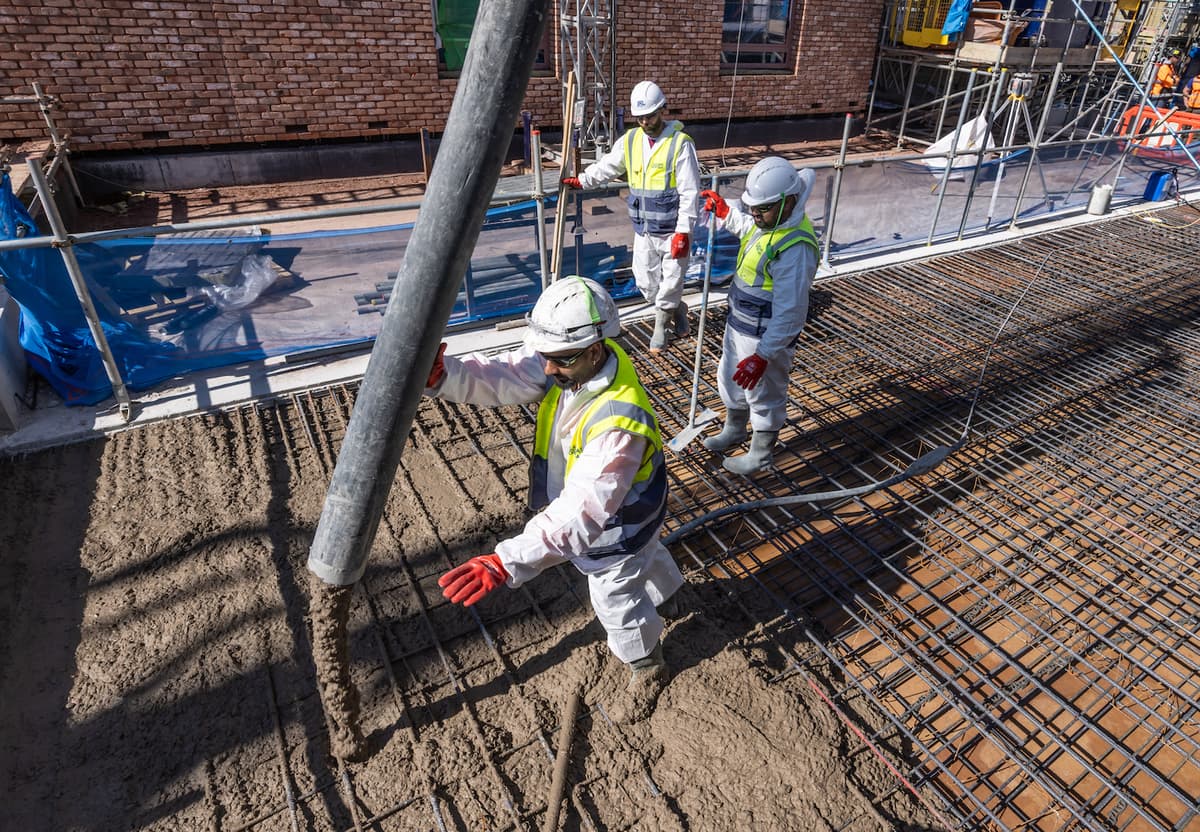
Major Regeneration Scheme Sees First UK Use of Lower-Carbon Calcined Clay Concrete
Key Takeaways
- •Calcined clay replaces 30% cement in Brent Cross slab.
- •Embodied carbon drops 10% versus traditional concrete mix.
- •First UK application in a 200‑unit rental building.
- •LKAB Minerals supplies clay sourced from waste bricks, supporting circular economy.
- •Brent Cross Town targets 6,700 homes, offices, schools, and green space.
Pulse Analysis
The construction industry has long grappled with the carbon intensity of Portland cement, which accounts for roughly 8% of global CO₂ emissions. Calcined clay, a pozzolanic material produced by gently heating natural clay, can replace a portion of cement without compromising strength or durability. Approved under British Standards since 2019, the material offers a lower‑temperature production process and leverages abundant clay deposits, positioning it as a practical low‑carbon alternative for a range of structural applications.
At Brent Cross Town, the UK’s largest regeneration effort in decades, Midgard’s use of calcined‑clay concrete marks a watershed moment. The 200‑unit build‑to‑rent block features a permanent suspended slab where 30% of the cement binder is substituted with clay sourced from waste bricks by LKAB Minerals. This mix delivers a 10% reduction in embodied carbon compared with conventional concrete, translating into measurable emissions savings across the development’s 6,700‑home portfolio. Beyond environmental benefits, the project creates local supply‑chain opportunities, as domestic clay processing facilities can generate skilled jobs and support the circular‑economy narrative.
The successful deployment at Brent Cross could catalyse broader adoption across the UK’s housing and infrastructure pipelines. Policymakers are increasingly incentivising low‑carbon materials through green‑building standards and carbon‑pricing mechanisms, while developers seek cost‑effective pathways to meet sustainability targets. As the sector scales up, economies of scale for calcined‑clay production are expected to lower material costs, making it competitive with traditional cement blends. If embraced widely, this technology could shave millions of tonnes of CO₂ from future construction projects, reinforcing the UK’s net‑zero ambitions and reshaping material sourcing strategies for the next generation of urban developments.
Major regeneration scheme sees first UK use of lower-carbon calcined clay concrete
Comments
Want to join the conversation?