Key Takeaways
- •10BASE‑T1L carries 10 Mbps over 1 km single‑pair
- •BACnet/IP runs natively on T1L, no protocol gateways
- •Existing two‑wire fieldbus cables can be reused for IP
- •PoDL powers sensors and controllers via the same pair
- •Reduces installation labor and downtime in large facilities
Summary
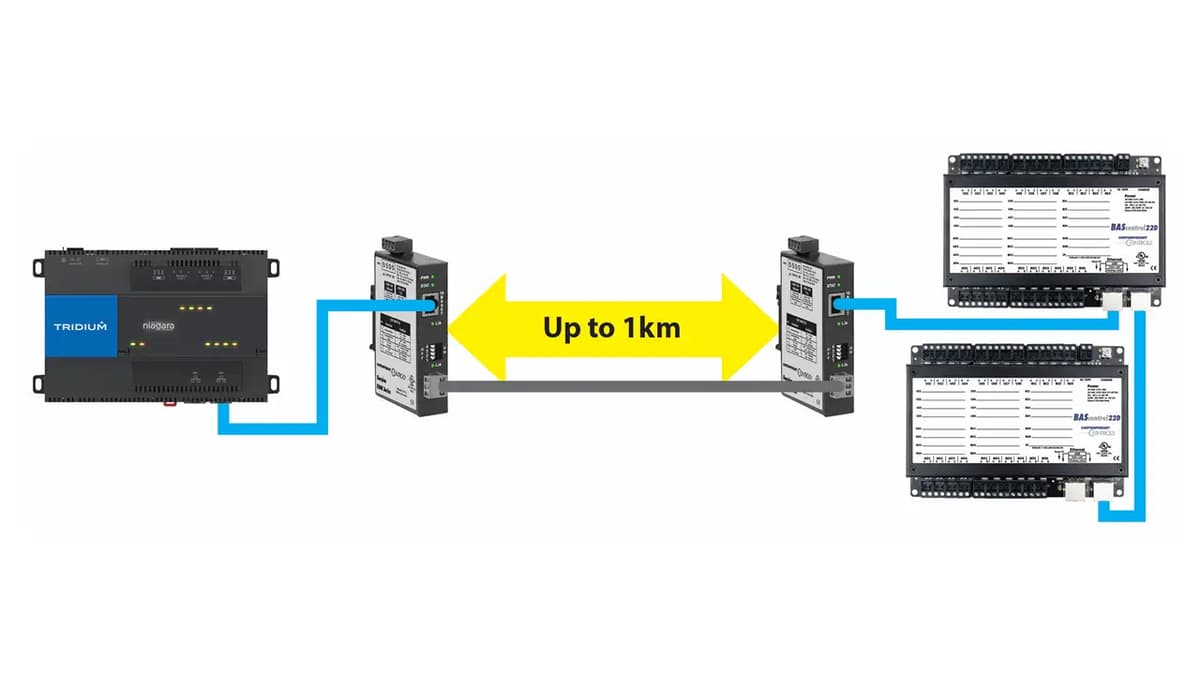
10BASE‑T1L, defined in IEEE 802.3cg, delivers 10 Mbps full‑duplex Ethernet over a single twisted‑pair for up to 1 km. The standard lets BACnet/IP run directly on the link, eliminating gateways and allowing seamless integration with IT networks. Existing two‑wire fieldbus runs can be repurposed, cutting retrofit labor and material costs. PoDL adds optional power delivery, enabling sensor and controller deployment without separate supplies.
Pulse Analysis
Single‑pair Ethernet (SPE) has moved from niche industrial use to mainstream building automation, and 10BASE‑T1L is its flagship offering. The specification balances modest bandwidth—10 Mbps—with a 1 km reach, a combination that directly addresses the distance limitations of traditional Cat5/6 Ethernet. Engineers appreciate the simplicity of a single‑pair cable: fewer conductors, lighter weight, and lower attenuation, which translates into more reliable links in harsh environments. As the IEEE 802.3cg standard matures, device manufacturers are integrating T1L PHYs into controllers, media converters, and switches, creating a growing ecosystem that supports both data and Power over Data Line (PoDL).
For building‑automation professionals, the real value lies in the seamless overlay of BACnet/IP onto the T1L physical layer. Because BACnet/IP is already Ethernet‑based, it can traverse T1L without any protocol translation, removing the need for costly gateways or additional fieldbus segments. This compatibility enables retrofits of legacy facilities that still house two‑wire cabling originally installed for MS/TP, Modbus, or LON. By simply swapping the media converter, those existing runs become high‑speed IP links, preserving the building’s architectural integrity while delivering the scalability of modern networks. The result is faster project timelines, reduced material waste, and lower total‑ownership costs.
Looking ahead, PoDL capability positions T1L as a conduit for the next wave of smart‑building devices. Sensors, actuators, and edge analytics modules can draw power directly from the data pair, eliminating separate power wiring and simplifying enclosure design. This convergence of power and data aligns with sustainability goals, as fewer cables mean reduced material usage and easier recycling. As standards bodies continue to refine SPE specifications and OEMs expand their product portfolios, adoption of 10BASE‑T1L is expected to accelerate, making it a cornerstone technology for resilient, cost‑effective, and future‑proof building‑automation infrastructures.
Comments
Want to join the conversation?