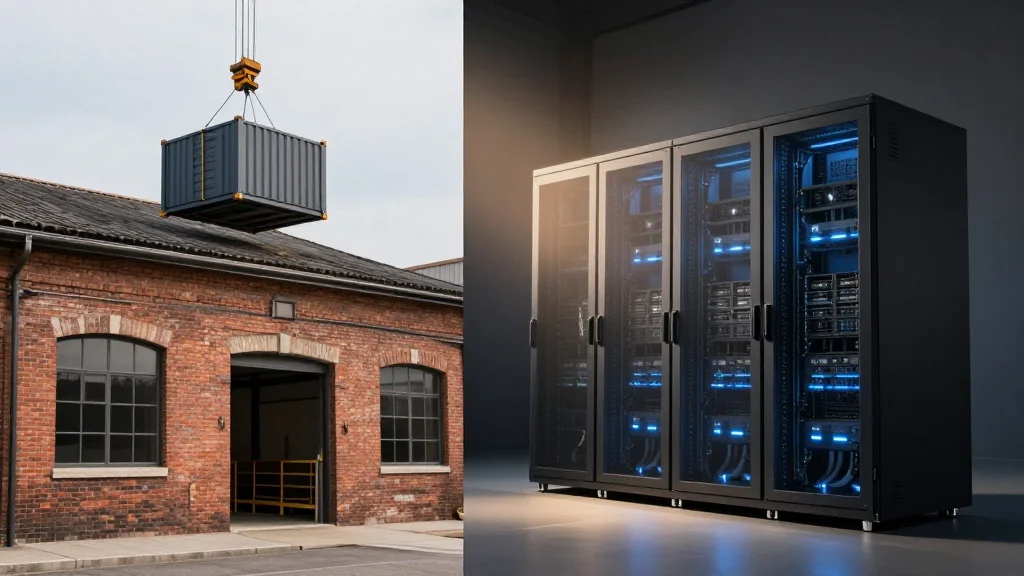
Adapting Existing Buildings as Demands for Data Centers Continue to Soar
Why It Matters
Retrofitting lets operators quickly expand capacity without the time and capital intensity of new builds, directly supporting the rapid growth of AI workloads. It also forces the industry to innovate around heat and power constraints, shaping future data‑center design standards.
Key Takeaways
- •Retrofits cut time vs new builds
- •Heat becomes primary constraint in dense upgrades
- •Airflow optimization yields quick ROI
- •Modular cooling adds flexibility for AI workloads
- •Phased modernization aligns capital with demand
Pulse Analysis
The rapid expansion of artificial‑intelligence models has turned data‑center capacity into a strategic bottleneck. While analysts project power availability to triple or even quadruple within the next decade, acquiring new parcels, securing permits, and financing construction lag behind demand. Consequently, operators are turning to the assets they already own, retrofitting legacy warehouses, office blocks, and industrial spaces to host higher‑density racks. This shift shortens deployment cycles, reduces capital outlay, and leverages existing grid connections, making it the most pragmatic response to today’s AI‑driven compute surge.
Retrofitting, however, is not a simple plug‑and‑play exercise. Floor‑load limits, ceiling heights, and undersized mechanical rooms often require structural reinforcement or creative rack layouts. The dominant engineering hurdle is heat: denser equipment generates far more thermal energy than legacy cooling plants can dissipate. Facilities teams therefore prioritize airflow redesign—adjusting aisle spacing, implementing hot‑aisle/cold‑aisle containment, and deploying granular temperature monitoring—to extract immediate efficiency gains. When airflow alone falls short, modular cooling units or liquid‑ready infrastructure provide scalable capacity without demanding extensive building demolition.
Because capital budgets and downtime windows are tight, most operators adopt a phased modernization roadmap. Initial benchmarks identify the most inefficient zones, followed by incremental upgrades to power distribution, cooling, and containment. This stepwise approach aligns spend with actual load growth, preserving uptime while avoiding over‑investment in oversized systems. In the longer term, flexible designs—such as space‑reserved liquid cooling loops and modular chillers—future‑proof facilities against the inevitable rise in AI‑era heat loads. Industry observers see this retrofit‑centric model as the emerging standard for sustainable, high‑density data center expansion.
Adapting existing buildings as demands for data centers continue to soar
Comments
Want to join the conversation?
Loading comments...