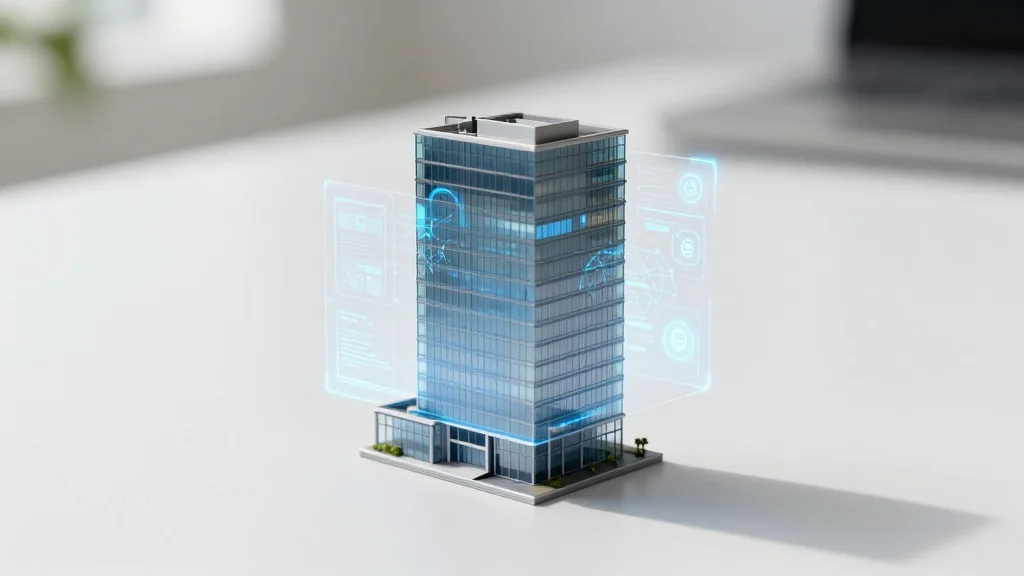
AI and Digital Twins Create Real‑Time Office Design Feedback Loop

Companies Mentioned
Why It Matters
The integration of AI and digital twins marks a shift from reactive to proactive building management. By turning occupancy and environmental data into actionable design insights, organizations can reduce wasted square footage, lower energy bills, and improve employee satisfaction—key metrics that directly affect the bottom line. Moreover, the ability to iterate designs in a virtual, data‑rich environment shortens project timelines and mitigates the risk of costly post‑occupancy retrofits. For the broader PropTech ecosystem, the surge in digital‑twin adoption creates a fertile market for sensor manufacturers, data‑platform providers and AI analytics firms. As standards evolve and data sharing becomes more seamless, the technology could expand beyond offices to mixed‑use developments, campuses and smart cities, amplifying its impact on real‑estate valuation and investment strategies.
Key Takeaways
- •AI‑enabled digital twins now provide live occupancy, temperature and air‑quality data for office spaces.
- •Research And Markets forecasts the global digital‑twin market will hit $154.3 billion by 2030.
- •Autodesk Tandem, Matterport and OpenSpace are leading platforms linking IoT data to BIM models.
- •3D Gaussian Splatting delivers real‑time, photorealistic renderings that accelerate design iteration.
- •Continuous data feedback reduces post‑occupancy redesign costs and improves energy efficiency.
Pulse Analysis
The convergence of AI and digital twins is redefining the economics of office development. Historically, architects relied on static drawings and post‑occupancy surveys to gauge performance, a process that could take months or years to surface issues. Today, the feedback loop operates in minutes, allowing stakeholders to reconfigure spaces before they become entrenched problems. This agility translates into lower capital expenditures and operational savings, a compelling value proposition for investors seeking to de‑risk real‑estate assets.
Competitive dynamics are also shifting. Legacy design firms that cling to conventional CAD workflows risk being outpaced by tech‑forward studios that embed AI analytics into their core offering. Meanwhile, sensor manufacturers and data‑platform providers are positioning themselves as indispensable infrastructure layers, akin to utilities in the digital‑twin stack. The race to establish open data standards will likely determine which players can scale globally versus those confined to proprietary silos.
Looking ahead, the next inflection point will be the integration of occupant‑experience data—such as sentiment analysis from workplace apps—into the digital‑twin ecosystem. If AI can correlate subjective comfort scores with objective sensor readings, the design loop will become not just performance‑based but experience‑centric, unlocking new revenue streams for firms that can monetize adaptive space‑as‑a‑service. For now, the momentum is unmistakable, and the firms that master this live‑design paradigm will set the benchmark for the next generation of office environments.
AI and Digital Twins Create Real‑Time Office Design Feedback Loop
Comments
Want to join the conversation?
Loading comments...