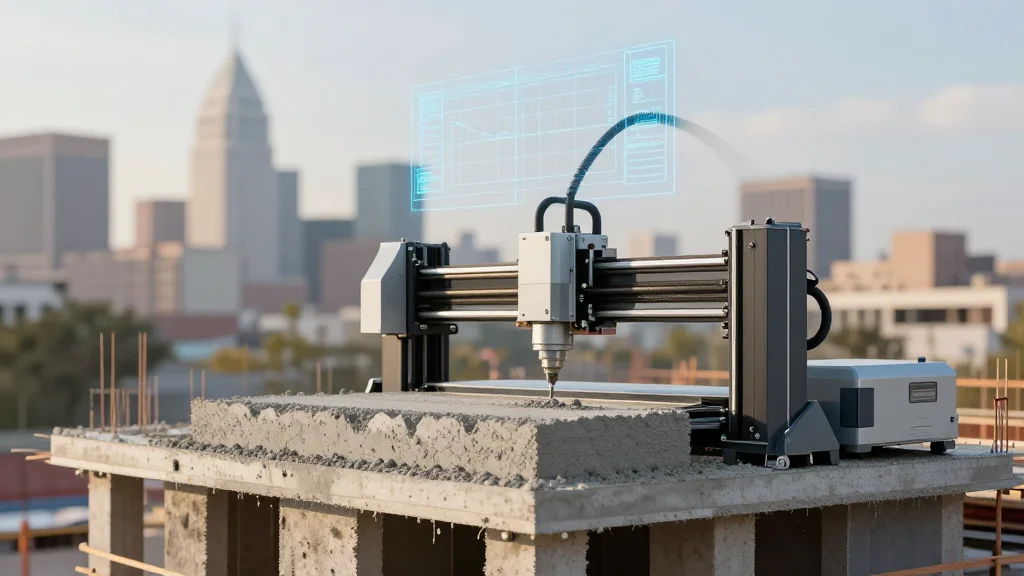
AI Design Tools and 3D‑Printing Propel $13 Trillion Construction Market

Companies Mentioned
Why It Matters
The twin advances of AI‑augmented design and large‑scale 3D‑printing address two chronic constraints in construction: design bottlenecks and labor scarcity. By extracting actionable data from legacy BIM files, AI reduces the time engineers spend on manual compliance checks, freeing capacity for higher‑value tasks and accelerating project timelines. Simultaneously, robotic printing cuts labor hours and material waste, directly lowering housing costs—a critical factor in markets where affordability is eroding. If these technologies scale, they could reshape capital allocation in the industry, shifting investment from traditional subcontractor labor to software platforms and robotics. That reallocation may also pressure incumbents like Autodesk to open their ecosystems, fostering a more competitive landscape that benefits developers, owners, and ultimately, end‑users.
Key Takeaways
- •AI‑enabled BIM tools are being integrated with large‑language models to interpret unstructured metadata
- •Revit holds ~95% market share and $3 billion in ARR, creating a lock‑in that AI plugins aim to bypass
- •HiveASMBLD’s 3D‑printed duplex is priced at $365,000, undercutting the local average by $21,000
- •One printer can produce 5‑7 wall segments per shift; the duplex’s 25 segments are printed in about five days
- •HiveASMBLD is building 80 homes on 13 acres and plans to have four printers operating continuously
- •
Pulse Analysis
The convergence of AI‑driven design and additive manufacturing marks a inflection point for an industry that has long been resistant to change. Historically, construction productivity has lagged behind other sectors, growing at roughly 1% per year since the 1970s. AI’s ability to automate data extraction from BIM files tackles the information overload that has hampered digital adoption, while 3D‑printing directly attacks the labor bottleneck that has become acute amid tighter immigration policies.
From a competitive standpoint, the AI wave could erode Autodesk’s dominance if open‑source or cloud‑native alternatives gain traction. Companies that can embed generative design, code compliance, and cost estimation into a single AI‑powered workflow will likely capture market share from firms locked into Revit’s proprietary format. At the same time, the economics of 3D‑printing are still emerging; the Houston duplex shows a modest price advantage, but scaling to multi‑unit developments will require further reductions in printer capital costs and improvements in material performance.
Looking forward, the real test will be integration. If AI platforms can output design data that feeds seamlessly into robotic printers, developers could compress the design‑construction cycle from months to weeks. Municipal regulators will also play a pivotal role, as permitting processes adapt to printed structures and AI‑validated compliance reports. The next twelve months should reveal whether these technologies remain niche experiments or become the new baseline for cost‑effective, rapid construction.
AI Design Tools and 3D‑Printing Propel $13 Trillion Construction Market
Comments
Want to join the conversation?
Loading comments...