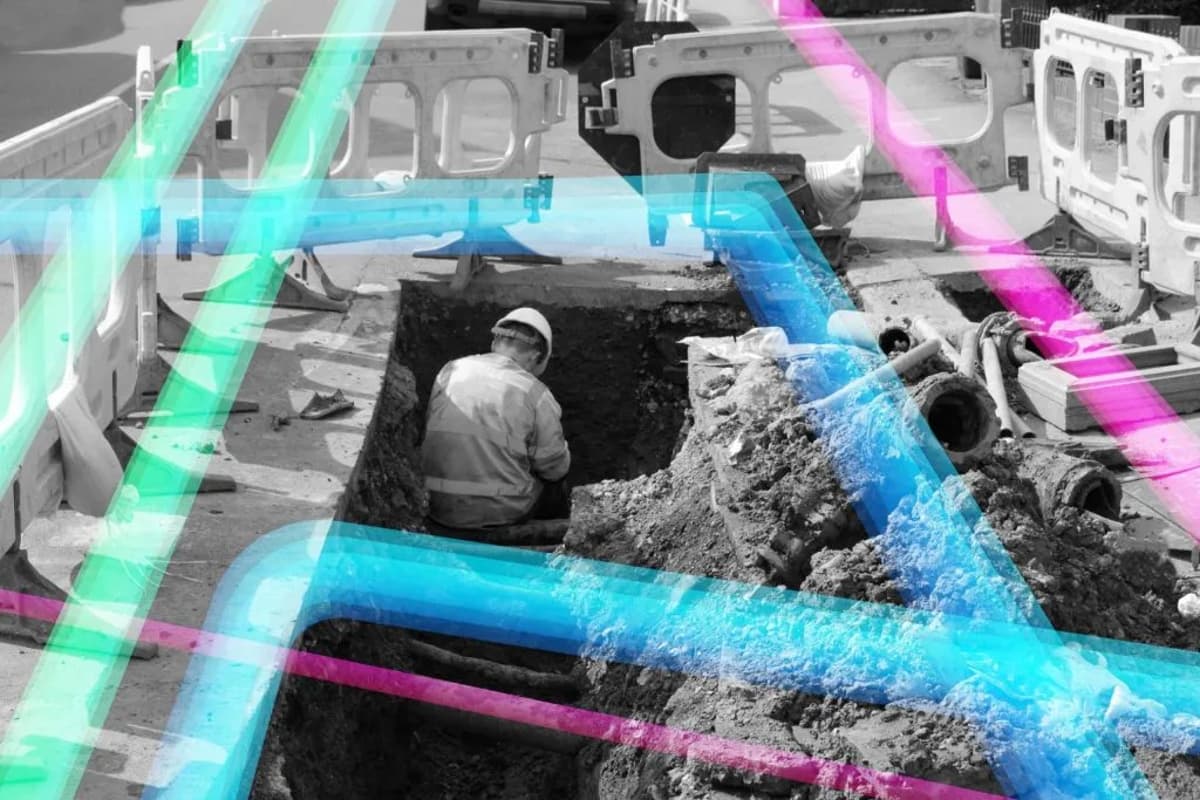
Bill Introduced to Ensure UK Geotechnical Data Is Available to Engineers to Save Billions
•March 4, 2026
0
Why It Matters
Universal access to accurate ground‑condition data cuts costly duplicate investigations, accelerates infrastructure delivery and enhances site safety across the construction sector.
Key Takeaways
- •Bill mandates uploading borehole logs to NUAR.
- •Potential £1.2bn annual savings from avoided duplicate investigations.
- •Improves safety by reducing utility strikes and site delays.
- •Leverages existing BGS database, limiting implementation costs.
- •Mirrors Netherlands’ BRO/KLIC system for centralized ground data.
Pulse Analysis
The UK’s fragmented approach to geotechnical information has long hampered efficient project planning. While utilities and large contractors maintain their own subsurface records, the majority of borehole logs and soil test results sit in isolated silos, often disappearing after a project concludes. By integrating these factual datasets into NUAR—a digital map already used for underground utilities—the proposed legislation creates a single source of truth for engineers, planners and regulators, reducing the need for costly repeat investigations.
Economic analyses suggest that better utilisation of existing ground data could generate roughly £1.2 billion annually. The savings stem from avoiding redundant drilling, streamlining design revisions, and minimising unexpected ground conditions that trigger costly change orders. Moreover, a comprehensive subsurface database improves risk assessments, leading to fewer utility strikes and associated downtime, which translates into tangible safety benefits and community disruption reductions. The Dutch BRO/KLIC system provides a proven blueprint, demonstrating how centralized geotechnical repositories can accelerate project timelines while delivering measurable fiscal returns.
Politically, the Bill follows a series of cross‑departmental roundtables and prior attempts to embed data sharing within the Data (Use and Access) Bill. While industry groups such as AtkinsRéalis, Arup and the British Geological Survey back the initiative, concerns linger around data ownership, commercial sensitivity and reporting burdens. By focusing on factual, non‑interpretative records and leveraging existing standards, the proposal aims to mitigate these objections. If the private member’s Bill secures parliamentary time and cross‑bench support, the UK could set a new benchmark for infrastructure data governance, fostering a more resilient and cost‑effective construction ecosystem.
Bill introduced to ensure UK geotechnical data is available to engineers to save billions
0
Comments
Want to join the conversation?
Loading comments...