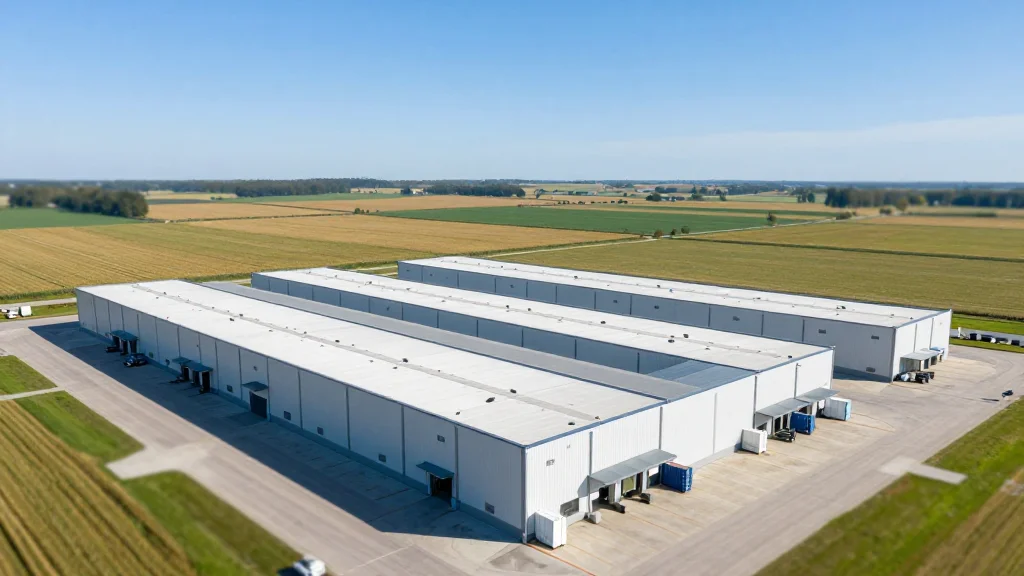
Buy‑Now Boom Drives Massive Expansion at CenterPoint, Sparks Land‑Use Clash in the Midwest

Why It Matters
The rapid expansion of logistics hubs like CenterPoint illustrates how the buy‑now model is reshaping the built environment, turning the American heartland into a high‑velocity distribution corridor. For PropTech firms, the surge creates demand for sophisticated warehouse management software, real‑time tracking, and AI‑driven demand forecasting, accelerating investment in technology that can optimize space and reduce operational costs. At the same time, the conflict over farmland highlights the need for integrated land‑use planning tools that can reconcile economic growth with environmental stewardship. PropTech platforms that incorporate GIS mapping, community impact analytics, and sustainability metrics could become essential in mediating future disputes and guiding responsible development.
Key Takeaways
- •CenterPoint processes >3 million containers and $100 billion in goods each year.
- •NorthPoint proposes to nearly double warehouse capacity in the Chicago heartland.
- •The expansion could add thousands of trucks to local roadways, raising safety concerns.
- •Farmland and small towns risk being converted into industrial zones.
- •Growth fuels demand for advanced PropTech solutions in warehouse automation and land‑use planning.
Pulse Analysis
The logistics boom driven by instant‑delivery expectations is redefining the PropTech value chain. Traditional real‑estate developers are now competing with technology firms that can offer modular, data‑rich warehouse designs capable of rapid deployment. Companies that combine site‑selection algorithms with predictive traffic modeling will have a distinct advantage in securing community approval and minimizing infrastructure costs.
Historically, the Midwest’s agricultural base acted as a buffer against unchecked industrial growth. The current pressure to convert that buffer into logistics space signals a tipping point: if developers can demonstrate that high‑tech warehouses reduce truck trips per unit of goods, they may alleviate some community resistance. However, without transparent impact assessments, the risk of a backlash that could stall future projects remains high.
Looking forward, policymakers are likely to demand more rigorous environmental reviews and community engagement processes. PropTech innovators that embed these requirements into their platforms—offering stakeholders real‑time dashboards on emissions, traffic flow, and land‑use changes—could become the de‑facto standard for sustainable logistics expansion. The outcome of the NorthPoint proposal will therefore serve as a bellwether for how the industry balances speed, technology, and stewardship in the era of the buy‑now economy.
Buy‑Now Boom Drives Massive Expansion at CenterPoint, Sparks Land‑Use Clash in the Midwest
Comments
Want to join the conversation?
Loading comments...