Europe Completes Its Largest 3D‑Printed Apartment Building in France

Companies Mentioned
Why It Matters
ViliaSprint² proves that large‑scale additive manufacturing can meet stringent European sustainability goals while delivering affordable housing faster than traditional methods. The project’s 10% concrete savings and 60% energy self‑sufficiency directly address EU climate targets, offering a replicable template for future social‑housing initiatives. If the upcoming 40‑unit development achieves its promised cost reductions, 3D printing could become a cornerstone of Europe’s strategy to close the housing deficit, especially in regions where labor shortages and high material prices have stalled construction. The technology’s ability to produce complex geometries without extra formwork also opens design possibilities that were previously cost‑prohibitive, potentially reshaping urban aesthetics and density planning.
Key Takeaways
- •ViliaSprint² comprises 12 social‑housing units printed in 34 days, three months faster than a conventional build.
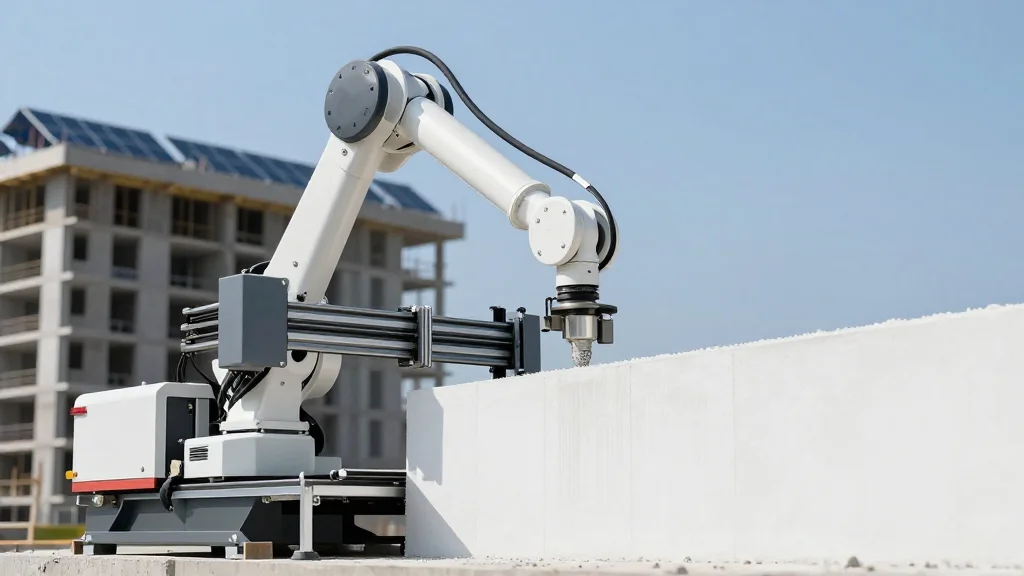
- •COBOD BOD2 printer extruded a Holcim cement mix on‑site, saving roughly 10% of concrete material.
- •The complex includes 500 sq m of photovoltaic panels and a hybrid gas‑heat pump, achieving ~60% power self‑sufficiency.
- •Future plan: a 40‑unit building using two printers to cut print time by 75% and match conventional costs.
- •Project aligns with France’s RE2020 2025 green‑building standards, showcasing low‑carbon construction.
Pulse Analysis
The ViliaSprint² completion is less a novelty than a proof point that additive manufacturing can scale to address Europe’s chronic housing shortage. Historically, 3D‑printed structures have been limited to single‑family homes or experimental prototypes. This project demonstrates that the technology can handle multi‑unit, socially critical housing while delivering measurable sustainability benefits. The 10% concrete reduction, while modest, translates into significant carbon‑emission savings when multiplied across thousands of units, aligning with the EU’s Green Deal objectives.
From a market perspective, the partnership model—developer Plurial Novilia, printer PERI 3D Building, material supplier Holcim, and energy system integrator Atlantic Systèmes—creates a vertically integrated ecosystem that can accelerate adoption. By bundling design, printing, material supply and energy solutions, the consortium reduces coordination friction that has traditionally slowed innovation in construction. Competitors such as ICON and Apis Cor will likely intensify their European push, but the European‑centric supply chain demonstrated here gives local players a strategic edge.
Looking forward, the real test will be the upcoming 40‑unit project. If it delivers the promised four‑fold speed increase and cost parity, investors may pour capital into 3D‑printing startups, and municipalities could embed the technology in public‑housing procurement policies. Conversely, any shortfall in durability, regulatory approval or resident satisfaction could temper enthusiasm. Nonetheless, ViliaSprint² sets a benchmark that will shape policy discussions, financing models, and design standards for the next decade of European construction.
Europe Completes Its Largest 3D‑Printed Apartment Building in France
Comments
Want to join the conversation?
Loading comments...