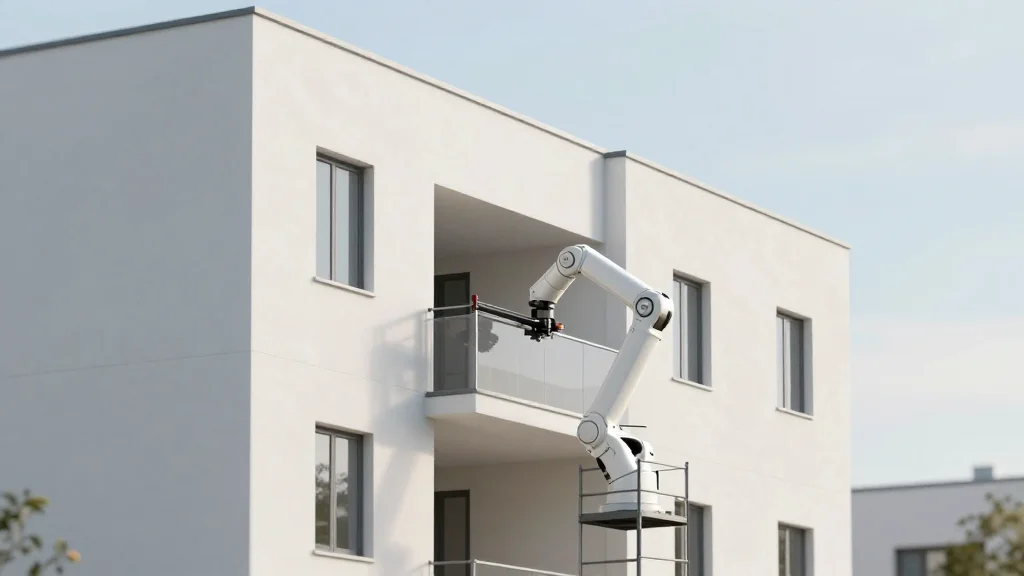
Europe’s Largest 3D‑Printed Apartment Block Completed in France, Cutting Build Time to 34 Days

Companies Mentioned
Why It Matters
The ViliaSprint² milestone proves that 3D printing can move beyond single‑family prototypes to deliver multi‑unit housing at a pace previously unattainable with conventional methods. By slashing labor inputs and shortening construction cycles, the technology directly addresses two of the most stubborn constraints in European real‑estate: high labour costs and chronic housing deficits. Moreover, the use of low‑carbon concrete aligns the construction sector with EU climate targets, suggesting that additive manufacturing could become a cornerstone of sustainable building policy. If the cost and speed advantages are validated at scale, investors and municipalities may redirect capital toward 3D‑printed projects, reshaping supply chains that have long been dominated by brick‑and‑mortar contractors. The Bezannes case also offers a data‑rich template for regulators evaluating building‑code adaptations needed to certify printed structures, potentially accelerating approvals across the bloc.
Key Takeaways
- •ViliaSprint², a 12‑unit, three‑storey block, completed in 34 working days
- •Labor needed fell from six workers (traditional) to three printer operators
- •Holcim’s low‑carbon concrete mix cuts embodied carbon by ~30%
- •Estimated 40% reduction in construction labour costs versus conventional build
- •Project serves as a live benchmark against a side‑by‑side traditional build
Pulse Analysis
The Bezannes achievement arrives at a tipping point for European PropTech. Historically, 3D‑printed housing has been limited to single‑family prototypes in the Netherlands and the United Arab Emirates, largely because the economics of scale were unproven. ViliaSprint² demonstrates that a repeatable, mass‑production workflow is feasible, leveraging a combination of high‑strength concrete, optimized printer logistics and integrated digital controls. This convergence reduces the need for skilled on‑site labour—a critical advantage as the construction sector faces a chronic skills shortage.
From a market perspective, the project could catalyse a wave of financing products tailored to additive construction. Lenders may view the reduced build time as a risk mitigant, shortening the exposure period between loan disbursement and asset completion. Simultaneously, insurers could lower premiums if the technology proves to deliver consistent structural performance, especially given the use of full‑strength concrete rather than experimental mixes.
Looking forward, the key challenge will be replication. The side‑by‑side traditional build provides a valuable control, but scaling to larger complexes will test printer capacity, supply‑chain resilience for specialised concrete, and regulatory adaptability. If Plurial Novilia and its partners can demonstrate cost parity or superiority on a broader portfolio, Europe could see a rapid shift toward printed housing, reshaping the competitive landscape for traditional developers and opening new opportunities for tech‑focused construction firms.
Europe’s Largest 3D‑Printed Apartment Block Completed in France, Cutting Build Time to 34 Days
Comments
Want to join the conversation?
Loading comments...