Facing the Age of Robots? Material Innovation in Architectural Structures
•March 10, 2026
0
Why It Matters
Robotic material innovation cuts construction time, waste and carbon, delivering faster, more sustainable buildings. It also creates new high‑skill roles and market opportunities in the tech‑enabled construction sector.
Key Takeaways
- •Robots enable precise, repeatable material fabrication
- •Bio‑based materials integrate with digital manufacturing
- •On‑site robotic assembly reduces waste and labor
- •3D‑printed concrete offers seismic resilience
- •Human‑robot collaboration reshapes architectural workflows
Pulse Analysis
The construction sector is entering an era where robots are no longer just speed‑up tools but active material makers. Advances in six‑axis arms, mobile platforms and drone‑based assemblers allow architects to program geometry directly into the building process, turning computational models into physical forms without intermediate molds. This convergence of robotics and digital fabrication blurs the line between design and construction, enabling on‑site adaptation and real‑time feedback. As a result, projects can explore complex topologies that were previously prohibitive, expanding the creative vocabulary of contemporary architecture.
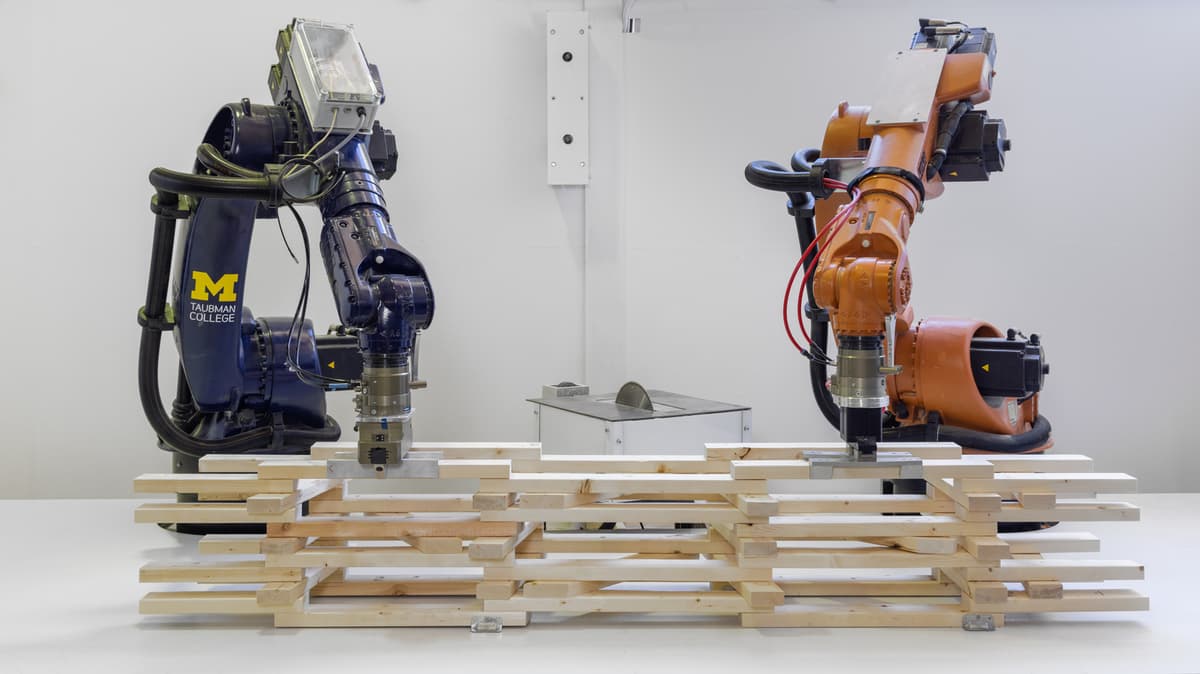
Material experimentation is the most visible outcome of this robotic turn. Yong Ju Lee’s Moss Columns fuse living moss with PLA using a robotic extruder, while the Mycelial Hut Pavilion grows fungal mycelium inside 3D‑printed molds, turning decay into structural strength. The Clay Rotunda in Bern demonstrated that a mobile arm can lay 30,000 soft bricks, compensating for shrinkage through algorithmic segmentation. Japan’s Obayashi 3dpod combined on‑site mortar printing with steel‑fiber‑reinforced SLIM‑Crete, achieving earthquake‑proof performance. Even timber pavilions now rely on collaborative robots to cut, stack and join elements with millimeter accuracy, cutting embodied carbon.
The business implications are profound. By reducing material waste, shortening labor cycles and enabling prefabricated yet site‑customized components, robotic construction promises lower project margins and faster time‑to‑market. At the same time, the need for software engineers, data scientists and material scientists creates new high‑skill roles, reshaping the labor pool. Investors are already funding start‑ups that marry AI‑driven design with autonomous fabrication, signaling a shift toward a tech‑centric built environment. Architects who embrace these tools will dictate the next generation of sustainable, resilient infrastructure.
Facing the Age of Robots? Material Innovation in Architectural Structures
0
Comments
Want to join the conversation?
Loading comments...