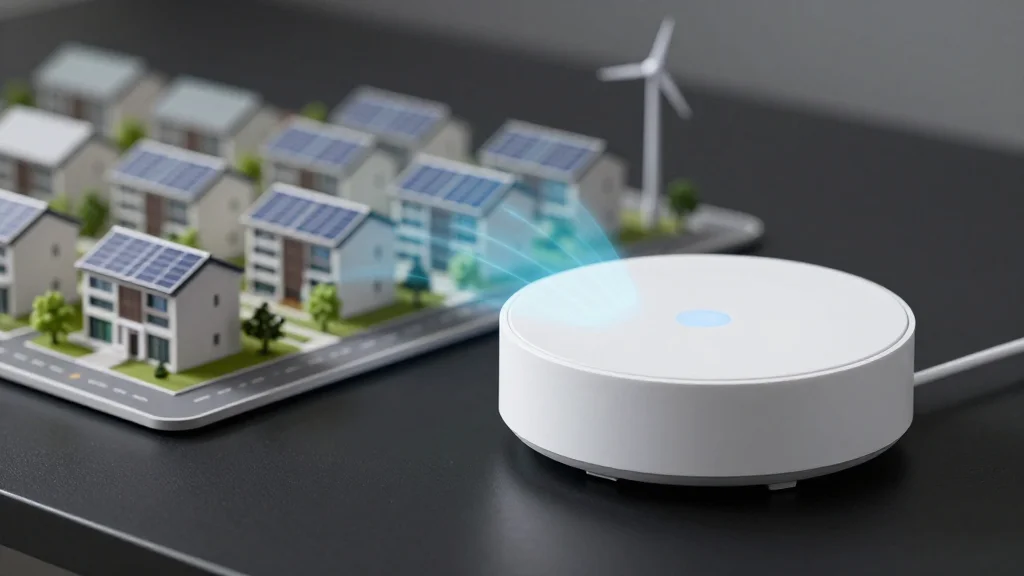
GTC Secures Smart‑Home Contract for UK's Largest Net‑Zero Housing Development at Cosmeston Farm

Why It Matters
Cosmeston Farm is the first residential development to combine a full suite of smart‑home technologies with a net‑zero carbon‑in‑operation target at this scale, offering a tangible proof‑point for policymakers and investors. Its success could unlock new financing mechanisms for sustainable housing, accelerate the rollout of grid‑flexibility services, and set a replicable template for other high‑density, low‑carbon communities. Beyond the immediate environmental benefits, the project illustrates how PropTech firms can become integral partners in public‑private housing initiatives, bridging the gap between construction, energy utilities and data analytics. If the performance metrics meet expectations, the model may become a de‑facto standard for future UK housing developments, reshaping the market dynamics for smart‑home hardware manufacturers and service providers.
Key Takeaways
- •GTC awarded contract to deliver smart‑home infrastructure for 576 homes at Cosmeston Farm, the UK's largest net‑zero housing site.
- •The system integrates ground‑source heat pumps, solar PV, battery storage, smart controls and GTC‑owned electricity and water networks.
- •Project exceeds the Future Homes Standard and is backed by the Welsh Government, with performance audited by Cardiff University.
- •Quotes from John Marsh (GTC), Oliver Novakovic (Barratt Redrow) and Jayne Bryant (Welsh Cabinet Secretary) highlight the project's ambition and policy relevance.
- •Full commissioning targeted for mid‑2027; data will be used to benchmark large‑scale net‑zero residential performance.
Pulse Analysis
The Cosmeston Farm deal marks a watershed moment for PropTech, moving the sector from pilot‑scale installations to mainstream, developer‑driven deployments. Historically, smart‑home technology has been fragmented—heat pumps, solar panels and home batteries have been sold as discrete products. GTC’s end‑to‑end platform consolidates these components, creating a single point of accountability for performance and cost. This integration reduces transaction costs for developers, simplifies regulatory compliance, and unlocks new revenue streams through grid‑flexibility services, a trend that utilities are increasingly courting.
From a market perspective, the contract could catalyse a wave of similar projects across the UK, especially as the government tightens net‑zero timelines. Developers will likely seek partners that can guarantee both technical reliability and data transparency, attributes that GTC is positioning itself to deliver. The involvement of Cardiff University as an independent verifier adds credibility, potentially encouraging lenders and green‑bond investors to tie financing terms to verified performance metrics.
Looking ahead, the real test will be whether the promised energy‑cost savings and grid‑service revenues materialise at scale. If successful, the model could redefine the economics of zero‑carbon housing, making it financially attractive without heavy subsidies. Conversely, any shortfall in performance could reinforce skepticism around large‑scale smart‑home rollouts. Stakeholders should monitor the upcoming performance data releases, which will likely shape the next round of policy incentives and private‑sector investment in PropTech‑enabled sustainable housing.
GTC Secures Smart‑Home Contract for UK's Largest Net‑Zero Housing Development at Cosmeston Farm
Comments
Want to join the conversation?
Loading comments...